


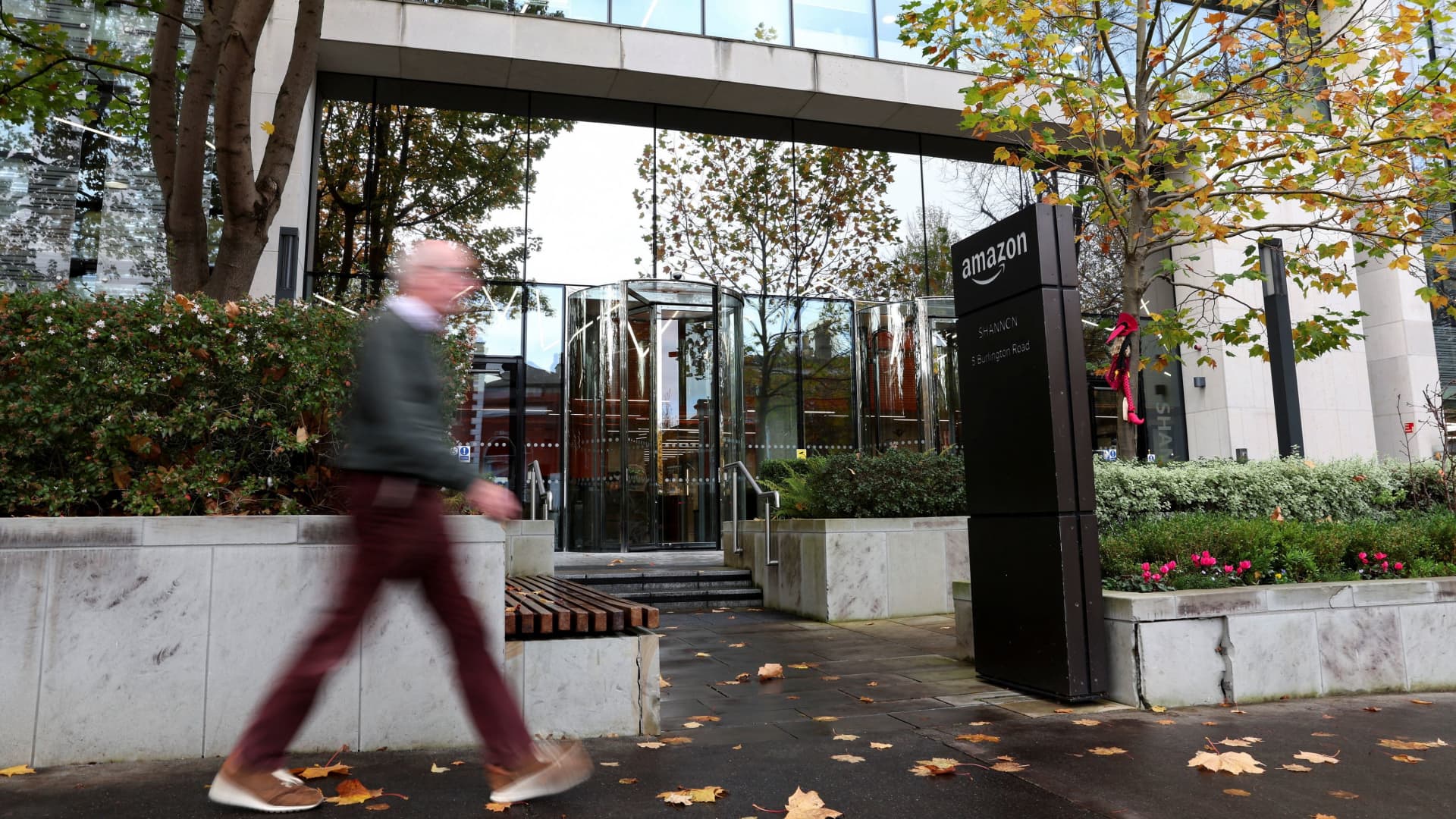

Amazon said Wednesday it plans to eliminate about 16,000 corporate jobs, marking its second round of mass job cuts since last October.
In a blog post, the company wrote that the layoffs were part of an ongoing effort to “strengthen our organization by reducing layers, increasing ownership, and removing bureaucracy.” That coincides with a push to invest heavily in artificial intelligence.
The job reductions come just a few months after October’s layoffs, when 14,000 employees were let go across Amazon’s corporate workforce. At the time, the company indicated the cuts would continue in 2026 as it found “additional places we can remove layers.”
Beth Galetti, Amazon’s senior vice president of people experience and technology, didn’t rule out more job cuts in the future, but said the company isn’t trying to create “a new rhythm” of broad layoffs every few months.
“That’s not our plan,” Galetti wrote in the blog post. “But just as we always have, every team will continue to evaluate the ownership, speed, and capacity to invent for customers, and make adjustments as appropriate.”
On Tuesday, some employees in Amazon’s cloud unit received an email sent in an apparent error acknowledging “organizational changes” at the company. The note referenced a post from Galetti and said Amazon notified “impacted colleagues in our organization.”
Amazon had about 1.58 million employees as of the end of its third quarter. That figure is primarily made up of warehouse and logistics workers.
The 30,000 job cuts since October represent about 10% of its corporate and tech workforce, which comprises about 350,000 people.
Amazon has been in the midst of a significant downsizing for the past several years. The company laid off more than 27,000 employees between 2022 and 2023, and it conducted smaller cuts across various organizations in 2024.
CEO Andy Jassy has looked to slim down Amazon’s workforce after the company went on a hiring spree during the Covid-19 pandemic, partly to meet a surge in demand for e-commerce and cloud computing services.
Jassy has also looked to reset Amazon’s corporate culture so that it can operate like the “world’s largest startup.” He set internal targets to slash management layers and established a “no bureaucracy email alias” to identify ways the company can innovate faster.
Amazon has also been cutting costs across its business so that it can invest more in AI and the rapid build-out of data centers. Earlier this week, the company shuttered its Fresh and Go grocery chains after years of experimentation.
Last October, Amazon said it expects capital expenditures to reach $125 billion for 2026, the highest spending forecast among the megacap companies.
Jassy said last June that efficiency gains from AI would likely cause Amazon’s corporate headcount to fall in the coming years.
“We will need fewer people doing some of the jobs that are being done today, and more people doing other types of jobs,” Jassy said at the time.
