


ISLAMABAD:
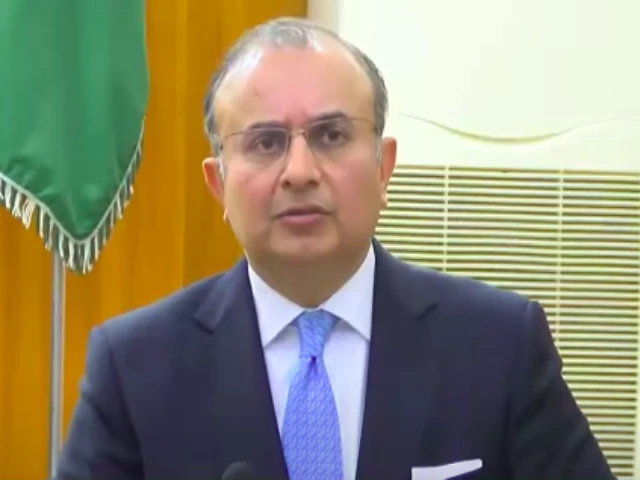
Former Supreme Court judge Mansoor Ali Shah has proposed a comprehensive roadmap to counter “autocratic tendencies”, warning that judicial independence often erodes under “concentrated power” and calling for stronger legal, institutional and cultural safeguards to prevent such a collapse.
The former apex court judge delivered a speech at the NYU Research Symposium on Legal Empowerment and Autocracy in Accra, Ghana.
“I speak today as someone who resigned from the Supreme Court of Pakistan on 13 November 2025, because I could no longer uphold an oath to protect a Constitution from within a court that had been stripped of the authority to protect it,” Justice Shah said.
“The Varieties of Democracy project tells us that autocracies now outnumber democracies in the world for the first time in twenty years, 91 to 88. The global average level of democracy has receded to where it stood in 1985,” he added.
“Freedom is in retreat, and those retreating are retreating faster than those advancing. This room, this symposium on legal empowerment and autocracy, is exactly where the counter-strategy must be built.”
The former Supreme Court judge noted that the 26th and 27th constitutional amendments, though passed by a two-thirds parliamentary majority, amounted to the “destruction of the Constitution”.
“Formally, they were constitutional acts. Substantively, they were the destruction of the Constitution. This is autocratic legalism at its most sophisticated, using the forms of democracy to hollow out its content,” he said.
Read: Pakistan notches diplomatic win at Riyadh summit
Outlining a multi-layered response, Justice Shah called for rebuilding legal education as a foundation for democratic resilience. “Law schools must stop producing technically excellent servants of power and start producing constitutionally grounded democratic citizens,” he said, stressing the need to embed political philosophy, constitutional history and the sociology of judicial capture into core curricula, alongside exposure to cultural traditions of resistance.
He further urged a redesign of the judicial selection process, arguing that courts must prioritise “constitutional character” over technical brilliance alone, favouring lawyers and academics who have demonstrated a willingness to take principled positions at personal cost.
Shah also emphasised the need to strengthen bar associations as independent constitutional actors, warning that a bar that remains silent in the face of judicial dismantling “is not a bar” but an accessory. He called for structural safeguards to prevent co-optation and for ethical rules barring personal benefits in exchange for political silence.
On legal strategy under authoritarian conditions, he argued that lawyers must continue approaching courts even when they are “captured”, in order to document violations and build a historical record. Where domestic remedies fail, he urged recourse to international mechanisms, including UN procedures and global legal bodies, alongside the development of transnational solidarity networks among lawyers, judges and academics.
Turning to the question of why judges accommodate authoritarian power, Justice Shah identified four key factors: fear, comfort, isolation and professional conditioning. A judge who resists, he said, risks dismissal, detention and the destruction of a career, as seen during Zia-ul-Haq’s 1977 Provisional Constitutional Order, when judges refusing new oaths were removed.
Beyond coercion, he pointed to “comfort”, the reluctance to give up office, privilege and status, and “isolation”, where judges lack institutional support. More fundamentally, citing the work of Lisa Hilbink, he described “institutionalised apoliticism”, where judges are conditioned to view constitutional resistance as unprofessional, enabling compliance even without direct pressure.
Shah argued that judicial independence is not merely a matter of individual courage but of institutional design, stressing the need to rebuild supportive ecosystems involving the bar, academia and civil society. He referenced Pakistan’s 2007 lawyers’ movement as an example of collective resistance, contrasting it with what he described as the deliberate weakening of such structures in 2024 through coercive constitutional changes and co-optation of legal actors.
He further warned that autocracy undermines not only legal systems but economic governance, eroding the rule of law and producing increasingly distorted decision-making. “When academics cannot research critically, the regime becomes blind,” he said.
Despite the risks, Justice Shah maintained that autocracy is not permanent, though its reversal may come at significant cost. He emphasised that authoritarian systems fear independent courts, empowered citizens and cultural resistance alike.
“In the darkest moments, when courts are captured and institutions co-opted, go back to the poems, the music, the art of those who resisted,” he said. “That imagination is not a luxury. It is the oxygen of resistance.”
He concluded that the Constitution ultimately depends on those willing to defend it. “Judicial independence is not a character trait. It is an institutional condition. Build the condition, and judges can hold. Destroy it, and even courageous judges cannot stand for long.”
