


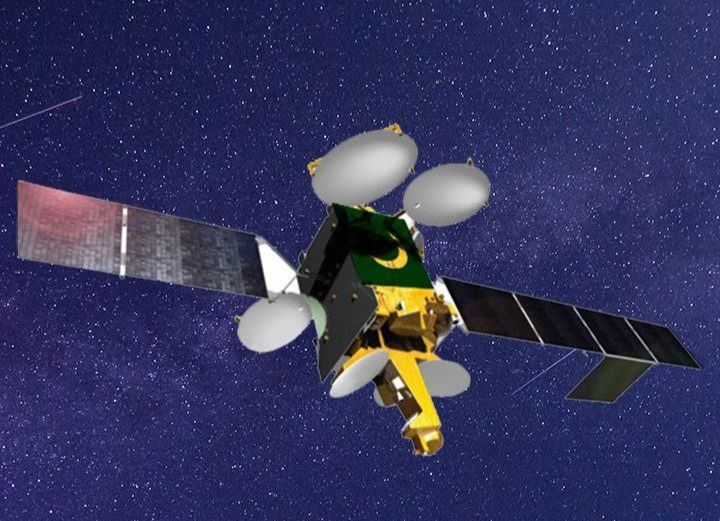
PPakistan’s apex space agency, the Space and Upper Atmospheric Research Commission (SUPARCO), last month announced the successful launch and insertion of the multi-purpose satellite PAKSAT-MM1 into geostationary orbit. The satellite was designed and manufactured in collaboration with China. Both countries are members of the Asia-Pacific Space Cooperation Organization and the launch took place at the Xichang Satellite Launch Center. The successful deployment marks another milestone in the growing space cooperation between Pakistan and China and highlights the technological and cooperative advancements in the space development of the two countries.
by Disclosed information Developed by SUPARCO, PAKSAT-MM1 provides communication services in C, Ku and Ka bands, and Satellite-Based Augmentation Services (SBAS) in L-band. Understanding these terms is crucial to understanding the capabilities of the satellite, which will begin its 15-year journey of service in August. These bands represent different ranges of microwave frequencies used for specific communication purposes. For example, C-band and Ku-band are used for long-distance radio and television broadcasting, respectively. Ka-band, which uses higher-frequency microwave signals, supports high-speed satellite communications and has faster data rates compared to C-band and Ku-band. On the other hand, SBAS increases the accuracy and reliability of satellite navigation signals, with L-band dedicated to mobile satellite services and certain navigation systems. L-band is less susceptible to weather conditions, making it ideal for enhancing GNSS information. This wide frequency band makes PAKSAT-MM1 a true multi-mission communication satellite.
With a population of 240 million and an average age of 23, Pakistan is one of the youngest and most populous countries in the world. This demographic has created a growing demand for advanced communication technologies and digital connectivity frameworks. The launch of PAKSAT-MM1 is a step in this direction and aims to enhance internet connectivity across Pakistan, where internet access is still inadequate. A major problem in about half the countryFor the relatively tech-savvy younger generation, improved access to the internet will significantly increase employment opportunities and allow young people to serve potential employers across the globe, regardless of geographical constraints. For a cash-strapped country like Pakistan, this will be a cost-effective means of generating online jobs while addressing low foreign exchange reserves. Prime Minister Shahbaz Sharif echoed this sentiment, saying satellites will not only improve the lives of its citizens but also boost economic activity, e-commerce and e-governance.
PAKSAT-MM1 is part of the National Space Programme 2047, which aims to launch multiple communications, remote sensing and weather satellites. International collaboration is a key aspect of this program, and Pakistan has previously partnered with China on the PRSS-1 and PakTES-1A satellites. These collaborations have facilitated knowledge and technology transfer, significantly enhancing the capabilities of Pakistan’s space scientists and engineers. This knowledge is also spreading to other important areas such as defence, where Pakistan lags behind its arch rival, India. Indian private sector has made great strides The defense sector has demonstrated the growing capabilities and innovative potential of private companies. For example, private companies recently designed and built the first spy satellite for the Indian military, ushering in a new era of space utilization for defense purposes. Historically, the private sector has been known for its efficiency and innovation, often outperforming public companies in these areas. Recognizing this, Pakistan must actively engage the private sector in its space and defense programs. There are signs that Pakistan’s policy direction is beginning to align with this approach, signaling a positive shift toward greater private sector participation. In modern weapons systems, the importance of space-based assets for communications, intelligence, and surveillance cannot be overstated. While the launch of satellites such as PAKSAT-MM1 is commendable, Pakistan needs to address its space asset gap with India before it becomes insurmountable.
Despite the vastness of space, it is becoming increasingly crowded due to a surge in private satellite launches by companies such as SpaceX. This congestion is making it increasingly difficult to find suitable orbits, highlighting the urgent need to accelerate efforts to design and launch satellites that meet both civilian and military needs. Minister of Planning Ahsan Iqbal, who attended a recent satellite launch, expressed optimism by saying, “The day is not far when we will launch a satellite on our own rocket from Pakistan’s Space Launch Centre. Congratulations, Pakistan.” Having an indigenous space launch centre would definitely boost Pakistan’s space program, but given the current economic situation, this goal seems difficult to achieve. Economic constraints have always been a major challenge for Pakistan’s space program and are likely to continue into the foreseeable future.
[Image credit: paksat.com.pk]
Akash Shah is a Research Fellow at the Strategic Vision Institute, Islamabad. His work focuses primarily on space development and militarization. The views and opinions expressed in this article are those of the author.
