


The Treasury Department is moving to fill gaps in U.S. investment in China’s high-tech sector that have not been addressed in previous actions by Congress or the Biden administration.
The proposal, unveiled late last month, would impose a blanket ban on U.S. citizens and residents from investing in certain technologies in artificial intelligence, quantum computing and semiconductor manufacturing, which officials say they need to address.
The ban would include spending on design automation software and the production of certain high-performance semiconductors. The proposal would prohibit investments in the development and production of quantum computers and their critical components, quantum sensing, and certain communications platforms. It also aims to block U.S. capital from going into artificial intelligence systems that have national security end goals, require certain levels of computing power, or are trained using biological sequence data.
In addition to the blanket ban, investments in semiconductor manufacturing, AI and quantum computing that do not fall into specific prohibited sectors will require notification within 30 days of the transaction.
A date for the final rules has not yet been set, but public comment is due by August 4th.
The Treasury Department’s action is the latest step in a process that began when President Joe Biden issued an executive order in August 2023 banning private equity and venture capital investments in sensitive Chinese technology fields if they contribute to Beijing’s new military acquisitions. It’s also part of a larger effort that includes export controls on sensitive technologies to slow China’s technological advances.
Biden’s order comes after Congress tried but abandoned efforts to pass such a ban into law, after which key lawmakers called on the president to act.
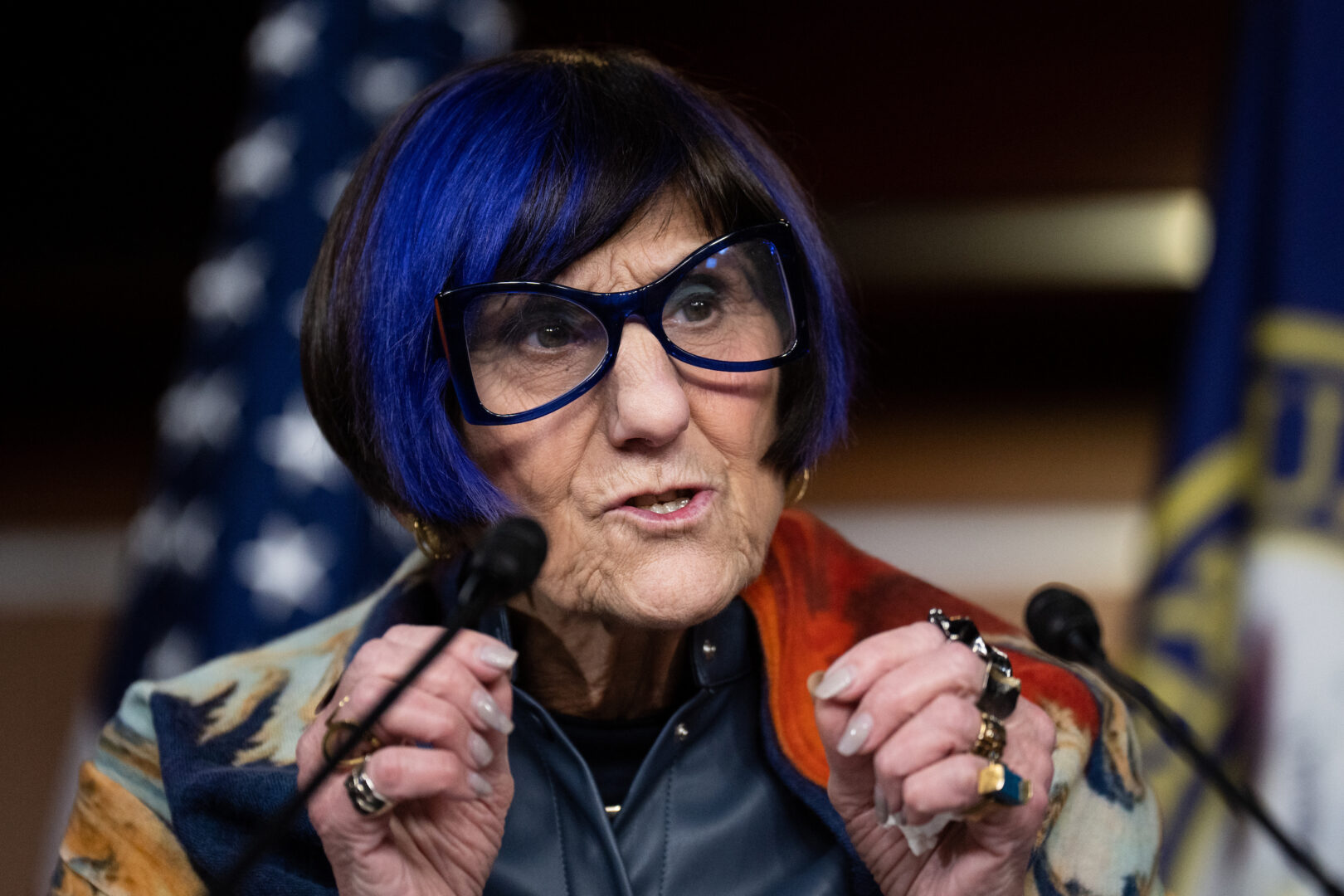
“The Treasury Department’s proposed rules on U.S. foreign investment are an important step in protecting our supply chains and national security while strengthening American competitiveness,” Rep. Rosa DeLauro, a Connecticut Democrat, said in an email.
DeLauro, the top Democrat on the House Appropriations Committee, authored a bill last Congress that sought oversight of U.S. capital flowing to Chinese tech companies. The bill passed the House with bipartisan support but failed to pass the Senate.
“Our capital and capabilities cannot advance the Chinese Communist Party’s agenda,” DeLauro said. “We already see how the offshoring of critical capabilities has impacted our economy and national security, not to mention our industrial base and workforce.”
In May, the House Foreign Affairs Committee passed a bill that would allow the Commerce Department to restrict exports of military-grade AI systems to China. The bill would also allow the administration to prohibit Americans from working with foreigners to develop AI systems that pose a risk to U.S. national security.
“Frontier” AI, biotechnology
Of the $110 billion raised by Chinese artificial intelligence companies between 2015 and 2021, at least $40.2 billion, or about 37%, came from U.S. investors, according to a 2023 report by the Center for Security and Emerging Technology at Georgetown University’s Walsh School of Foreign Service.
The proposed rule seeks to cover investments in AI technologies that have specific military end uses, such as weapons development, target identification and combat simulation.
But Ngor Long, a senior research analyst at Georgetown University’s CSET, said the proposed rule would also broaden the ban on investments in the development of powerful AI systems, known as frontier models.Long said the proposed rule aims to set the boundaries of the ban based on the computing power such AI models use.
According to the proposal, the Treasury Department is considering setting a general computing power threshold for training advanced models at one septillion arithmetic operations or more — a one followed by 24 zeros.
In anticipation of the upcoming investment restrictions, venture capital firms and tech companies are already adjusting their strategies to avoid running into new regulations, said Chuck Blanchard, senior counsel at law firm Arnold & Porter.
During the comment period, investors and tech companies are likely to ask for “more precise clarification” about “what falls under the umbrella of advanced integrated circuit design versus ordinary integrated circuit design,” Blanchard said in an interview.
Meanwhile, the Commerce Department has tightened controls on exports of advanced semiconductor chips to China. In October, the department set additional semiconductor performance standards, preventing chips that exceed either of these performance standards from being exported to China.
Blanchard said companies are also interested in knowing what action Treasury might take regarding transactions that require notification. “Right now, it appears that a transaction that requires notification is simply advance notice, rather than some sort of approval requirement or getting approval from Treasury,” he said.
Blanchard said that while the latest proposed rules focus on technologies essential to national security, investors and tech companies will be watching to see whether the administration expands them to the biotechnology sector.
Lawmakers have tried to block such investments. In January, former Rep. Mike Gallagher (R-Wis.) and Rep. Raja Krishnamoorthi (D-Ill.) introduced legislation that would ban U.S. government agencies from contracting with companies that get equipment or services from certain Chinese biotechnology companies, including BGI Genomics.
Blanchard said it would be “misguided” to extend the ban on Chinese investment in high-tech to biotechnology. “As Chinese biotech companies develop the next generation of better cancer treatments, U.S. investors want to get a share of the rewards and also facilitate the successful commercialization of that technology,” he added.
DeLauro said the Treasury Department’s regulations, based on the president’s executive order, are “just one piece of the puzzle.”
“But the administration can only act within the bounds of what Congress has set for it, and it is Congress’ responsibility to act now,” DeLauro said, adding that he continues to support the bill he first proposed in 2021.
