


PUBLISHED
March 30, 2025
KARACHI:
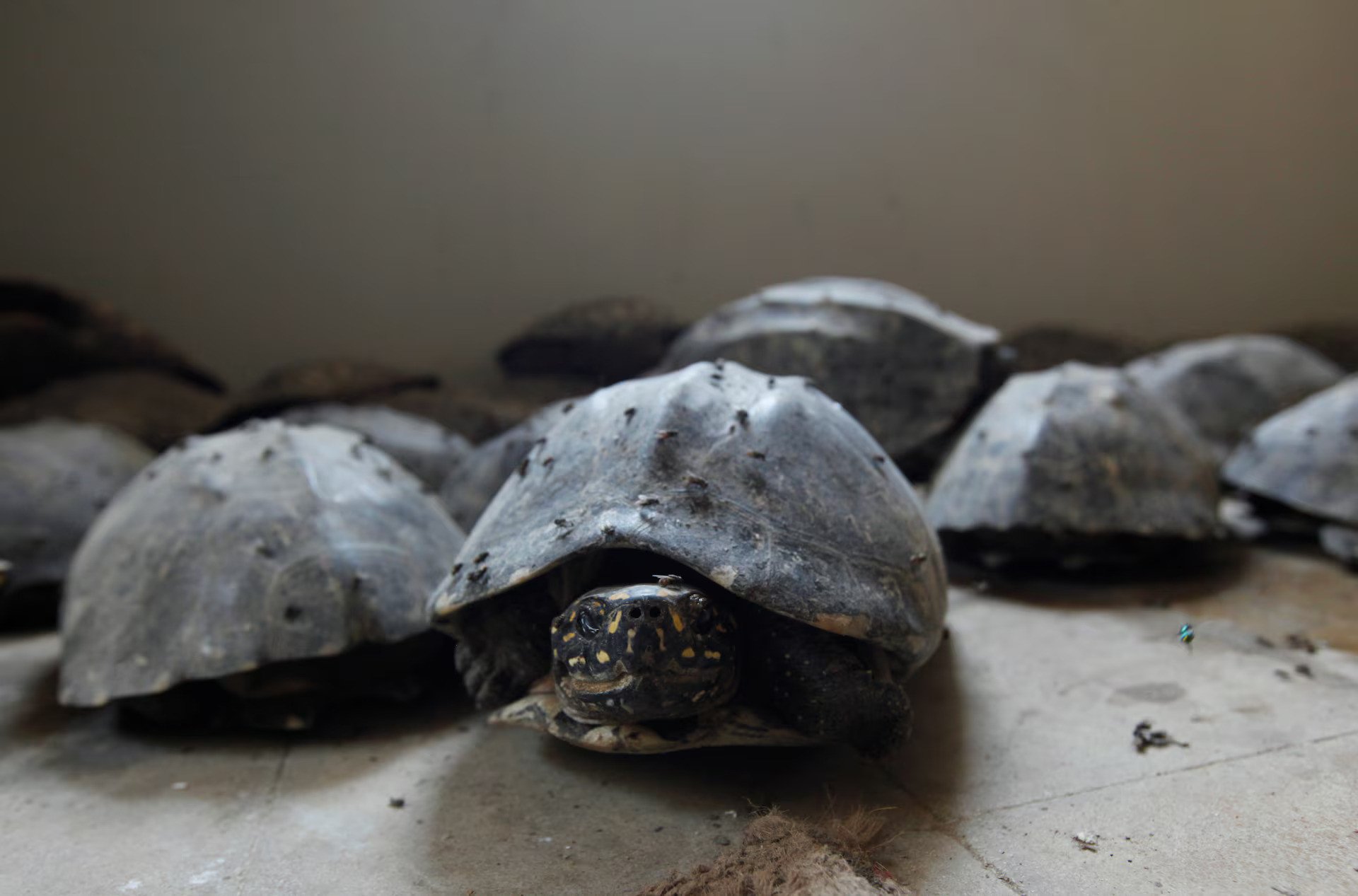
The import, export, and smuggling of rare species are all part of Pakistan’s multimillion-dollar animal trade. The demand for exotic pets, zoo animals, and ingredients for traditional medicines continues to build an underground network of merchants despite national and international legislation intended to discourage this illegal enterprise. Pakistan has turned into a major hub for wildlife trafficking involving endangered turtles, snakes, African lions, and macaws.
Many of these species are trafficked through weak border security, frequently in appalling conditions that cause their deaths, while some are brought into the country lawfully by private collectors and zoos. Authorities often carry out raids, but because of legal loopholes, corruption, and ignorance, the enforcement of the law is nevertheless lax.
All for the sake of status
The demand for exotic animals in Pakistan is driven by multiple factors, including luxury and social status. Exotic animals are frequently bought by the wealthy as status symbols, particularly in places like Karachi, Lahore, and Islamabad. Having a cheetah, imported parrot, or lion cub has become a status symbol. By sharing footage of their exotic birds or pet tigers, social media influencers further glamorise this trend. “This culture is not just harming the animals but also the idea of showing off their wealth by owning an animal and taking it away from their natural habitat is cruel,” said Sindh Wildlife Chief Conservator Javed Maher.
Private zoos frequently engage in illicit activities, whereas government-run zoos lawfully import animals. Rich people establish private reserves in which they house endangered deer and African lions. Some species, such as snakes, turtles, and pangolins, are trafficked for use in traditional remedies. For instance, illegal exports from Pakistan to Southeast Asia are caused by the huge demand for pangolin scales in China. “Having pet animals isn’t a crime, and people who are importing them legally and having a proper set up at their homes or farms shouldn’t be questioned, because a lot of people like me are doing it out of life for animals and not a status symbol,” said Abid Ali* who has a small zoo at his farmhouse that includes lion, python, ostriches and many other exotic animals as pets. He also added that traffickers who import such animals charge heavily from enthusiasts like him, and keeping such a pet is costly already where their food, habitat, and care taker not just take time but also a huge amount costs monthly.
Legal provisions
Pakistan is a signatory to the Convention on International Trade in Endangered Species of Wild Fauna and Flora (CITES), which regulates the global wildlife trade. Under the Pakistan Trade Control of Wild Fauna and Flora Act, 2012, exporting any listed species requires a valid export permit issued by the designated authority after meeting specific conditions. Similarly, importing such species into Pakistan requires a corresponding export or re-export certificate from the country of origin, also issued by an authorised body.
“This is what’s required on paper — permits, just like passports and visas for travel. But in reality, enforcement is weak,” said Sindh Wildlife Chief Conservator Javed Maher.
In practice, these laws are rarely implemented, allowing traffickers to exploit legal loopholes. Although Pakistan has multiple regulations against wildlife trafficking, enforcement remains a major challenge. The Wildlife Protection Ordinance of Pakistan (1972) prohibits the hunting, capturing, and trading of endangered species. However, enforcement varies across provinces due to differing levels of efficiency in local wildlife departments.
The Punjab Wildlife (Preservation, Conservation, Management, and Protection) Act of 1974 grants the Punjab Wildlife Department authority to conduct raids and enforce stricter regulations. Despite this, offenders often face minimal consequences, with small fines instead of severe penalties. The Sindh Wildlife Protection Act of 2020 provides stronger legal measures against illegal breeding and smuggling. However, Karachi remains a major hub for the illicit wildlife trade, highlighting ongoing enforcement gaps.
Illicit trade secrets
Wildlife traffickers often obtain licenses under the guise of importing animals for breeding, conservation, or research. However, many of these animals ultimately end up in private zoos or homes. Rare species frequently enter the country without proper inspection, facilitated by fake or fraudulent documentation.
While Pakistan legally imports a variety of exotic animals — including lions, macaws, iguanas, and ball pythons — wildlife advocates argue that many are smuggled in through illegal channels, bypassing regulations.
“Customs needs to be stricter. The laws exist, so why are exotic animals still allowed in with fake or incomplete documentation? We barely have the resources to care for our native wildlife, yet we keep adding to the burden,” said Maher.
There are several reasons why the illegal wildlife trade continues to thrive in Pakistan. Well-established smuggling networks exploit gaps in border regulations to move animals in and out of the country with ease.
Land routes through Balochistan are commonly used to traffic a range of exotic species, including birds and reptiles. The porous and poorly monitored borders allow traffickers to transport animals hidden in trucks, buses, or even on foot. In addition, major transit points like Port Qasim in Karachi and Jinnah International Airport serve as key hubs for smuggling operations.
Smugglers often use creative and cruel methods to move animals undetected — concealing them in luggage, stuffing birds into plastic tubes, or sedating large cats to keep them unconscious during transport.
“With all these practices, customs officers often let the animals through out of sympathy, as they’re told the animals will die if held at the border or sent back,” lamented the Sindh Wildlife Chief Conservator.
In the digital age, the trade has only become more accessible. With little to no oversight, exotic animals are routinely bought and sold through Facebook pages, WhatsApp groups, and other online platforms — where much of the exploitation takes place beyond the reach of law enforcement.
Total disregard
Animals smuggled across borders are often subjected to severe abuse. Traffickers prioritise profit over welfare, transporting animals in appalling conditions — without food, water, or ventilation. Many are crammed into tiny cages, stuffed inside bags, or packed into boxes with no room to move. A significant number die from suffocation, dehydration, or trauma before they even reach their destination.
To avoid detection, smugglers sometimes sedate large cats and birds or mutilate them — removing fangs or claws to prevent resistance or noise.
Even after arrival, the suffering continues. Exotic pets kept in private homes frequently endure malnutrition, cramped spaces, and a lack of veterinary care. Large animals like bears and tigers are often confined to small enclosures, leading to intense psychological distress.
Pakistan’s lack of proper rehabilitation facilities means the future of rescued animals is uncertain. Many are sent to local zoos, which are themselves notorious for poor conditions — starvation, untreated illness, and neglect are common. The Islamabad Zoo, for instance, faced global backlash over its treatment of Kaavan, an elephant later relocated to Cambodia after years of mistreatment.
“Our resources are limited. We cannot take in every animal that gets confiscated,” said Javed Maher. “The law clearly states that no animal should be brought in without a permit, and when they are, the responsibility shouldn’t fall on us.”
Only a handful of rescued animals — mostly birds and reptiles — are ever rehabilitated and released. But reintroducing exotic, non-native species into the wild poses serious ecological risks.
In many cases, trafficked animals are sold cheaply in local markets when dealers fear raids or arrests. Even confiscated animals are sometimes auctioned off, with some ending up back in the hands of private collectors. This undermines the very purpose of anti-smuggling efforts.
Pakistan still lacks a network of well-equipped exotic animal rescue centers, and while organisations like the Sindh Wildlife Department and WWF-Pakistan try to provide temporary care, the long-term solutions remain elusive.
Why smuggling thrives
Despite the presence of several laws, regulating the illegal import and export of exotic animals remains a significant challenge in Pakistan. “Traffickers are rarely fined heavily and often get away with brief jail terms. Purchasers also play a role — many are unaware of the legal and ethical implications of owning such pets,” said animal enthusiast Sabir Umar.
The thriving exotic animal trade is fueled by high demand, weak legislation, and poor enforcement. While occasional crackdowns may offer temporary relief, experts believe sustainable solutions require stricter penalties for traffickers and complicit officials, alongside public awareness campaigns highlighting the moral and environmental costs of this trade.
“A major step would be to establish dedicated wildlife sanctuaries,” Umar added. “Right now, animals seized during raids often suffer in customs facilities or become a burden on private rescuers who lack the resources to care for them.”
*Name changed to protect source’s identity
