


PUBLISHED
June 01, 2025
KARACHI:
In the aftermath of the Second World War, the world stood at a crossroads. The unprecedented destruction and human suffering left by not one, but two devastating global conflicts exposed the catastrophic failures of nationalist rivalries and unchecked power concentrated in the hands of a few.
Determined to prevent such devastation from recurring, the great powers of the time — led by the United States and its Western allies — spearheaded the creation of a new global architecture based on cooperation, rules, and institutions. From the United Nations, with its International Court of Justice (ICJ) as its principal judicial organ, to the General Agreement on Tariffs and Trade (GATT), the precursor to the World Trade Organisation, and the Bretton Woods institutions like the International Monetary Fund (IMF) and the World Bank, these frameworks were designed to promote peace, economic stability, and collective security.
This multilateral system was revolutionary. It established shared norms, binding legal frameworks, and dispute resolution mechanisms aimed at taming the anarchic tendencies of international relations and providing a platform for dialogue. It was founded on the belief that no single nation could safeguard prosperity and peace alone. Instead, global challenges demanded collaboration through international institutions rooted in law and mutual respect. For decades, this rules-based order underpinned a relatively stable and prosperous era, enabling unprecedented global integration.
Yet this post-war order also inherited — and at times perpetuated — deep inequalities born from the legacy of colonialism. Many formerly colonised nations entered the global system burdened by economic disparities, political marginalisation, and unresolved conflicts rooted in colonial-era divisions. The institutions created by Western powers often failed to fully address these structural imbalances, leaving vast swathes of the Global South struggling to achieve equitable representation and justice. Over time, these enduring inequalities have fuelled scepticism about the fairness and inclusiveness of the existing multilateral order, creating fertile ground for alternative visions of global governance.
Today, this carefully constructed edifice faces profound challenges. Rising unilateralism, nationalism, and intensifying geopolitical competition threaten to unravel these institutions just as new crises and conflicts demand stronger global cooperation. Nearly halfway through this decade, war continues to rage in Europe and the Middle East. Just last month, all-out war nearly engulfed South Asia, averted only by a US-mediated ceasefire between Pakistan and India. While the immediate threat has seemingly dissipated, the spectre of further, increasingly dangerous rounds of conflict looms large — fuelled by India’s reckless disregard for the Indus Water Treaty and the inflammatory rhetoric of its Hindu majoritarian leadership.
It is into this fractured landscape that China officially launched the International Organisation for Mediation (IOMed), headquartered in Hong Kong. Against the backdrop of unprecedented and ever-deepening geopolitical faultlines, this new institution for peaceful dispute resolution seeks to reinforce multilateralism — an ideal that appears to be eroding before our eyes.
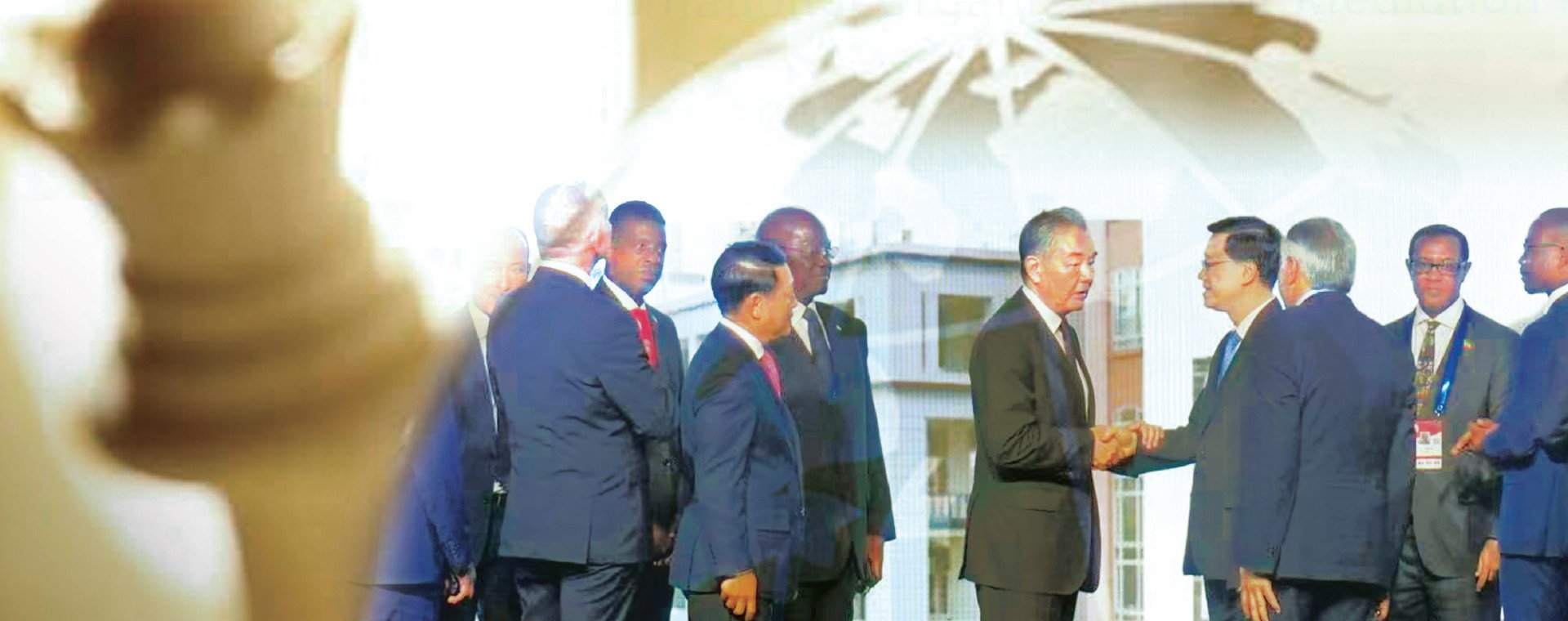
More than 30 countries have backed the Convention on the Establishment of the IOMed. At the official signing ceremony on Friday, Pakistan, Indonesia, Belarus, and Cuba signed the convention to become founding members of the organisation. Pakistan’s Deputy Prime Minister and Foreign Minister, Mohammad Ishaq Dar, was among the high-level representatives present, alongside delegates from over 80 countries and 20 international organisations. “IOMed also offers new opportunities and fresh hopes to build a more inclusive, more just and more equitable world. As one of the founding members of IOMed, Pakistan would continue to be an active voice in this noble mission,” a statement by Pakistan’s Foreign Office quoted him as saying. Representatives from Laos, Cambodia, Serbia, Papua New Guinea, and Venezuela were also in attendance.
At the signing ceremony, China’s Foreign Minister Wang Yi underscored the symbolic timing of the organisation’s launch: “This year marks the 80th anniversary of the victory of the World Anti-Fascist War, and the 80th anniversary of the founding of the United Nations.” He recalled that the UN Charter “states a clear purpose of different countries living together in peace and maintaining international peace and security.” Yet, “eighty years later, faced with accelerating global transformation not seen in a century,” the world is grappling with rising tensions.
In this context, Wang cited President Xi Jinping’s view that “disagreements between countries are normal and should be properly settled through dialogue and consultation.” China, he said, “has all along advocated addressing disagreements in a spirit of mutual understanding and accommodation, building consensus through dialogue and consultation, promoting development through win-win cooperation, and solving issues with a future-oriented perspective.” The IOMed, according to Wang, is an embodiment of these principles: “China has been actively exploring ways of hotspot issue settlement that carry the Chinese touch, so as to lend our thoughts to countries seeking to resolve problems or disagreements with others.”
Wang Yi framed the establishment of the IOMed as “an actualisation of the purposes and principles of the UN Charter.”
“Mediation, as is clearly stated in Article 33 of the Charter, is one of the first means that should be tried in seeking peaceful solutions to international disputes. But so far, there is not yet an intergovernmental legal organisation in this field,” he said. The IOMed, according to Wang Yi, would fill that institutional gap, by incorporating the “very best of major legal systems,” respecting the wishes of parties concerned, and by being “more flexible, cost-effective, convenient and efficient.”
“The birth of the IOMed can help transcend the ‘you-lose-I-win’ zero-sum mentality… and foster more harmonious international relations,” the Chinese foreign minister added.
The IOMed comes at a time when many of the world’s existing multilateral institutions are facing unprecedented strain. The Trump administration’s “America First” approach, in particular, has severely undermined confidence in these bodies. By withdrawing from international agreements and institutions, imposing tariffs, and dismissing dispute resolution frameworks, the US under Trump has disrupted the rules-based global order Washington helped create
Simultaneously, conflicts such as those in Gaza have exposed the limitations of international law enforcement mechanisms. The ICJ’s interim order last year demanding Israel prevent acts of genocide in Gaza, while legally binding, has faced practical enforcement challenges, illustrating how global legal institutions can be hamstrung in global crises.
Against this backdrop, the IOMed signals China’s intent to fill institutional gaps with an alternative vision. Yet this development also raises critical questions. Can the IOMed provide an impartial platform respected by all parties, or will it become another arena for great power rivalry under the guise of multilateralism? Its success will depend on navigating complex geopolitical realities and building broad legitimacy beyond China’s immediate allies.
Nonetheless, it is clear that the existing global governance architecture struggles to keep pace with today’s complex conflicts and geopolitical shifts. In this environment, the IOMed represents a significant attempt to reinvent multilateralism by placing mediation and dialogue at the centre of international dispute resolution.
