

by Mahmoud Fouly
CAIRO, Dec. 21 (Xinhua) — Growing Chinese investments in Egypt are helping the Arab country reshape its industrial landscape, shifting the focus from trade dependence toward localized, export-oriented manufacturing, amid deepening bilateral ties.
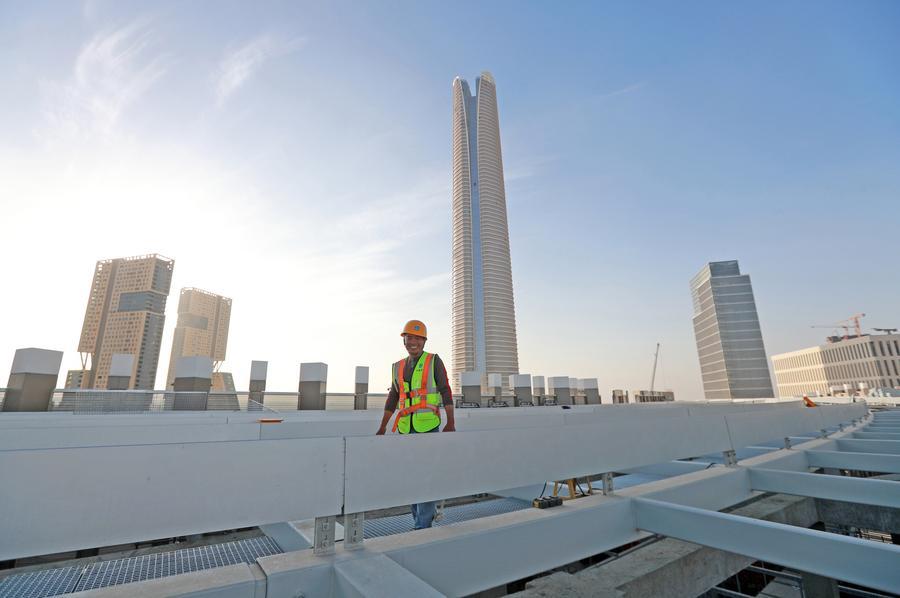
In recent years, Chinese investment in Egypt has increasingly taken the form of factory-based projects and industrial expansions, supporting Cairo’s drive to localize production, strengthen value-added industries, and position itself as a regional manufacturing hub amid global trade uncertainties.
Egyptian business circles view this shift as a key indicator of the growing depth of the Egypt-China comprehensive strategic partnership.
“Egypt seeks localization of industry. Some countries invest in Egypt by buying factories, which is an ownership transfer, not a real investment, but China comes to build real factories,” said Mostafa Ibrahim, vice chairman of the China committee at the Egyptian Businessmen’s Association.
Ibrahim added that the expansion of Chinese projects in Egypt reflects the current strength of bilateral economic and political ties, which are “at their best.”
Hassan El-Khatib, Egypt’s Minister of Investment and Foreign Trade, said the next phase of economic cooperation with China should focus on expanding joint production and strengthening export-oriented domestic manufacturing.
He explained that Egypt’s Vision 2030 for sustainable development aligns closely with China’s Belt and Road Initiative, particularly in areas related to regional integration, industrial connectivity, and cross-border trade, highlighting Egypt’s strategic location connecting three continents, competitive labor costs, and extensive trade agreements granting access to global markets.
“Egypt is part of the Belt and Road and could be a bridge between China, Egypt and global markets,” El-Khatib said in an interview with Xinhua.
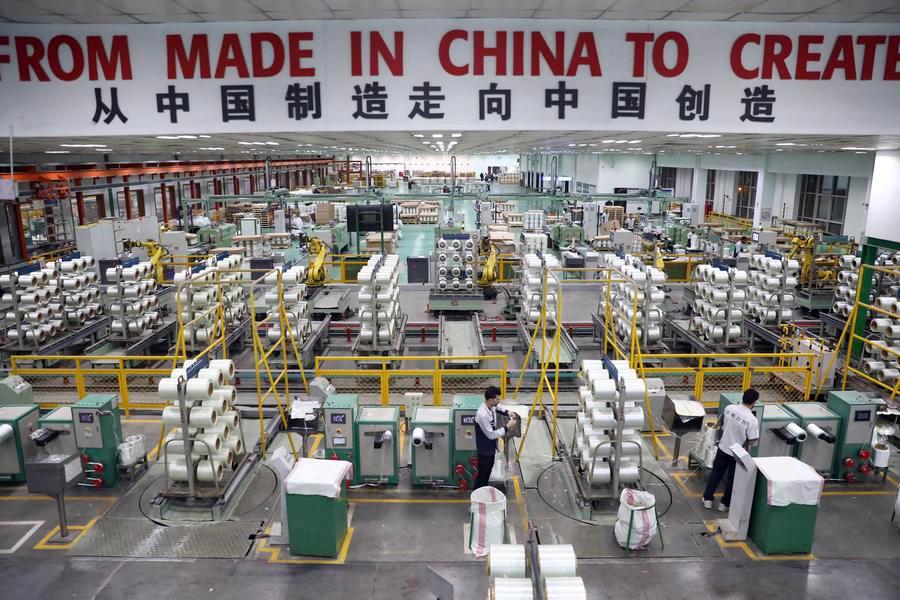
Much of this localized manufacturing push is taking shape within Egypt’s designated industrial platforms, particularly the Suez Canal Economic Zone (SCZone), which has emerged as a central hub for Chinese manufacturing investment.
Over the past three and a half years, the SCZone has attracted investments totaling 11.6 billion U.S. dollars, with Chinese investors accounting for around 50 percent of the total, according to Waleid Gamal El-Dein, chairman of the SCZone authority.
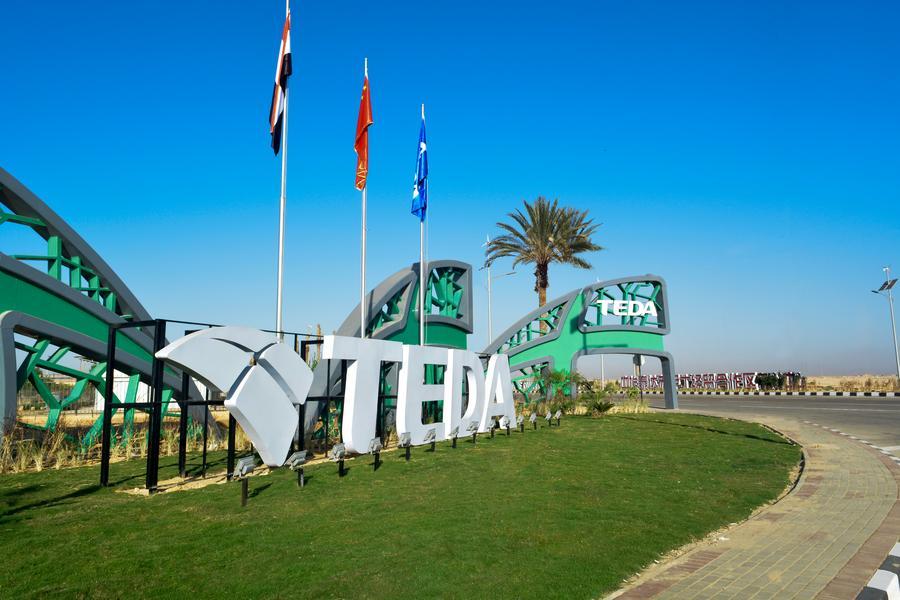
El-Dein highlighted the importance of the China-Egypt TEDA Suez Economic and Trade Cooperation Zone inside the SCZone, which he said currently encompasses more than 200 industrial, service, and logistics projects with total investments of about 3.8 billion U.S. dollars.
China’s fiberglass giant Jushi has been operating a major plant within TEDA for over a decade, positioning Egypt as a significant global fiberglass producer. Chinese home appliance manufacturers Haier and Midea have expanded production bases in Egypt as well.
Recent project announcements further underscore how Chinese investment in Egypt is translating into factory-based manufacturing. Within the SCZone, a Chinese company has launched a glassware manufacturing project expected to attract more than 70 million U.S. dollars in total investment, targeting both local demand and export markets.
The zone has also signed contracts on a Chinese-invested 40-million-dollar microfiber manufacturing project and another project to build a fully integrated textile and garment complex with investments of about 100 million U.S. dollars, much of its output aimed at export markets.
Ibrahim Mostafa, professor of international political economy at Cairo University and former vice chairman of the SCZone for investment affairs, noted that China’s expanding industrial footprint in Egypt comes amid heightened global trade tensions and supply chain realignments.
“Chinese companies are increasingly seeking reliable destinations for overseas expansion, and Egypt’s trade agreements, competitive production costs, strategic location, and investment incentives form a strong foundation for attracting Chinese capital,” he told Xinhua.
Mostafa identified manufacturing, new and renewable energy, information and communications technology, and electric vehicles as priority areas for cooperation.
With China’s industrial influence across Asia, its growing investments in Egypt could also attract broader Asian investment flows into the country, reinforcing Egypt’s ambition to deepen industrial localization, Mostafa said.