


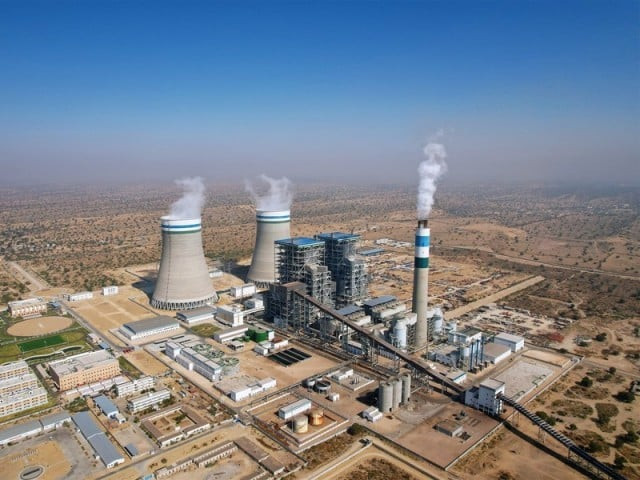
Action Plan formalises a “shared future” vision while CPEC-II shifts attention to inclusive industry and livelihoods
ISLAMABAD:
The world is undergoing rapid and multifaceted change, described by President Xi as a once-in-a-century transformation. State relationships are shifting. Friends are becoming foes, and foes are becoming friends.
Old hegemonic alliances, such as NATO, are under strain. New partnerships are emerging, including the Shanghai Cooperation Organisation (SCO). However, some relationships have resisted this pressure and remained stable. The China-Pakistan relationship is one such case.
In 2025, this relationship entered a new era with two major milestones: the launch of CPEC-II and the signing of the Action Plan to foster an even closer China-Pakistan community with a shared future in the new era. CPEC-II has been launched with a renewed focus and aims to foster sustainable development, shared prosperity, and a stable and peaceful Pakistan.
It has several distinctive features that make it future-oriented and transformative. While retaining elements of CPEC-I, the second phase places greater emphasis on inclusive industrial and socio-economic development. It is closely aligned with Pakistan’s Five Es: Employment, Education, Energy, Economy, and Environment.
CPEC-II is also designed to create synergies with five corridors envisioned by Pakistan: Growth, Livelihoods, Innovation, Green, and Open and Regional Connectivity. These corridors aim to realise the vision of a prosperous and peaceful Pakistan. They seek to accelerate growth by fast-tracking industrialisation, enhancing exports, and entering new and future industries.
At the same time, the framework focuses on creating decent livelihood opportunities and promoting future-ready skills. It emphasises equal opportunities and job creation, particularly for youth, through investments in education and health. Innovation and green growth are also central pillars.
Despite its broad scope, the primary focus of CPEC-II remains on people’s well-being. A closer review suggests that synergy creation will be easier, as the initiative is structured around these interconnected areas. Youth empowerment is a core priority under CPEC-II. The initiative aims to ensure youth participation in future technologies such as artificial intelligence, quantum computing, and fintech. Future-oriented skill development is a key area of cooperation. This focus is essential for preparing Pakistan’s workforce for the demands of the fourth industrial revolution.
Climate-smart and green agricultural development is another major area of collaboration. Both countries plan to work together to produce high-quality agricultural inputs, strengthen research and development, and share technical expertise. China has also committed to opening its food and agriculture market to Pakistani exporters. This presents a valuable opportunity, provided exporters meet China’s customs and food safety standards. In addition, the green transition and innovation-driven growth will receive special attention. Green industries, climate-smart agriculture, and technology-based sectors are expected to be prioritised. All efforts under CPEC-II aim to serve people by investing in human resources and creating decent livelihoods. In this regard, Pakistan can benefit from China’s people-centric governance model.
The second milestone, the signing of the Action Plan, further reinforces CPEC-II and related initiatives. A closer examination reveals two defining concepts: a community with a shared future and the new era. These visions guide China’s modernisation process and national rejuvenation. Under these frameworks, China is transitioning away from large-scale infrastructure-led growth, export dependence, and traditional industries. It is moving towards intelligent, AI-based industries, smart investment, domestic consumption-led growth, and green development. New energy sources, innovation-driven growth, and advanced technologies are central to this transition.
The Action Plan indicates that China wants Pakistan to be part of this journey. China seeks to share its development experience and extend access to emerging opportunities and markets. It also reflects China’s readiness to support Pakistan’s entry into the fourth industrial revolution with confidence and dignity. This commitment highlights the depth of the ironclad brotherhood.
Together, CPEC-II and the Action Plan offer Pakistan an opportunity to reverse its economic crisis, fast-track industrialisation, pursue green transition and improve people’s welfare. They can also help address Pakistan’s long-standing state-owned enterprise (SOEs) problems. However, realising these gains requires Pakistan to overcome several domestic challenges.
First, Pakistan needs to ensure a genuinely business-friendly environment. Currently, the business climate remains discouraging. Inefficiencies in electricity, gas supply, and licensing persist. Export and import procedures remain time-consuming. Weak human resource capacity in public institutions and rent-seeking behaviour further undermine investor confidence. Despite repeated claims, meaningful improvement remains limited. Special initiatives such as the Special Investment Facilitation Council were created to address these issues. However, they have not delivered the expected outcomes. Although SIFC is a powerful body with high-level representation, structural weaknesses and a shortage of professionals have limited its effectiveness.
To succeed, SIFC must be granted clear decision-making and implementation authority. Other institutions should be required to follow its directives, and professional expertise must be inducted.
Second, Pakistan needs to address political instability and terrorism. Both deter investment and create uncertainty. In recent years, foreign-funded groups have targeted Chinese investors and businesses. These attacks aim to disrupt investment and strain Pakistan-China relations. Ensuring political stability and providing foolproof security to Chinese nationals is critical.
Third, Pakistan can request China to jointly launch an SOEs-to-SOEs corridor. China has developed effective models for managing SOEs on merit and competitiveness. Such cooperation could help Pakistan reform and revive its own SOEs. Beyond these challenges, Pakistan should not allow any country to use the China-Pakistan relationship as a bargaining chip. In the past, the United States asked Pakistan to disengage from CPEC. As bilateral ties evolve, similar pressures may re-emerge. Pakistan must therefore draw clear lines on acceptable engagement. The China-Pakistan relationship is immune to circumstances and trustworthy.
By contrast, Pakistan’s relationship with the US has historically been shaky and time-bound. After achieving its objectives, the US has often disengaged, as seen after the Soviet withdrawal from Afghanistan and during the war on terror. Pakistan later faced sanctions and negative propaganda. Pakistan should not waste time balancing these two relationships. Decisions must be based on merit and historical experience. In conclusion, 2026 presents a significant opportunity to benefit from CPEC-II and the Action Plan. These initiatives can help revive the economy, modernise agriculture, lay the foundation for innovation-led growth, and kick-start the fourth industrial revolution.
The writer is a political economist and visiting research fellow at Hebei University, China
