


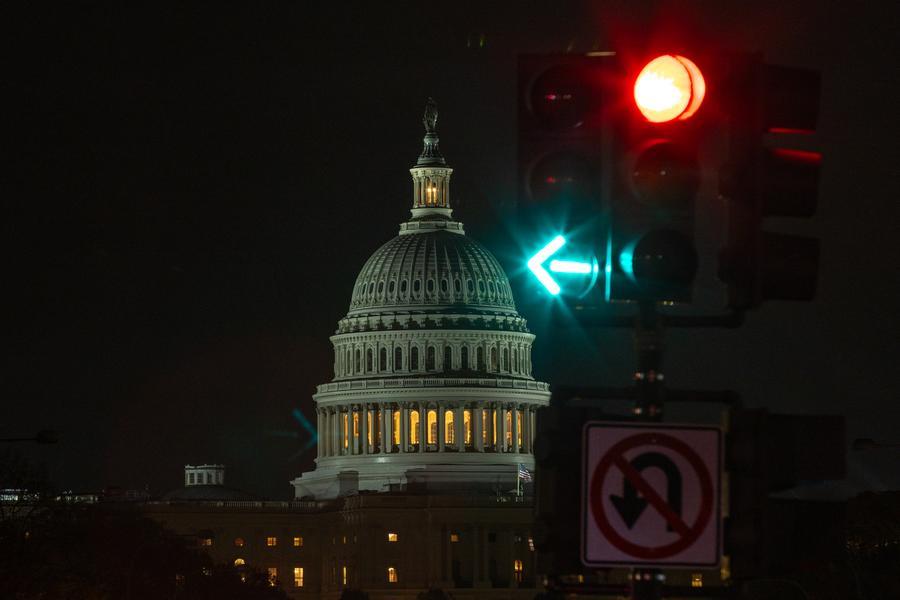
* A poll by the Pew Research Center in December found that only 17 percent of Americans trust the federal government to do the right thing “most of the time” or “just about always,” marking one of the lowest levels in nearly seven decades.
* The record-setting government shutdown was a direct result of the argy-bargy, with neither side willing to concede first, despite billions of dollars in economic losses and the welfare of the general public. Analysts said this revealed the major flaws in the country’s institutional resilience and political structure.
* A WSJ report said that the United States has two economies right now, and they are moving in different directions. For high earners and many older Americans, the economy looks robust. For many others, momentum has stalled or reversed.
NEW YORK, Jan. 1 (Xinhua) — The past year ended with an ugly drama for Americans: thousands of pages of documents from sex offender Jeffrey Epstein’s case were finally made public, yet many appeared as little more than fields of blacked-out text, entire pages obscured by heavy redactions.
During the unprecedented government shutdown from Oct. 1 to Nov. 12 last year, both parties remained entrenched, prioritizing partisan positions over the public welfare and disregarding the substantial economic damage incurred during the impasse.
These episodes are telling emblems of what has unfolded across America over the past year — a cascade of chaotic events and deepening partisan polarization spanning the economy, society, governance and foreign policy. Democrats and Republicans have traded blame at every turn, each side accusing the other of driving the nation into disarray. No wonder so many media outlets have reached for words like “wild” and “crazy” to capture the tenor of 2025.
RECKLESS POLICY DECISIONS
When the consumer price index (CPI) for November 2025 rose at a lower-than-expected annual rate of 2.7 percent, economists questioned its accuracy, as the report missed October figures due to a prolonged government shutdown and assumed essentially zero changes in key sectors like housing costs.
“Noise rather than signal is the major takeaway from the November CPI report,” said Joe Brusuelas, chief economist at RSM US LLP, in his article titled “Dude, that was one flawed CPI report.”
“When looking at the November inflation data, one should proceed with caution around making policy and investment decisions,” he warned.
However, U.S. President Donald Trump touted the CPI figure and claimed that there was “practically no inflation.”
Externally, the White House launched a trade war against the rest of the world, including its closest allies, serving as another testament to many analysts’ belief that the U.S. policies were rolled out without deliberation and necessary research. When pressured by domestic price hikes or hit a wall in negotiations with other countries, tariffs would be lowered or canceled on specific industries or products.
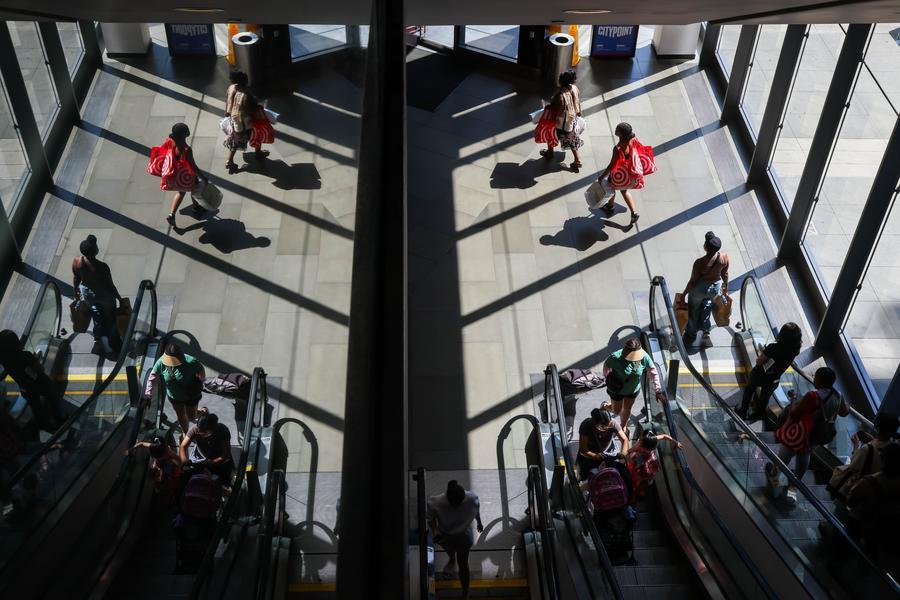
The legal bases for levying the tariffs remain vague. According to media reports, the U.S. Supreme Court is questioning its legitimacy and is expected to announce its ruling in the coming weeks.
At a time when new energies are critical to alleviate the impact of global climate change, Trump branded wind and solar power as “the scam of the century” and canceled most tax exemptions and subsidies on new energies, leading to a stagnation of the development of green and new energy vehicles.
Analysts pointed out that lobbying by capital behind fossil fuels has played a significant role in shaping the political ecosystem, which framed renewables as unreliable and their subsidies as market distortions.
While disregarding new energies, Washington has strengthened its military operations in the Caribbean on the pretext of fighting drug-trafficking.
When the American navy hijacked an oil tanker which is not on the U.S. sanction list off the waters of Venezuela, it drew widespread criticism, notably from many Americans who argued the move would harm the country’s credibility.
Many of the U.S. top decisions are full of personal features, lacking the solemnity expected of the world’s most powerful country.
“The Price of Unpredictability,” an article published by Foreign Affairs, said the Trump administration has abandoned all efforts to make Washington reliable or consistent. Washington “could find itself ever more isolated — and without any clear path to reestablishing its reputation.”
A poll by the Pew Research Center in December 2025 found that only 17 percent of Americans trust the federal government to do the right thing “most of the time” or “just about always,” marking one of the lowest levels in nearly seven decades.
DEEPENING POLITICAL POLARIZATION
On the release of the heavily redacted Epstein files, many Democrats criticized the Republicans for the partisan-biased publication of information.
Experts criticized the release for failing to comply with the law passed by Congress last month, while ordinary people expressed their anger at the incompleteness of information.
The Trump administration has removed at least two dozen ambassadors appointed by former Democratic President Joe Biden, U.S. media reported, citing a State Department official familiar with the matter. With a majority in Congress, the Republican government revoked many of the Biden administration’s policies and advanced its own agenda.
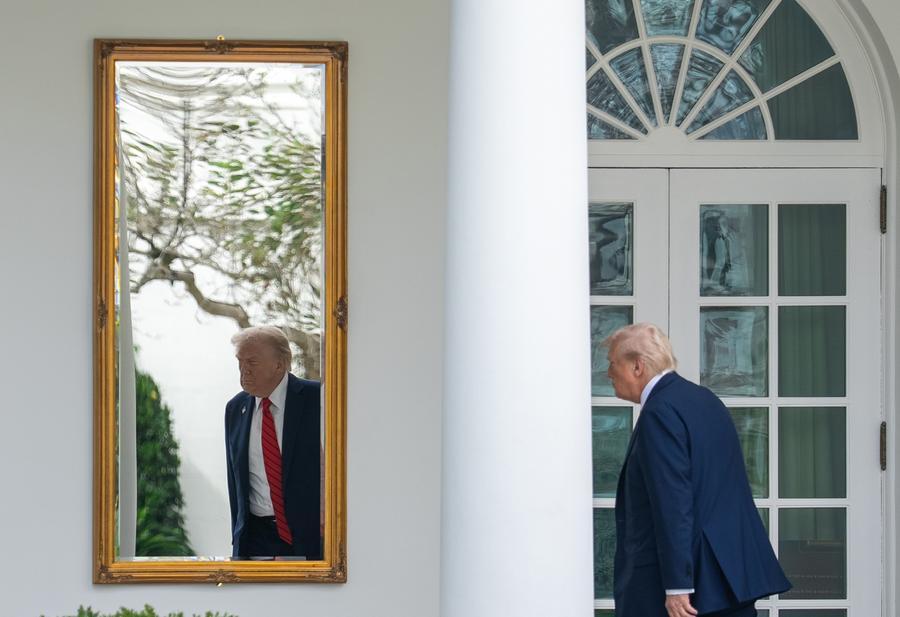
These episodes exemplify the deepening political polarization in the United States during 2025, as Republicans and Democrats clashed repeatedly over economic policy, governance norms, and the nation’s strategic priorities. Immigration, healthcare and taxation remain the most fiercely contested policy domains between Republicans and Democrats, while college campuses have increasingly become arenas for partisan ideological outreach and mobilization.
The record-setting government shutdown was a direct result of the argy-bargy, with neither side willing to concede first, despite billions of dollars in economic losses and the welfare of the general public. Analysts said this revealed the major flaws in the country’s institutional resilience and political structure.
With the mid-term election drawing near, a further escalation in political polarization appears inevitable.
WIDENING SOCIAL DISPARITY
The U.S. economy maintained moderate growth in 2025, with a more bullish stock market. The benchmark S&P 500 rallied 16 percent in 2025, while the Nasdaq locked in a 20 percent gain. However, just as the economy relied heavily on investment in AI, the market movement was also fueled by high-tech giants.
Yet this surge in wealth has largely bypassed the general public. According to Federal Reserve data, the top 1 percent of Americans hold half of all corporate equities and mutual fund shares, while the top 10 percent own more than 87 percent of such. In stark contrast, the bottom half of the population holds just over 1 percent.
A recent Oxfam report revealed that, over the past year alone, the combined wealth of the 10 richest U.S. billionaires surged by 698 billion dollars, while the top 0.1 percent of Americans now hold a record-high 12.6 percent of the nation’s total wealth.
“The data confirms what people across our nation already know instinctively: the new American oligarchy is here. Billionaires and mega-corporations are booming while working families struggle to afford housing, healthcare and groceries,” said Abby Maxman, president and CEO of Oxfam America.
“Now, the Trump administration and Republicans in Congress risk turbocharging that inequality as they wage a relentless attack on working people and bargain with livelihoods during the government shutdown,” he added.

A WSJ report said that the United States has two economies right now, and they are moving in different directions. For high earners and many older Americans, the economy looks robust. For many others, momentum has stalled or reversed.
“I think the U.S. population is split into these two types — the lucky ones, the asset owners, and the unlucky ones,” Camelia Kuhnen, a finance professor at the University of North Carolina at Chapel Hill, was quoted by the journal as saying.
Media reports often highlight a disconnect between the public’s feeling of price hikes and the optimistic official economic data. A CBS report said more than 40 percent of New York City families cannot afford weekly food costs, and one in three adults does not have enough money for food.
In his address to the nation on Dec. 17, 2025, Trump said, “Inflation has stopped, wages are up, prices are down.” Earlier, he rated the economic performance under his administration as “A+++++.”
However, according to media reports, few people buy that rating. “People are not feeling positive about the economy,” said CBS News business analyst Jill Schlesinger, who expounded on how Americans are feeling about affordability.
Recent public polls show that living cost affordability and economic policies are the most dissatisfied topics.■
