


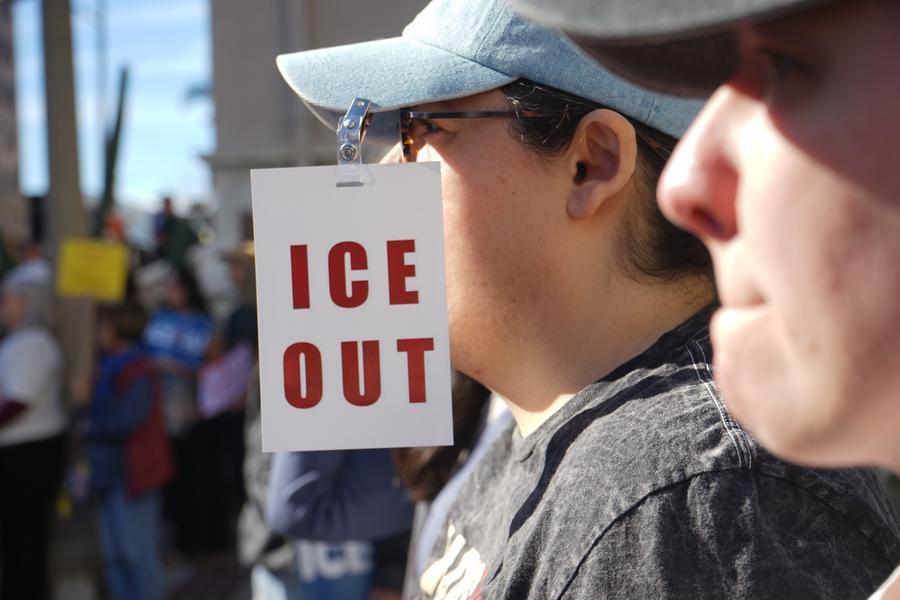
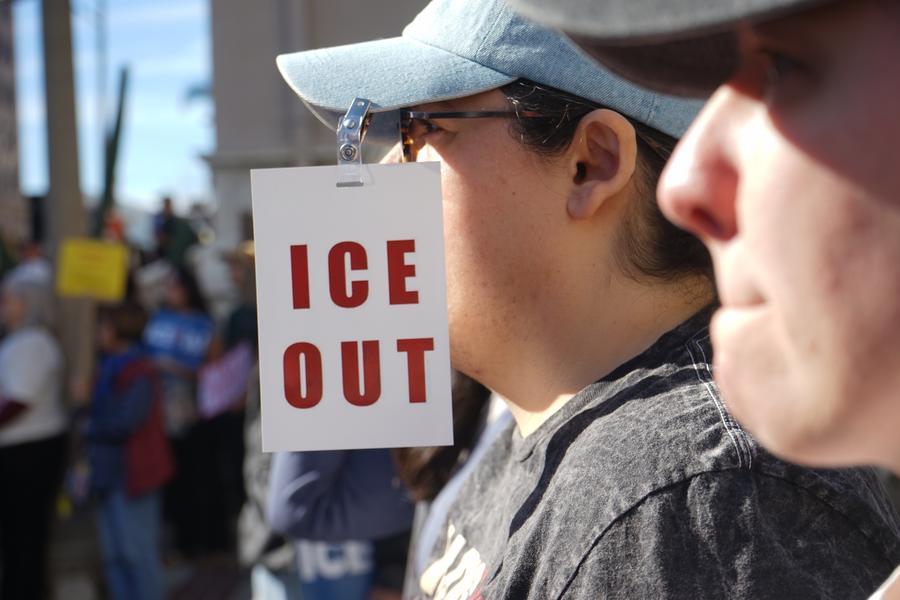
The fatal shooting of Renee Nicole Good by an ICE agent in Minneapolis, United States, has sparked nationwide protests and intensified clashes between the federal government and local authorities, raising fears of further unrest and highlighting deep partisan and law enforcement tensions.
WASHINGTON, Jan. 18 (Xinhua) — The fatal shooting of a U.S. woman by an Immigration and Customs Enforcement (ICE) agent in Minneapolis has continued to stoke tensions locally and nationwide, as state and federal officials sharply clash over how the incident unfolded and should be handled.
Protests showed signs of escalation following another ICE agent shot a Venezuelan immigrant in the leg in the same area exactly a week later. Mayor Jacob Frey recently said that the situation in the city is “not sustainable.”
The incident has become a battleground of competing narratives, with partisan leaders using it to intensify political conflict. Observers believe that tensions between federal and local governments could deepen, and confrontations between the public and law enforcement may further escalate.
ONE INCIDENT, TWO NARRATIVES
On Jan. 7 in Minneapolis, 37-year-old U.S. citizen Renee Nicole Good was shot and killed by an ICE agent during a federal enforcement operation, sparking widespread controversy nationwide.
The shooting has generated markedly divergent accounts of what happened, amplified by partisan conflict and ideological division.
Homeland Security Secretary Kristi Noem, President Donald Trump and Vice President JD Vance defended the ICE agent, claiming the woman attempted to run over officers in what they called “an act of domestic terrorism.”
“The woman driving the car was very disorderly, obstructing and resisting, who then violently, willfully, and viciously ran over the ICE Officer, who seems to have shot her in self-defense,” Trump wrote on Truth Social.
Frey, meanwhile, argued that video footage indicates that Good did not pose a threat and that the agent acted recklessly. “This was a federal agent recklessly using power that resulted in somebody dying,” said the mayor.
The Trump administration recently announced it is sending 2,000 immigration agents to the Minneapolis area amid allegations of welfare fraud involving immigrants in Minnesota. The number of newly dispatched ICE and Border Patrol agents has since increased to nearly 3,000.
Frey and Minnesota Governor Tim Walz have demanded that ICE leave the city and state immediately, arguing that the presence of ICE is causing chaos.
U.S. media reported on Friday that the Justice Department is investigating Minnesota officials, including Walz and Frey, for allegedly impeding federal law enforcement operations in the state, a further escalation in the administration’s clash with Democratic leaders.
“Weaponizing the justice system and threatening political opponents is a dangerous, authoritarian tactic. The only person not being investigated for the shooting of Renee Good is the federal agent who shot her,” Waltz said in a statement.
Amid the dispute, the FBI has taken full control of the case, limiting Minnesota authorities’ access to evidence — a move Walz criticized as undermining transparency and impartiality, and that “people in positions of power have already passed judgment.”
Meanwhile, the Minnesota National Guard has been mobilized as tensions remain high. In a post on X, the Minnesota Department of Public Safety said that the Minnesota National Guard had been mobilized and was staging to support local law enforcement and emergency management agencies at the direction of Governor Walz.
TENSIONS SPIKE, FEARS MOUNT
Exactly one week after the fatal shooting, debates over whether the situation reflects justified enforcement or dangerous escalation have continued to intensify.
With rhetoric heating up on both sides, observers say the clash between the Republican-led federal government and Democratic-led local authorities could deepen, and confrontations between the public and federal agents could escalate further, potentially leading to additional chaos.
Protests erupted in the area following Good’s death. On the morning of Jan. 8, a group of demonstrators clashed with federal law enforcement outside a federal building in the suburbs of Minneapolis. Fully armed federal officers used tear gas to drive protesters across the street, and some demonstrators were detained on the snow-covered ground.
On the evening of Jan. 9, more than 1,000 protesters gathered in downtown Minneapolis, resulting in at least 30 arrests.
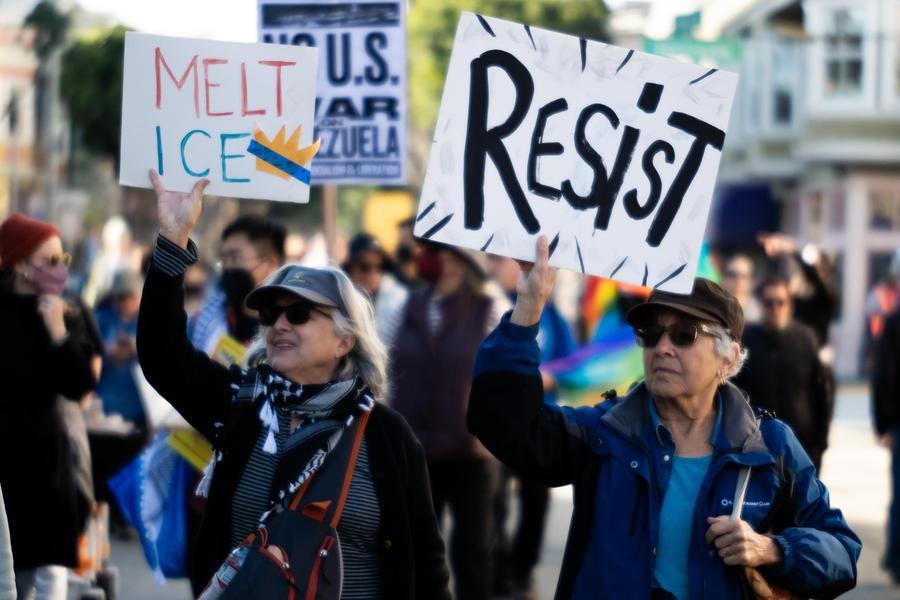
On Jan. 10, despite freezing temperatures and howling winds, tens of thousands marched in Minneapolis to express their outrage over the ICE agent’s fatal shooting. Nationwide protests flared in major cities across the country, including New York, Washington, D.C., Boston, Philadelphia, Chicago and Seattle, with demonstrators calling for changes to federal immigration enforcement and an end to ICE operations.
“The graphic video of the shooting has galvanized protesters across America who feel it is a gross injustice and want an independent investigation. The ICE agents seem less well-trained than police officers and don’t have the same ability to de-escalate personal confrontations,” Brookings Institution Senior Fellow Darrell West told Xinhua, adding that “many worry that the same thing could happen elsewhere.”
Greg Cusack, a former member of the Iowa House of Representatives, told Xinhua that “this is the predictable outcome of the militarization of police forces, the hiring of masked thugs armed to the teeth, and the ugly branding of anyone who disagrees with this administration as ‘the enemy.'”
Large crowds have gathered in response to the second shooting, with some demonstrators clashing with federal agents — resulting in local authorities declaring an “unlawful assembly.”
Trump has even threatened to invoke the Insurrection Act, an 1807 federal law that gives the president authority to deploy the U.S. military domestically under certain extreme circumstances.
Amid the unrest, a federal judge in Minnesota ordered agents not to retaliate against people “engaging in peaceful and unobstructive protest activity” and not to use pepper spray or other “crowd dispersal tools.” The judge also said agents could not stop or detain protesters in vehicles who were not “forcibly obstructing or interfering with” them.
Christopher Galdieri, a political science professor at Saint Anselm College in New Hampshire, told Xinhua that he absolutely expects such incidents to happen again in the future.
“ICE, DHS (the Department of Homeland Security), and the White House have shown no indications that they are rethinking their approach to these deployments, and probably see the chaos and protests as beneficial to them. I think they are wrong to think this, but we’ll just have to see what happens,” Galdieri said.■
