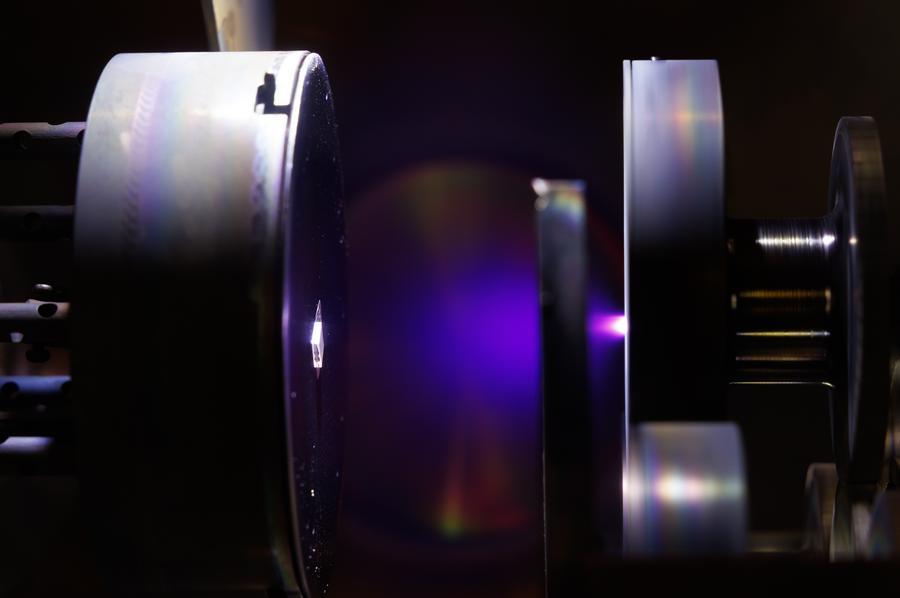
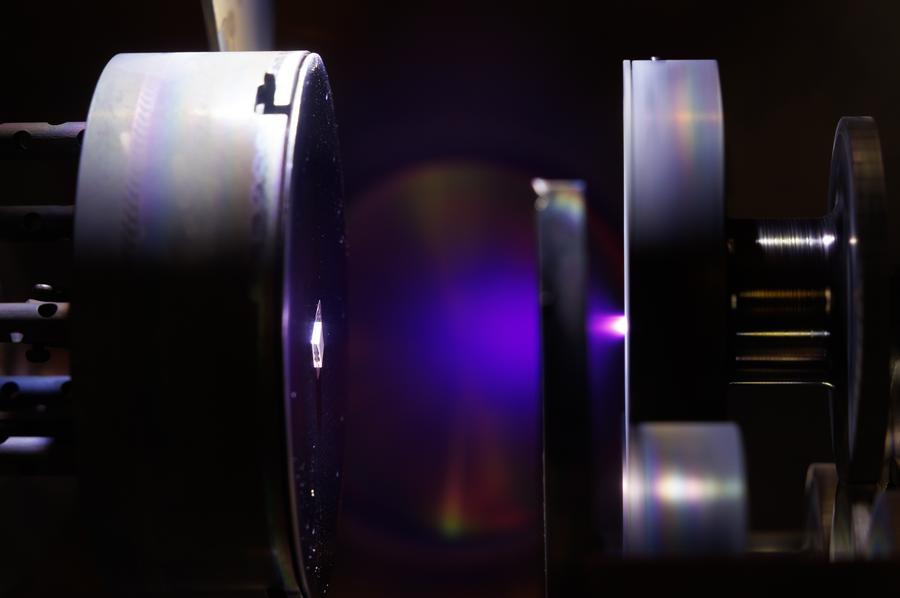
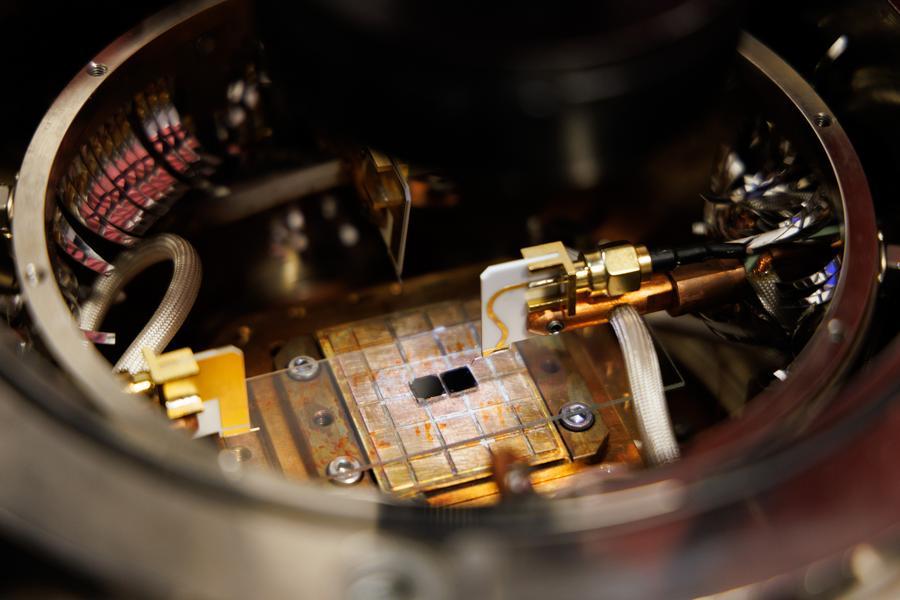
This photo taken on Jan. 21, 2026 shows a sample of ferroelectric thin film in experiment at a laboratory of the Institute of Physics at the Chinese Academy of Sciences, in Beijing, capital of China. (Xinhua/Jin Liwang)
BEIJING, Jan. 23 (Xinhua) — Chinese researchers recently made a breakthrough in ferroelectric materials that promises to dramatically increase information storage density.
The research team from the Institute of Physics at the Chinese Academy of Sciences, successfully identified one-dimensional charged domain walls within a fluorite-structured ferroelectric material.
These walls are tiny, with both thickness and width measuring just a few hundred-thousandths of the diameter of a human hair. This discovery, notably, provides a scientific basis for developing next-generation ultra-high-density devices.
Their findings were on Friday published in the journal Science.
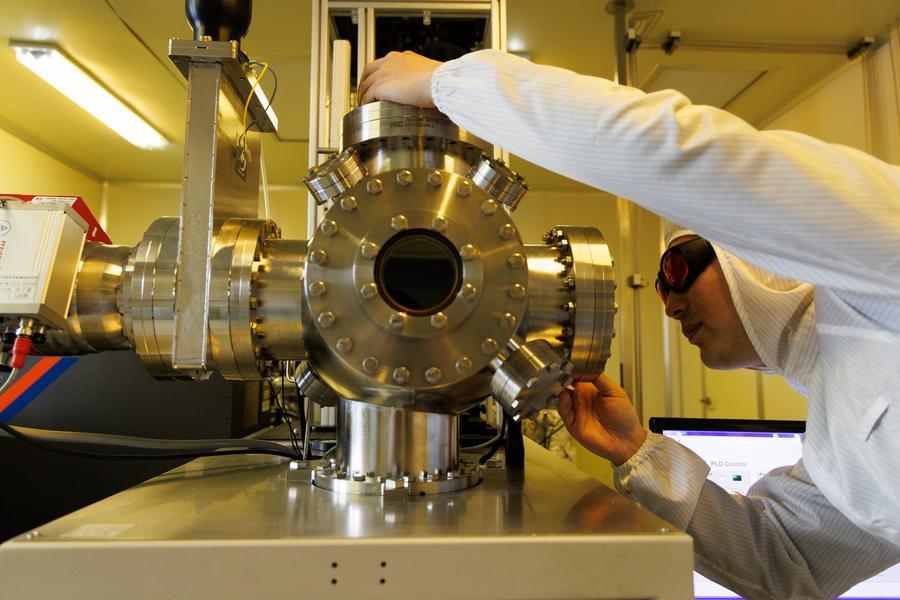
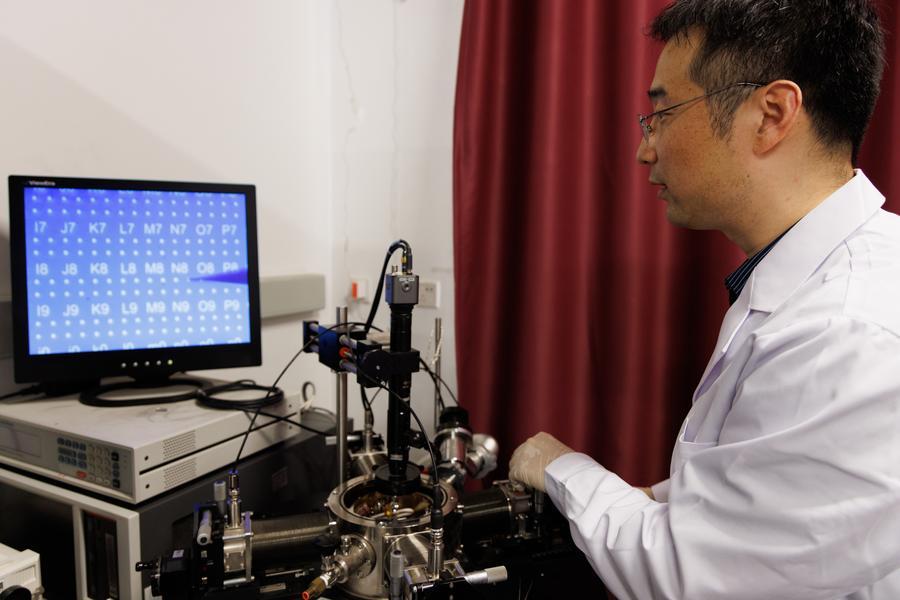
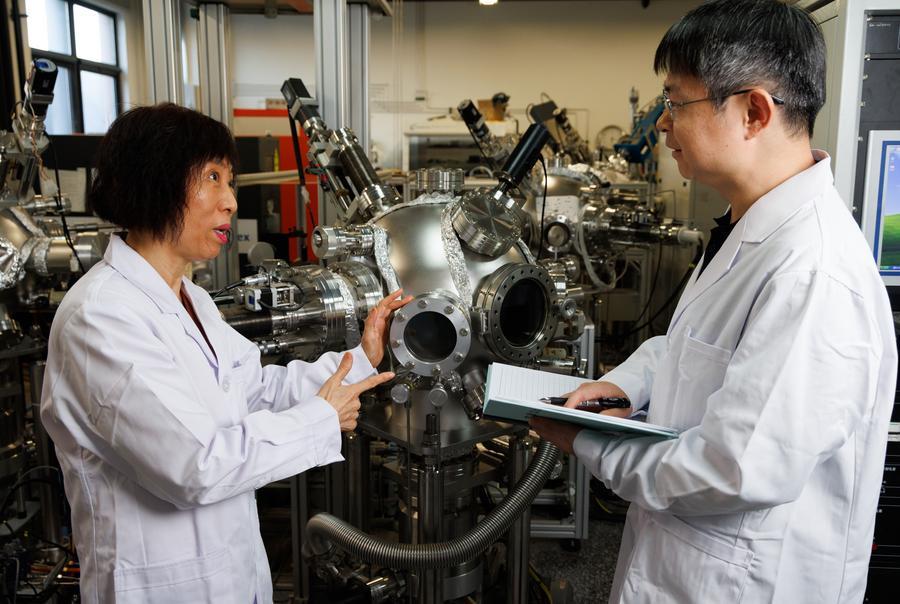
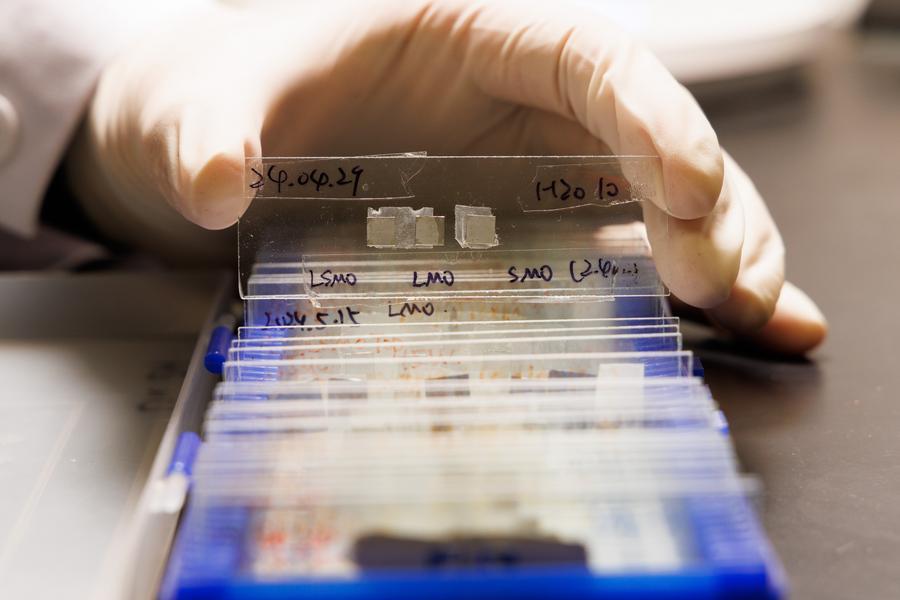
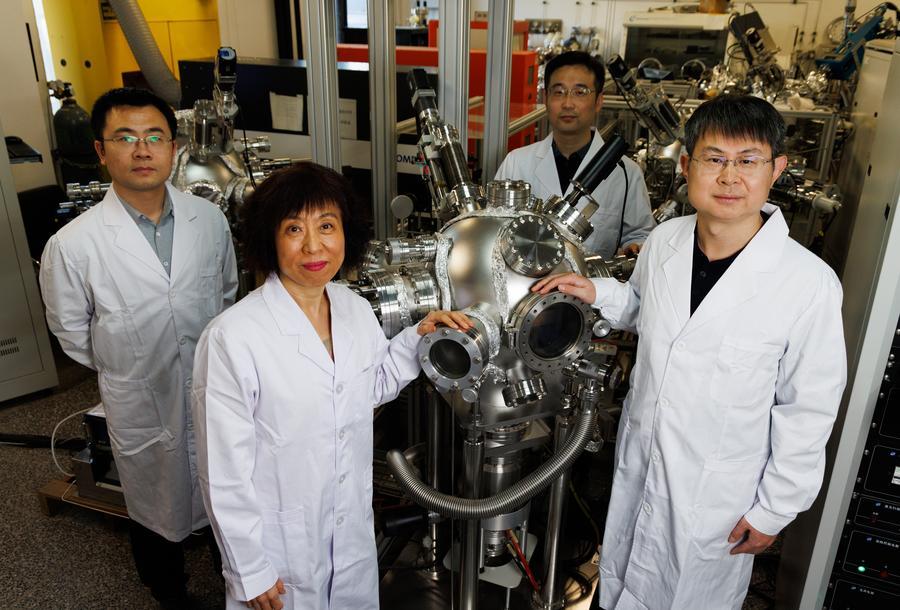
Postdoctoral researcher Zhong Hai conducts an experiment on ferroelectric thin film deposition at a laboratory of the Institute of Physics at the Chinese Academy of Sciences, in Beijing, capital of China, Jan. 21, 2026. (Xinhua/Jin Liwang)Postdoctoral researcher Zhong Hai tests ferroelectric performance at a laboratory of the Institute of Physics at the Chinese Academy of Sciences, in Beijing, capital of China, Jan. 21, 2026. (Xinhua/Jin Liwang)This photo taken on Jan. 21, 2026 shows a sample of ferroelectric capacitor waiting to be tested at a laboratory of the Institute of Physics at the Chinese Academy of Sciences, in Beijing, capital of China. (Xinhua/Jin Liwang)Researchers Jin Kuijuan (L) and Ge Chen discuss the experiment plan at a laboratory of the Institute of Physics at the Chinese Academy of Sciences, in Beijing, capital of China, Jan. 21, 2026. (Xinhua/Jin Liwang)This photo taken on Jan. 21, 2026 shows a sample of ferroelectric capacitor at a laboratory of the Institute of Physics at the Chinese Academy of Sciences, in Beijing, capital of China. (Xinhua/Jin Liwang)Researchers Zhang Qinghua, Jin Kuijuan, Zhong Hai and Ge Chen (from left to right), who have successfully identified one-dimensional charged domain walls within a fluorite-structured ferroelectric material, pose for a group photo at a laboratory of the Institute of Physics at the Chinese Academy of Sciences in Beijing, capital of China, Jan. 21, 2026. (Xinhua/Jin Liwang)■