


Istanbul has over 160,000 street cats, regularly fed and fussed over by the city’s 16 million residents
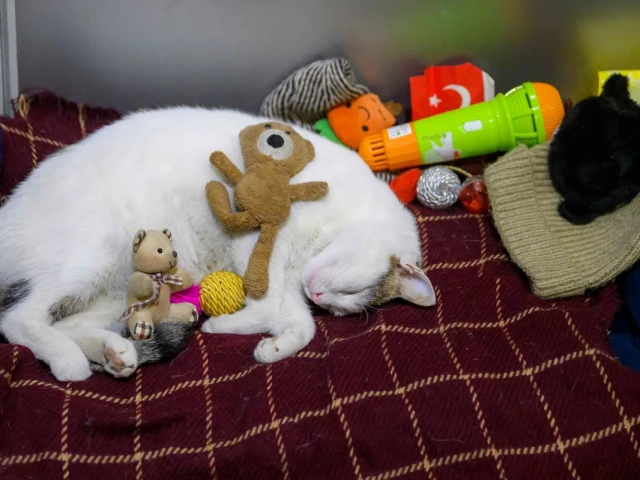
Kanyon, a stray cat, sleeps in his basket at the entrance of an Istanbul shopping mall, in Istanbul on January 23, 2026.PHOTO: AFP
Kanyon is getting fat: since someone stole his basket, this white cat with grey markings who lives at an Istanbul shopping centre has been showered with snacks, love and affection.
News of his plight brought out countless well-wishers, who have handed him endless supplies of food, toys, a comfortable cat house — and his very own Instagram page run by a fan.
He’s not alone: according to City Hall, Istanbul has more than 160,000 cats living on its streets who are regularly fed and fussed over by the city’s 16 million residents.
These street cats are looked after with an almost religious devotion.
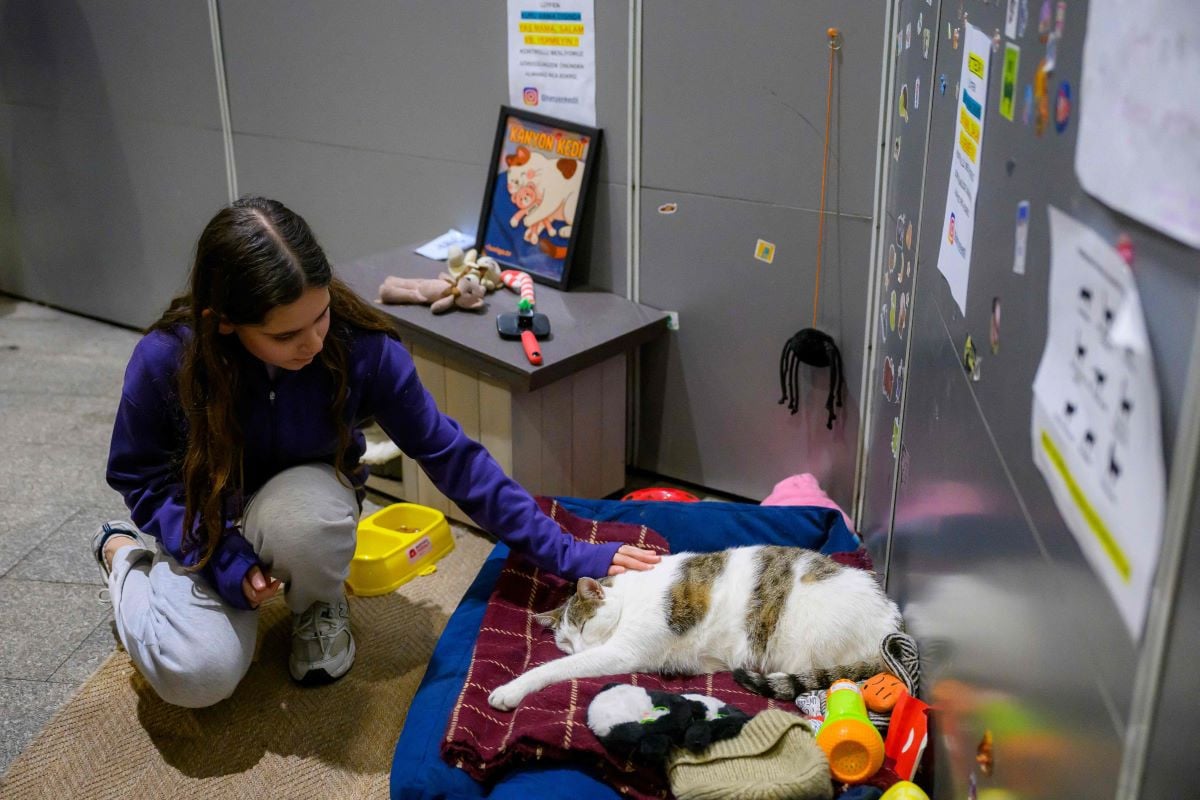
Kanyon, a stray cat that lives at the entrance of an Istanbul shopping mall, is stroked by a young girl as he lays in his basket, in Istanbul, on January 23, 2026. Since someone stole his basket, Kanyon, who lives at an Istanbul shopping centre, has been showered with snacks, love and affection.PHOTO: AFP
Kanyon, who had his basket stolen, rests among the many gifts given to him by admirers.
Whether on the Asian or European side of Istanbul — or the ferries connecting them — cats can be seen everywhere, snoozing on restaurant chairs, wandering through supermarkets or curled up in shop windows.
And they are rarely, if ever, disturbed.
“Istanbulites love animals. Here, cats can walk into shops and curl up on the most expensive of fabrics. That’s why they call it ‘the city of cats’,” explains Gaye Koselerden, 57, looking at Kanyon’s toy-filled corner which looks like a child’s bedroom.
From pre-Ottoman times
Like Kanyon, many strays have turned into much-loved neighbourhood mascots.
In Kadikoy, locals set up a bronze statue in 2016 to immortalise Tombili (Turkish for chubby), a pot-bellied feline whose characteristic pose — lounging on benches with one paw draped over the edge — spawned countless internet memes.
When Gli, the tabby mascot of Istanbul’s sixth-century Hagia Sofia basilica-turned-mosque, died, an obituary in the Turkish press recalled how she was stroked by United States president Barack Obama when he visited in 2009.
At the neighbouring Topkapi Palace, for years the opulent residence of the Ottoman sultans, they have just restored a centuries-old cat flap.
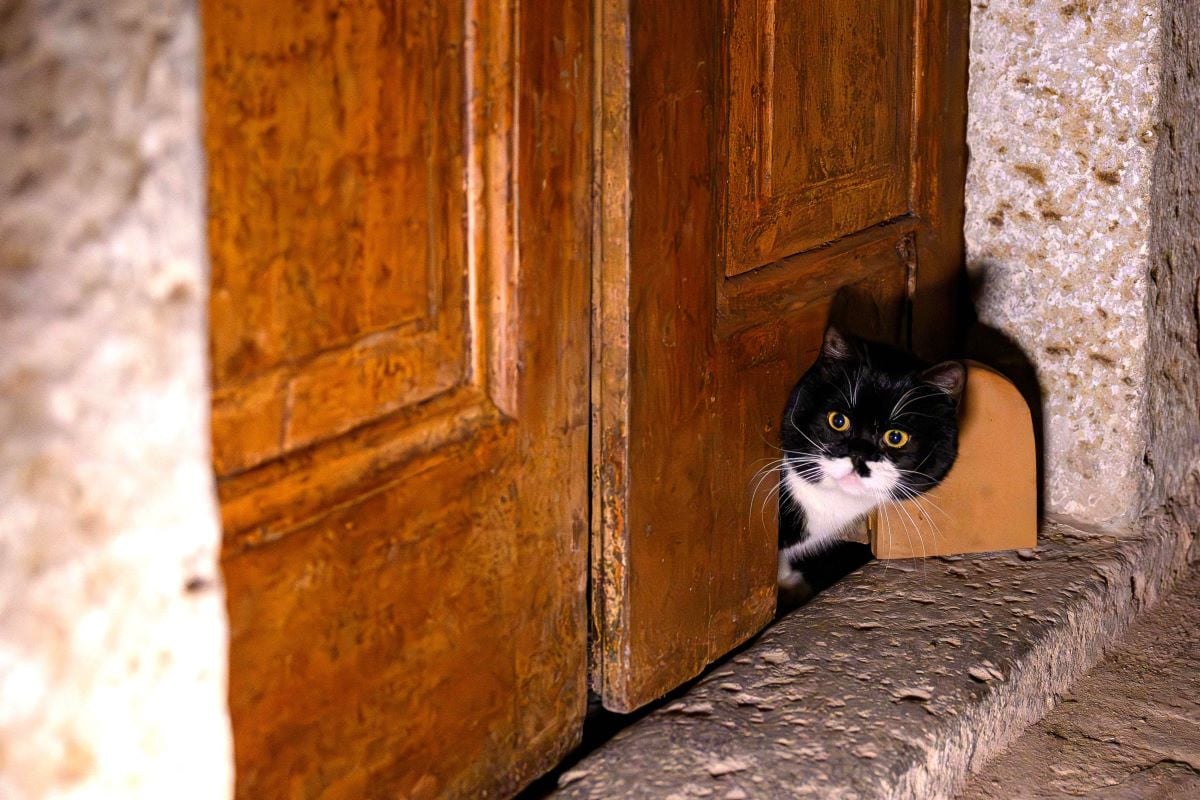
A cat passes through a cat flap on the door at the The Ottoman Topkapi Palace in Istanbul on January 20, 2026. At Topkapi Palace, for years the opulent residence of the Ottoman sultans, a centuries-old cat flap has just been restored.PHOTO: AFP
“Cats have always been here, no doubt because they are clean and close to humans,” the site’s director Ilhan Kocaman told AFP.
The presence of so many cats in the city has often been explained with reference to “the deep affection the Prophet Muhammad (Peace Be Upon Him) had for them”, explained Altan Armutak, an expert at Istanbul University’s veterinary history department.
When Ottomans seized Constantinople in 1453, “they found cats waiting to be fed outside fish stalls and butchers’ shops”, he said.
“Giving the cats food was seen as an offering in the name of God.”
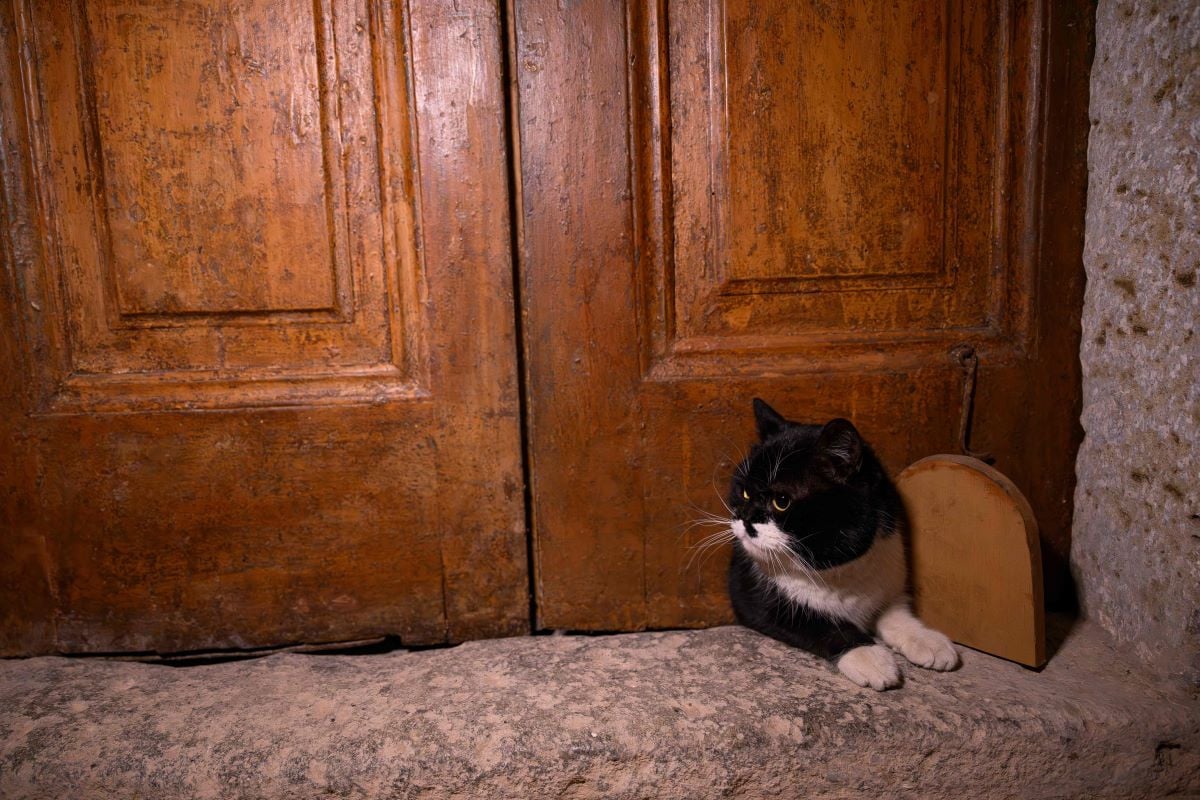
A cat passes through a cat flap on the door at the The Ottoman Topkapi Palace in Istanbul on January 20, 2026. At Topkapi Palace, for years the opulent residence of the Ottoman sultans, a centuries-old cat flap has just been restored.PHOTO: AFP
Living side by side
Six centuries later, cats have retained their historic presence in Istanbul, although these days City Hall is trying to manage their numbers, sterilising more than 43,000 cats last year, 12 times more than in 2015.
And the authorities are concerned about residents’ often over-generous offerings of food, which they fear is encouraging the spread of rodents.
“Normally, cats chase rats. But in Istanbul, you can see the rats eating the food alongside the cats. We must tackle this,” the region’s governor, Davut Gul, recently warned.
Although several such clips did the rounds on social media, they seem to have had a limited impact.
“I’ve lived here for four months and I’ve never seen a single rat,” said Fatime Ozarslan, a 22-year-old student originally from Germany as she put out a sachet of wet food in Macka Park, which is home to at least 100 cats.
“In Germany, we have many rats, but here, with so many cats, they must be afraid,” she smiled.
Without its cats, Istanbul just would not be the same, she said. “Here people and cats live side by side, as equals.”
