


PUBLISHED
February 01, 2026
KARACHI:
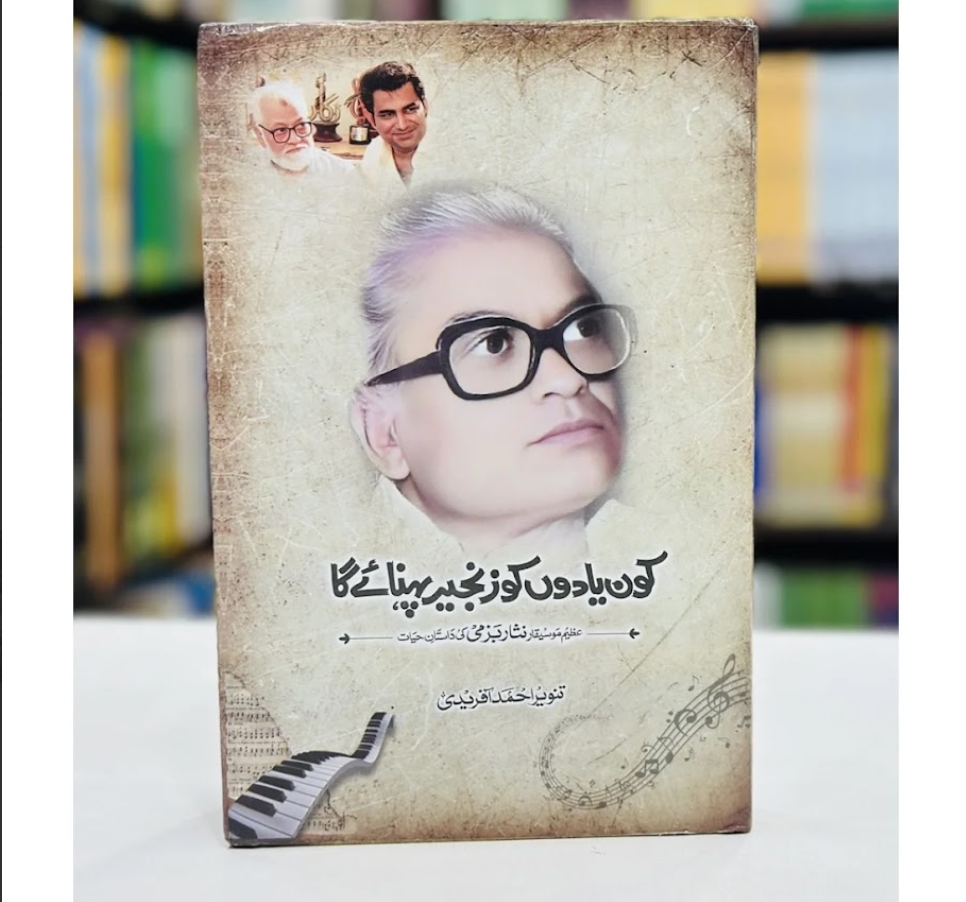
Nisar Bazmi wasn’t just an ordinary music director—he was an institution. His name remains synonymous with quality film songs produced from the 1960s through the 1990s. His renowned student, Tanvir Afridi, pays a heartfelt tribute to his Ustad in the form of a biography, Kon Yaadon Ko Zanjeer Pehnaye Ga, a project that took many years to complete. The result is not only a valuable addition to Pakistan’s film literature but also an illuminating account of the struggles and successes that shaped Nisar Bazmi’s remarkable career.
Laced with coloured posters from films whose soundtracks were composed by Bazmi, the book functions both as a guide to yesteryear filmi music and as a tribute to a composer who began his career in Bombay (now Mumbai), relocated to Lahore, and spent his final years in Karachi. What made him a legend in his lifetime was the caliber of his work, which raised the standard of music in Pakistani cinema while also giving us enduring national songs and memorable ghazals.
Tanvir Afridi is an accomplished music composer in his own right, and putting his memories of his late Ustad into print is a fitting way to preserve his legacy. Whether you are unfamiliar with Nisar Bazmi or wish to know more about him, this book is worth seeking out. It chronicles a journey that began in India and concluded in Pakistan, enriching music lovers across the world.
The strengths
The book opens in a manner reminiscent of the classic films for which Nisar Bazmi composed songs and background scores, through a flashback. Writing from a place close to his heart, the author takes readers back in time in a largely chronological fashion. He speaks of his Ustad in simple, accessible language while giving due importance to the social and cultural issues of each era. Questions such as what drew Nisar Bazmi to music, where he stood during his years in India, why he came to Pakistan, and what prompted his extended stay in Pakistan, how he applied his Bollywood experience in Pakistan, and why he eventually relocated to Karachi are all addressed in these pages.
The depth of research undertaken by the author is impressive and deserving of praise, particularly given the limited documentation available on Pakistani films and their soundtracks. Afridi approached one of Nisar Bazmi’s protégés, Pyarelal (of Laxmikant–Pyarelal fame), for his perspective and also gathered testimonials from Ghulam Abbas and Naheed Akhtar, among the many singers whose voices Bazmi shaped. By nearly listing every song composed by his teacher and collecting posters from the films they appeared in, Afridi has honoured his mentor with diligence and devotion. Add to this a selection of memorable photographs and several never-before-seen images, and you have a book that does justice to both the man and his work.
For readers who may not know who Nisar Bazmi was or why he deserved a biography, these pages offer a comprehensive introduction. He was one of the finest music composers produced by Pakistan and differed from his contemporaries in several important ways, all of which the author lays out intelligently. Bazmi was far more than the composer of Andaleeb, Anjuman, and Umrao Jaan Ada, and the book conveys this effectively through the eyes of someone who spent considerable time with him.
The flaws
Having read and reviewed numerous autobiographies and biographies of actors, directors, singers, and music composers from both sides of the Wagah Border, I found one aspect of this book puzzling: the decision to give space to contemporaries without clear justification. Most readers who pick up a book on Nisar Bazmi are likely already familiar with Pakistani films and their music. Including songs by his contemporaries to illustrate the musical landscape of the time feels unnecessary.
Did this comparison elevate Nisar Bazmi’s stature in my eyes? Not at all. He was among the finest music directors of his era and remains so by any measure. As a reader, however, I found it mildly irritating to wade through pages of songs not by Nisar Bazmi. If I wanted to know what Sohail Rana, Robin Ghosh, M. Ashraf, Khalil Ahmed, or Kamal Ahmed were doing while Bazmi was composing his music, I would search for them online or seek out books about them—not look for their work here.
Given that Tanvir Afridi was Bazmi Sahab’s student, the book could have benefited from a sharper focus on the Ustad himself. A separate volume on Pakistani filmi music might have been a better place for broader comparisons. It often feels as though the author knows far more than he has committed to paper. Important episodes are omitted: why Nisar Bazmi took over Sohail Rana’s Aas Paas in the early 1980s, why he once interrupted another composer’s recording session, how his distinctive filmi touch elevated the Pak–China collaboration Rishtey Aur Raastay, and how he remained relevant through national songs and private ghazal albums. Readers curious about these moments will not find their answers here.
It would also have been fascinating to explore the stories behind some of Bazmi’s greatest compositions. What led him to create Pakistan’s first pop song, Hum Ko To Ishq Ne, with Ahmed Rushdi’s deliberate stutter? Why did he opt for minimal instrumentation in Aise Bhi Hai Meherbaan? What made him gamble on Ghulam Abbas and Asad Amanat Ali Khan as playback voices? Why did he make Naheed Akhtar sing Allah Hi Allah Kia Karo after it was sung by Tahira Syed? How did he react when Bollywood copied his tunes? These insights would have added depth and intimacy to an already valuable narrative.
Structurally, the placement of song lists at the end of each chapter—alongside songs by other composers—feels unconventional. Typically, such lists appear at the end of biographies. The book might also have benefited from chapter titles drawn from Bazmi’s iconic songs, such as Ho Tamanna Aur Kia, Chalo Acha Hua Tum Bhool Gaye, or Hum Chalay To Hamaray. Additionally, instead of multiple recollections at the beginning (some relevant, others less so), a single foreword followed by the author’s note might have lent the book a more international, streamlined feel—an approach that could still be adopted in a future edition with expanded testimonials.
The verdict
I consider myself fortunate to have met and interviewed Nisar Bazmi Sahab during his final years. The interview took place at his home between Asr and Maghrib prayers. My questions delayed his namaaz and clearly annoyed him. Yet in those fifteen minutes, he clarified many issues that had long intrigued me: his preference for Runa Laila over Madam Noor Jahan in two of his biggest films, his choice of Mujeeb Alam instead of Ahmed Rushdi in Shama Aur Parwana, his decision not to continue with Rushdi in the singer’s final days, and his reasons for stepping away from filmi music after Very Good Duniya Very Bad Loag. Were I to write another tribute to the maestro, these are the details I would want to share with a wider audience.
Tanvir Afridi, however, appears to have played it safe. He avoids such questions perhaps because this book focuses on Bazmi’s career rather than controversy, perhaps to avoid displeasing backers like EMI, or perhaps because such details no longer command the attention they once did. Within those boundaries, he has still done a commendable job of compiling this biography and paying tribute to his master. Now that the book is published, there remains scope to build upon it by speaking to actors, singers, directors, and producers who shared a room with Nisar Bazmi. That is how international biographies are shaped, and that is the level of respect a great maestro like Nisar Bazmi truly deserved.
All facts and information are the sole responsibility of the writer
Omair Alavi is a freelance contributor who writes about film, television, and popular culture
