


PUBLISHED
February 08, 2026
KARACHI:
The 2026 Grammy Awards were a representation of the culture of misalignment we observe in the zeitgeist today. Nothing went catastrophically wrong, no single moment collapsed the evening, and yet the ceremony never quite cohered as a soulful celebration of enduring music. Despite the prolonged red carpet event unfolding as a sequence of earnest statements and historic milestones, it seemed to be all about the optics. What persisted was a lingering sense of tonal mismatch and a general feeling of incongruity — a feeling that the Grammys no longer know how to hold together celebration, politics and spectacle in a way that makes cultural sense. This is only apt considering the fragmented world we live in.
The night was overtly political in a way that would once have been unthinkable for a mainstream awards show. Multiple artists used their acceptance speeches to condemn the actions of US Immigration and Customs Enforcement, speaking about deportation, displacement and the treatment of immigrants in blunt, often emotional terms. These statements were repeated often enough to feel like a theme of the evening. Yet they unfolded within a broadcast whose structure remained untouched by what was being said. The music swelled, the applause followed, the cameras cut away, and the programme moved on.
The awards’ biggest winner Bad Bunny brought this tension into sharp focus. His win for Album of the Year — for a Spanish-language record — was rightly described as historic. It marked a genuine shift in what the Grammys are willing to reward and acknowledge, and it reflected the scale of his global influence as an artist. When he took the stage, he opened his speech with a clear and direct denunciation of ICE and dedicated his award to immigrants who had been forced to leave their homes in search of opportunity. The moment was received with a standing ovation.
Billie Eilish echoed similar themes when she accepted Song of the Year. She spoke about immigration, about land, about state violence, using language that was deliberately confrontational. Parts of her speech were censored on broadcast. Olivia Dean, accepting Best New Artist, grounded the issue more personally, referring to her own family history and the courage required to leave home and start again. Together, these speeches formed a loose chorus — sincere, urgent, and clearly meaningful to the artists delivering them.
What made them feel strange was not their content but their placement. Political speech at award shows has become almost expected. World politics has seeped into La La Land as somewhat of a trend to jump on; artists must speak up against injustice, we demand. The showbiz platform allows artists to use their voice, but it does not allow their words to change anything substantially only to provide viral soundbytes.
That sense of surface progress without structural shift extended to the winners themselves. The Grammys have long struggled to appear both authoritative and current, and the 2026 winners reflected that balancing act. Names like Bad Bunny, SZA, Jelly Roll and Olivia Dean now sit at the centre of the industry rather than being outliers. There is also something amusing about these stage names, acronymic and non serious epithets that will make boomers scoff at the state of the industry and the quality of music it produces.
This is not a critique of the musicians, whose work and popularity are undeniable, but of the ceremony itself. Artists still feign ultimate reverence for The Grammys but the culture the music awards are trying to canonise is shaped by branding, irony and digital familiarity. The result is a ceremony that sounds slightly out of tune with the big names it is honouring.
Where the political speeches and symbolic wins produced one kind of dissonance, the night’s genuinely odd moments produced another. Cher, presenting an award, mistakenly announced the name of a singer who had been dead for years, Luther Vandeross. The error was corrected almost immediately, but the moment had audience raising eyebrows and later suppressing smirks. As it was a gaffe by an icon, who had just reminded evdryone she has been in the business for 60 effing years, it was treated like an embarrassing mistake made by a disoriented grandma.
Justin Bieber’s performance was more deliberately strange. Appearing on stage in boxer briefs, he delivered a set that left viewers unsure how to read it. Was it vulnerability? Provocation? An attempt to shed glamour
or reclaim attention? The show offered no framing, and so the image floated free of meaning.
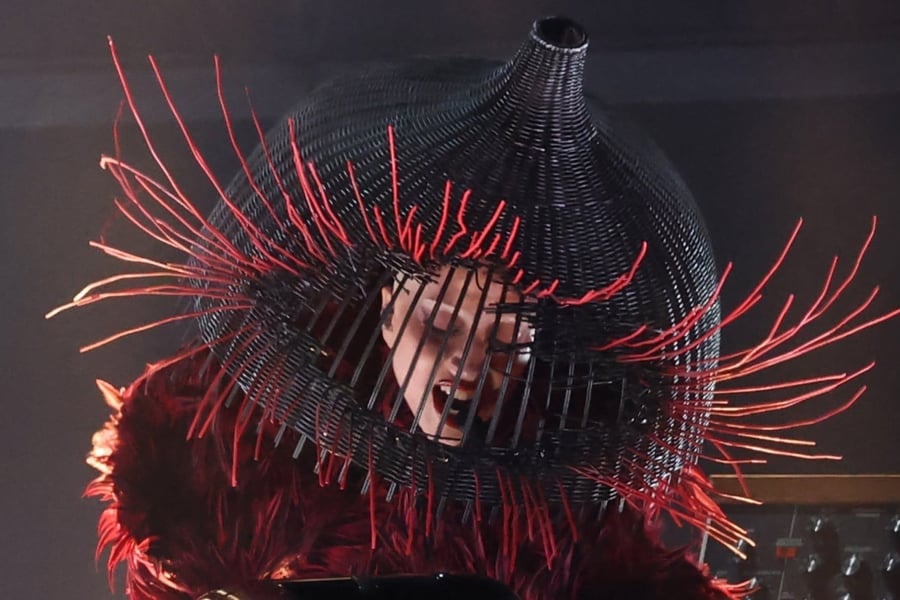
Lady Gaga’s appearance landed in a similar register. Known for theatrical excess, she arrived in a costume designed to astonish, but the effect was oddly muted. What once felt transgressive now felt obligatory, as though she had run out of extravagant ideas. The performance was not a failure, but it raised questions about what spectacle can still achieve when shock has become routine.
These moments stood out because they were not loaded with moral or political weight; they were simply strange. And in their strangeness, they exposed the ceremony’s broader difficulty in controlling tone. Earnest speeches about immigration sat beside confusing visual choices and unintentional gaffes, all presented with the same polished seriousness.
This confusion unfolded against a wider backdrop of cultural scepticism. Recent releases of Epstein-related files have renewed public scrutiny of the relationship between power, wealth and celebrity. While the Grammys are not implicated in those revelations, they exist within the same climate of distrust. Audiences are less willing than before to suspend disbelief, less inclined to treat celebrity platforms as benign or authoritative simply because they are glamorous. Hence, the cracks show a little more glaringly.
In that context, the Grammys’ moral gestures can feel thin. When artists speak with conviction, viewers listen — but they also listen with sharper questions about institutions, incentives and accountability. The gap between what is said on stage and how the industry functions off it has become harder to ignore.
The problem is not that music, politics and spectacle intersect, they always have. The problem is that the Grammys no longer provide a clear forum for making sense of that intersection. The ceremony wants to appear responsive but has to be restrained enough to avoid being disruptive.
Throughout the evening, the way the broadcast handled these moments was telling. When artists spoke about ICE, the camera reliably cut to sympathetic faces in the audience, applause swelled on cue, and then the show briskly reasserted control. Speeches ran just long enough to register but never long enough to unsettle. In Billie Eilish’s case, parts of her remarks were muted or edited for broadcast standards, a reminder that even impassioned statements are filtered through institutional limits.
The audience response followed a similar pattern. Inside the arena, the applause was loud and immediate, suggesting broad support or at least shared etiquette. Outside it, reaction fractured along predictable lines. Clips circulated online stripped of context, celebrated by some and condemned by others as inappropriate for an awards show. What was missing was any sense that the night itself acknowledged this split.
This impulse to absorb rather than engage has become central to how major awards function. The Grammys can host political speech without having to examine their own voting systems, industry hierarchies, or commercial dependencies. Dissent is allowed so long as it remains performative — emotionally resonant but structurally inconsequential.
The same pattern applies to the ceremony’s ongoing attempts at relevance. By elevating artists whose identities, sounds and audiences sit outside the industry’s traditional centre, the Grammys signal openness and evolution. Yet the surrounding framework remains unchanged, still rooted in legacy thinking and broadcast-era pageantry. This disconnect is why the evening can feel progressive and antiquated at the same time.
The Grammys continue to matter, but increasingly by inertia rather than conviction. In 2026, they did not offend or inspire so much as reveal their own uncertainty — a ceremony still standing visible, but slightly out of step with the culture it claims to represent.
