


MOHAMMAD ZAFAR BALOCH
|
PUBLISHED
February 22, 2026
Every morning in Quetta, before the sun clears the jagged peaks of the Sulaiman Mountains, a ritual of anxiety begins. It starts with the hollow, metallic clink of a dry tap. For thousands of households, this sound is the starting gun for a daily race for survival. With it echo the neighbourhoods with one question: “Will water come today?”
In the sprawling neighbourhoods of the provincial capital, families ration every drop, calculating whether a litre of water should be used for cooking a meal or washing a child’s face.
What was once a seasonal inconvenience has hardened into a defining feature of life in Balochistan. This quiet crisis is unfolding alongside a demographic explosion that threatens to overwhelm the province’s fragile ecology.
The arithmetic of crisis
According to Abdul Sattar Shahwani, Director PMCT, Balochistan’s population has surged to 14.89 million, up from 12.34 million in 2017. This represents an average annual growth rate of 3.2 percent.
The trajectory is staggering. In 1951, Balochistan was home to a mere 1.17 million people. By 1998, that number had reached 6.56 million. Today, it has more than doubled again. Official projections suggest that by 2030, the province will host 18.57 million people. By 2050, that figure could exceed 35 million.
“We are adding millions of people to a landscape that is physically losing its ability to support life,” says a local urban planning consultant. “If the population doubles while the water table halves, the math simply doesn’t work. We are heading toward an impossibility.”
Urban pressure
While Balochistan remains 69.04 percent rural, the pressure is increasingly concentrated in its thirsty cities. Quetta is the epicentre of this strain, housing 2.59 million people at a density of 753 persons per sq/km.
The city is not just growing naturally; it is absorbing people from across Balochistan. A lot of rural families abandon their ancestral homes for the promise of the city for better future prospects. But they find a city already gasping for breath. Districts like Kech (1.06 million), Khuzdar (997,214), and the port city of Gwadar (305,160) are seeing similar influxes.
The national imbalance is stark. The Population Council notes that while Pakistan’s population grew by 65 percent between 2000 and 2024, per capita availability plummeted by 40 percent. In arid Balochistan, where rainfall is a rare blessing rather than a seasonal certainty, this gap is a chasm.
The drying aquifers
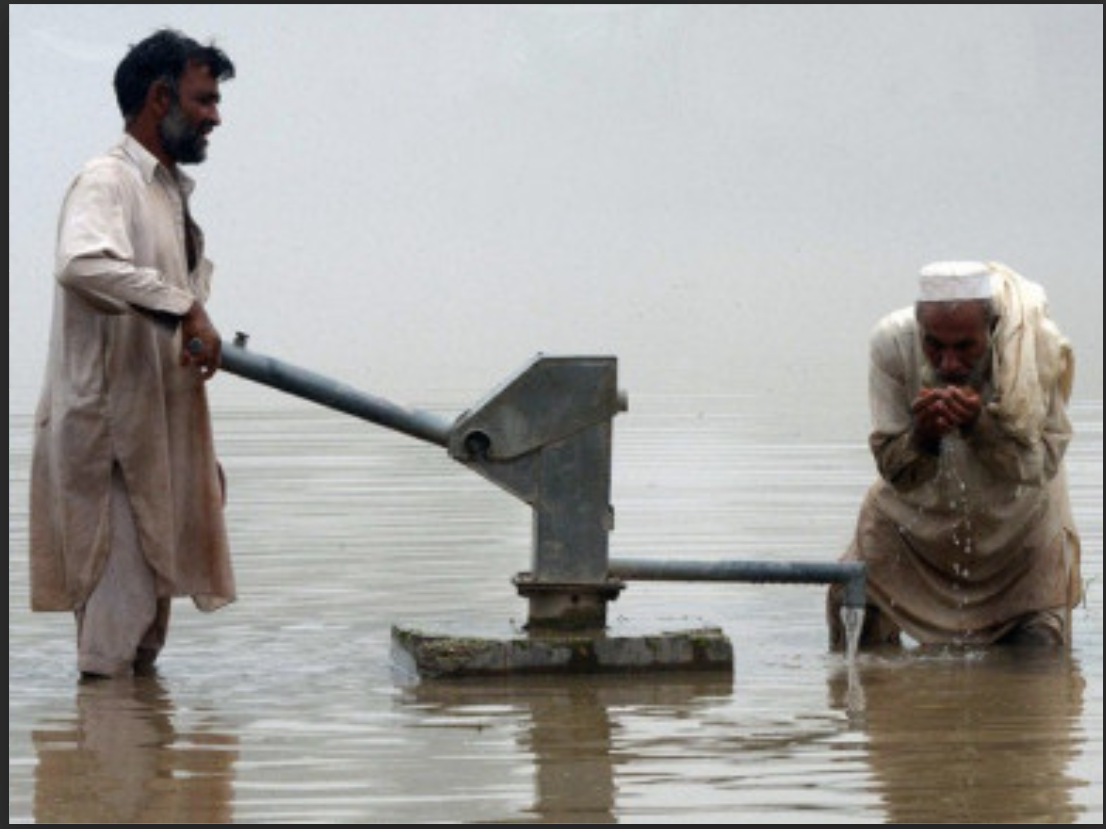
For decades, Balochistan has survived on its ‘savings account’: groundwater. But the account is now overdrawn. The World Bank reports that a staggering 95 percent of Balochistan’s farmland relies on groundwater extraction, mostly through thousands of unregulated tube wells. Only five percent of the province is connected to the Indus Basin’s canal system. This over-reliance has turned a lifeline into a liability.
Data from the International Union for Conservation of Nature (IUCN) paints a grim picture. In 2000, groundwater could be reached at 50 metres. By 2023, that depth has plunged to over 150 meters in many areas. In Quetta, the water table is dropping by two to five metres every single year.
“Ten years ago, our community well was enough for the whole street,” recalls Gul Bibi, a resident of Quetta’s outskirts. “We used to see the water clear and cold. Now, the pumps just bring up sand and noise. We wait days for a tanker, and if we don’t have the 3,000 rupees to pay, we simply go thirsty.”
A map of vulnerability
The crisis is not uniform; it is a patchwork of desperation. The UK-funded District Vulnerability Index for Pakistan (DVIP) identifies 17 districts in Balochistan as being on the absolute edge. From the desert reaches of Washuk and Chagai to the mountainous terrain of Zhob and Kalat, falling water tables and rising populations are converging to create a perfect storm of food insecurity and displacement.
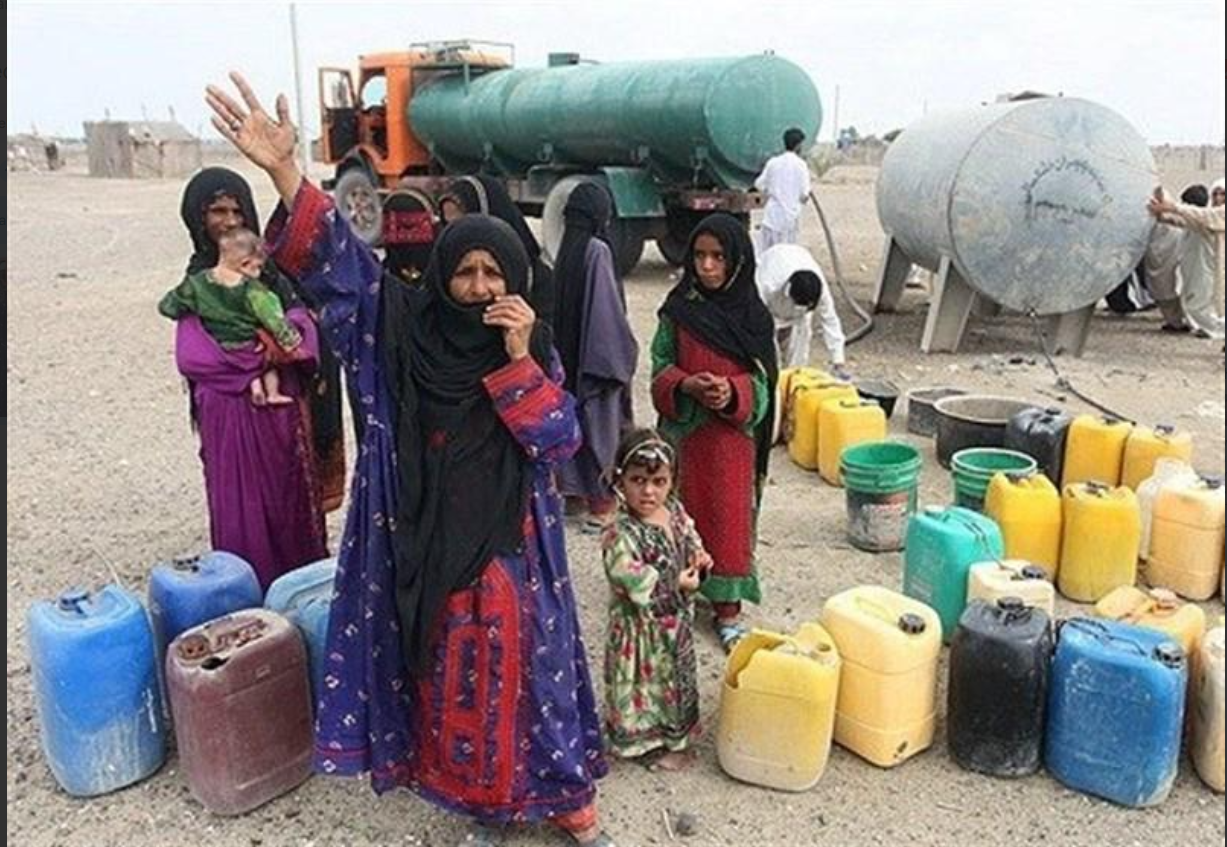
In Quetta, the deficit is quantified in millions of gallons. Tanveer Jamote, Deputy Secretary of the Public Health Engineering (PHE) Department, notes that the city’s daily demand is roughly 60 million gallons. The government supplies about 30 million.
The tanker economy and the Mangi dam
Where the government fails, the private market thrives—at a steep price. In Gwadar, a recent audit revealed a shocking 956.9 million rupees was spent in a single year just on water tankers. It is a staggering sum that critics say reflects a failure of governance.
In Quetta, a family might spend 20 to 30 percent of their monthly income just to buy enough water to stay hydrated. That is money stolen from their children’s education and health.
All hopes for a temporary relief have been pinned on the Mangi Dam. Designed to bring eight million gallons a day to Quetta, the project has become a symbol of bureaucratic lethargy. Originally meant to be finished in 2022, it is now nearly 42 percent over budget, with costs swelling to 19.8 billion rupees. Lawmakers at the Public Accounts Committee have expressed outrage over these delays. The new “guaranteed” completion date is March 31, 2026. For the thirsty residents of Quetta, two years feels like an eternity.
The situation stands in direct defiance of UN Sustainable Development Goal 6, which promises water and sanitation for all. In Balochistan, that goal isn’t just distant; it is receding.
Learning from what already works
Even as Balochistan edges toward a water emergency, workable solutions already exist inside Pakistan. In Chakwal, the International Water Management Institute (IWMI) has demonstrated how data-driven water management can dramatically reduce wastage while improving resilience. These models offer practical lessons for the Government of Balochistan.
One such intervention is the Chameleon Soil Moisture Sensor, which allows farmers to irrigate based on real-time soil conditions rather than guesswork. By showing exactly when crops need water, the system prevents over-irrigation, reduces groundwater extraction, and protects crops during critical growth stages. For a province where agriculture consumes most available water, this technology could significantly slow the collapse of aquifers while helping farmers adapt to drought and extreme heat.
The IWMI has also deployed Eddy Covariance (EC) Flux Tower Systems in Chakwal, which continuously measure water loss, soil moisture, climate stress, and energy exchange between land and atmosphere. This real-time data enables more accurate irrigation planning, improved water allocation, and better drought monitoring. In Balochistan—where water decisions are often made without reliable field data—such systems could provide the scientific backbone needed for sustainable governance.
More such solutions installed in Chakwal include advanced soil and water monitoring technologies that provide granular insights for precision agriculture. The Heat Flux Plate, for instance, measures soil heat flux to calculate energy balance parameters critical for understanding soil-water-plant interactions. The Wetting Front Detector allows collection of highly refined water samples directly from root zones, helping farmers optimise irrigation schedules, manage nutrients more efficiently, and prevent soil salinisation. Another key tool, the Hydra Probe, simultaneously measures soil temperature, moisture levels, and electrical conductivity, offering a multidimensional view of soil health. Together, these devices allow farmers and water managers to make decisions based on real-time, location-specific data rather than broad assumptions.
Complementing them are automated rain gauges that capture even minimal precipitation events, ensuring that scarce rainfall is accurately recorded and incorporated into water management strategies. By combining soil, water, and climate monitoring, these systems create a feedback loop where every intervention—whether irrigation, fertilisation, or drainage—is informed by precise measurements. If adapted for Balochistan, such integrated tools could revolutionise water governance, slow aquifer depletion, and increase resilience against recurring droughts, while simultaneously supporting agricultural productivity in one of Pakistan’s most water-stressed regions.
Together, these interventions point to a crucial shift: water security in Balochistan will not be achieved by infrastructure alone. Without smart monitoring, regulation, and data-driven decision-making, even the largest projects risk becoming temporary fixes in a deepening crisis.
Expert insight
Dr Muhammad Ashraf, Country Representative with the IWMI, emphasises that sustainable groundwater management in Balochistan requires balancing water abstraction with recharge. “Both controlling groundwater use and replenishing aquifers are crucial,” Dr Ashraf says. “The province can improve water efficiency by planting low-water crops such as olives, pistachios, grapes, and pomegranates, and by adopting high-efficiency irrigation methods like drip, bubbler, and well-designed bed-and-furrow systems. Protecting and rehabilitating the centuries-old karez system can further relieve pressure on groundwater.”
Experts recommend an integrated approach combining rainwater harvesting, hill torrent management, watershed management, groundwater regulation, and karez revival. With proper planning and feasibility studies, harvesting even part of Balochistan’s 12 MAF annual runoff—currently only 3 MAF is captured—could reduce the water gap and mitigate recurrent flash floods. Local authorities have the power to enforce regulations, while international organizations like IWMI provide technical guidance to ensure effective implementation.
A narrowing window
The province is approaching a threshold from which there may be no return. Infrastructure like the Mangi Dam and various filtration plants are vital, but they are band-aids on a gaping wound. Without a radical shift in water management—including strict regulation of tube wells, massive investment in rainwater harvesting, and a serious conversation about population planning—the province faces a series of crises ahead.
The window for intervention is closing. As the population continues its climb toward 35 million, the earth beneath them is drying out.
For now, the people of Balochistan continue their daily vigil. They look at the sky for rain that rarely comes, and they look at their taps for water that has vanished. And tomorrow morning, as the sun rises over the parched earth, the same question will echo again: “Will water come today?”
