


PUBLISHED
March 01, 2026
In his 1983 essay “Behind the Painted Smile” and subsequent interviews, Alan Moore explains what inspired him to write V for Vendetta, his dystopian graphic novel about an anarchist rebellion against a totalitarian regime.
Alan Moore notes that he was worried by the fascist tendencies of Prime Minister Margaret Thatcher’s government and wanted to write something about “a fascist takeover in the post-holocaust Britain of the 1990’s”.
The writer also shares the “long list of concepts” that he wanted “to reflect in V”.
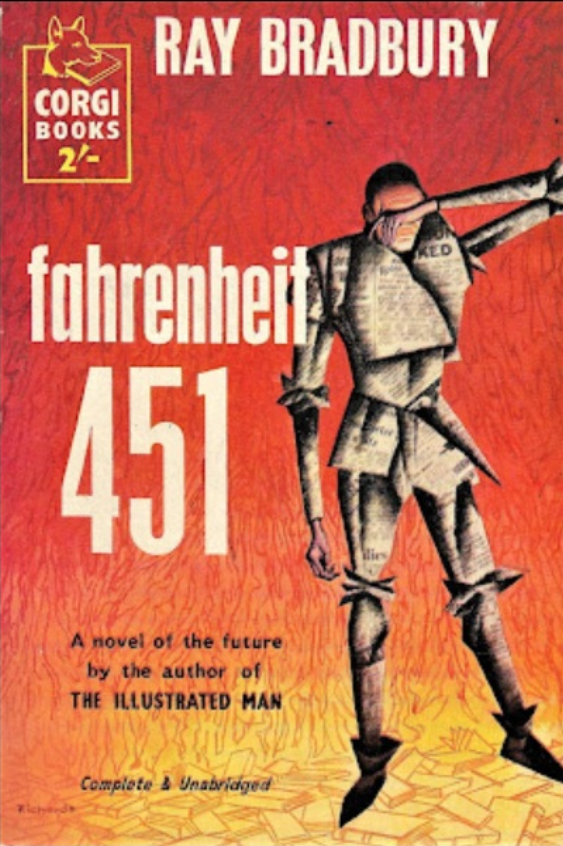
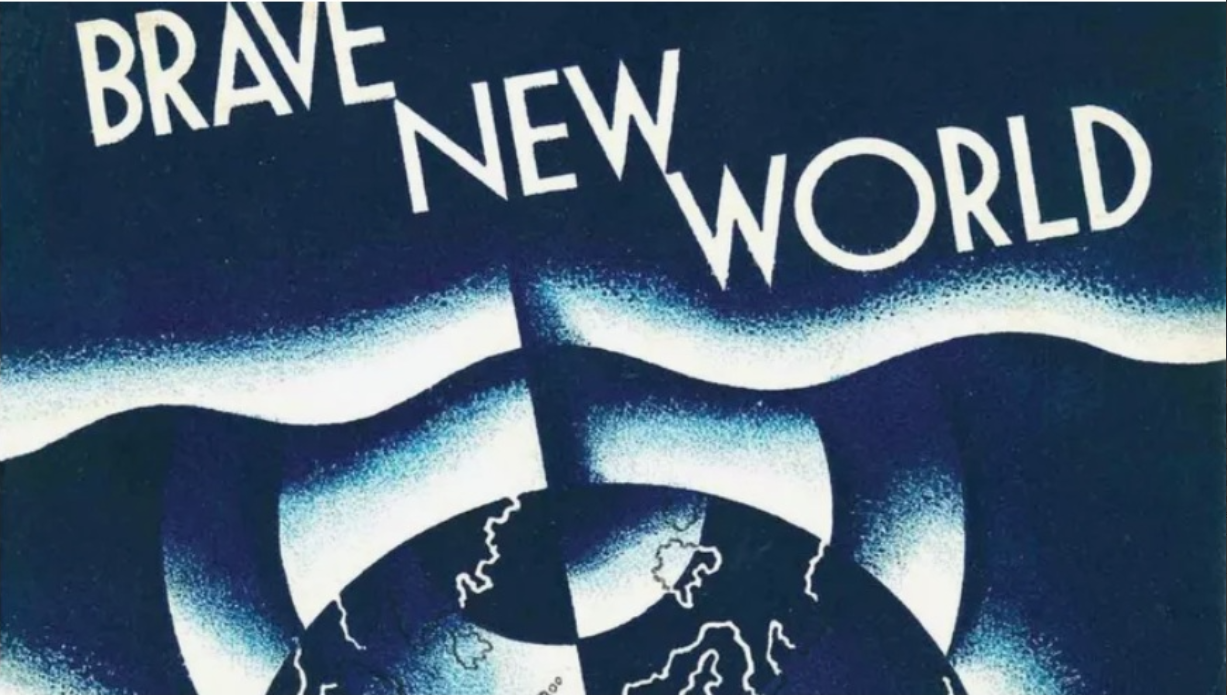
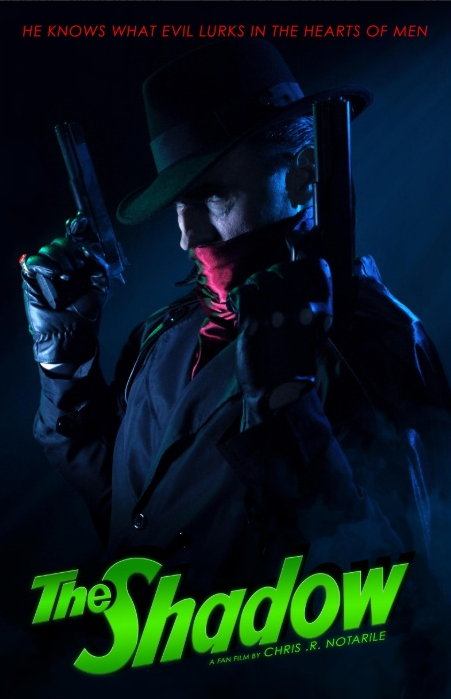
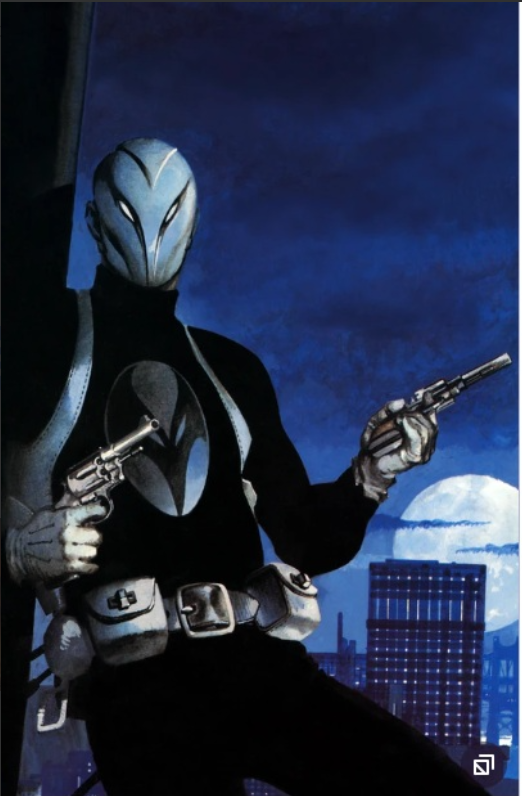
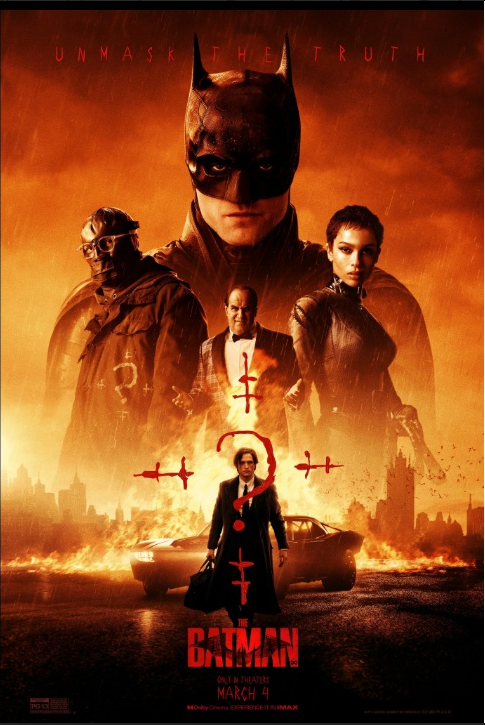
These include dystopian novels like 1984, Fahrenheit 451 and Brave New World; two revenge movies—the Abominable Dr Phibes and Theatre of Blood; and three “masked” heroes from pulp fictions and comics—The Shadow, Night Raven and Batman.
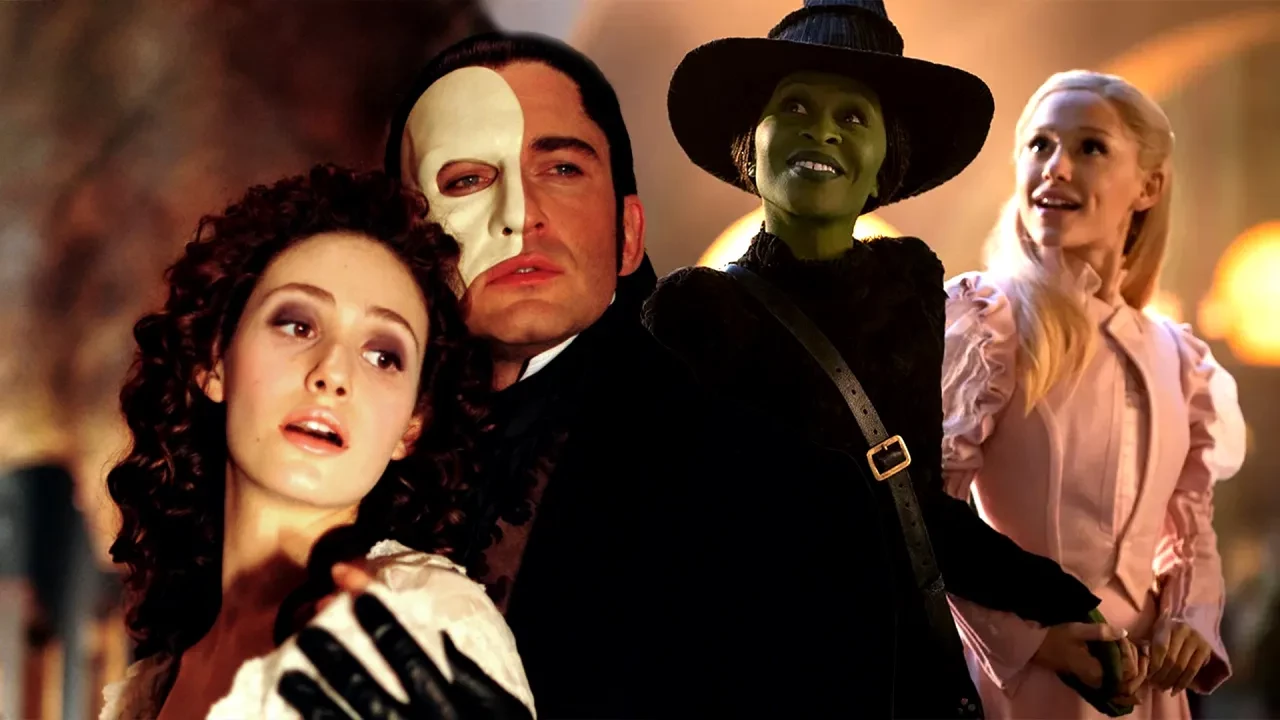
This list, however, troubles me as Alan Moore apparently fails to mention the real and most authentic forerunner of his novel’s protagonist—Erik, the Phantom of the Opera.
It is true that V, the hero in Alan Moore’s novel, shares many traits with the comic characters on his list: he prowls in the dark, is highly accomplished in many fields of human excellence, and wears a mask—a Guy Fawkes mask.
However, unlike Batman, Night Raven and The Shadow, V does not cover his face to hide his true identity. He wears the mask to represent the idea of rebellion but also because his real face is disfigured—like Erik, the anti-hero of Gaston Leroux’s 1910 novel.
Both V and Erik are not vigilantes or working in aid of law enforcers.
They are murderous criminals in the eyes of the law: the former driven by a desire for revenge against a state that subjected him to torture and brutal scientific experiments and the latter by hatred for a society that rejected him at birth due to his immense ugliness.
V’s sprawling underground den beneath London—The Shadow Gallery—also reminds one of the Phantom’s lair built beside an underground lake beneath the Paris Opera House.
Alan Moore’s female protagonist Evey Hammond’s staged imprisonment at V’s Shadow Gallery also echoes opera singer Christine Daae’s captivity at Erik’s den.
But most importantly, both Erik and V are “Masters of Infernal Machines”—explosive experts and bomb-makers. In V for Vendetta, the protagonist bombs four symbols of the Norsefire government including the Houses of Parliament.
In the Phantom of the Opera, Erik tells Christine Daae that if she refuses to marry him, he will push “The Grasshopper”—a button that will trigger a massive quantity of gunpowder stored in the cellars, blowing up not only the opera house but an entire quarter of Paris.
Here one may argue that the hero of the Abominable Dr Phibes, a 1971 comedy horror film that Alan Moore mentions in his list as one of the sources of inspirations, is also as close to V.
Believed dead after a car crash, the disfigured genius Dr Anton Phibes hides in a flamboyant, underground lair filled with clockwork automatons and a massive pipe organ.
Blaming a team of surgeons for his wife’s death on the operating table, he hunts them down one by one, executing them in a theatrical manner—a style mirrored by V as he takes down the people who subjected him to torture at the Larkhill Resettlement Camp.
However, some film scholars and reviews explicitly call Dr Phibes a “modern reinterpretation” or “homage” to Leroux’s Phantom, citing parallels: disfigured genius musician, hidden Art Deco lair, modulated voice, tragic romance fuelling revenge.
Here we arrive at an interesting conclusion: Alan Moore apparently missed the gothic masterpiece that the Frenchman authored over 70 years before he began planning his graphic novel but ended up creating a reinterpretation of Leroux’s hero through secondary influences.
But if we look closely, it is not just Dr Phibes that seems to be derived from Erik. The secret resident of the Paris Opera House—the musical genius, polymath architect, inventor, assassin and ventriloquist who disappears from places like a ghost—also appears to be the progenitor of some more veiled heroes including Batman.
There is no definitive, documented claim that Bob Kane or Bill Finger—the creators of Batman—explicitly stated that Erik directly inspired Batman. However, the circumstantial evidence is compelling.
For example, both Erik and Batman have underground lairs; both have dual identities; both are genius polymaths; both have a tragic backstory; both are more themselves in disguise and both operate in a predominantly gothic environment.
Are these similarities incidental? Or is it possible that the creators of both The Phantom of the Opera (1910) and Batman (1939) were drawing inspiration from some earlier real or fictional character?
Leroux, in the prologue and epilogue of his novel, claims that he is only documenting a true story based on an investigation that uncovered evidence of the Opera Ghost. He implies that Erik was a historical figure who secretly built his underground lair during the opera’s construction and died “of love” around 1881.
This claim is largely regarded as a literary device on Leroux’s part to frame the novel like investigative reportage to heighten the illusion of truth.
Some critics connect Erik’s lineage to Victor Hugo’s heroes in The Hunchback of Notre-Dame and The Man Who Laughs, arguing that Leroux’s Phantom resembles the tradition of the brilliant, disfigured outcast—a sort of Byronic Hero.
This connection cannot be denied. Erik does belong to the tradition of heroes in Western literature—from the Beast in Beauty and the Beast to Hugo’s Quasimodo and Gwynplaine and Mary Shelley’s Frankenstein—whose apparent deformity “masks” their genius or kind heart, often turning them into brooding outcasts.
Interestingly the masked men with disfigured faces—particularly Erik and V—also harken back to a real masked character, a rebel and cult leader from early Muslim history—Hashim ibn Hakim.
Hashim, who led a revolt against the Abbasid rulers in 776 CE after the assassination of his mentor Abu Muslim al-Khorasani, was also known as Al-Moqanna, as he kept his face covered in a veil or a mask, or both.
Al-Moqanna claimed that he was an incarnation of God and that the mortal eyes of his followers could not withstand the radiance of his face. However, Abbasid historians insist that the rebel hid his face because it was ugly, disfigured, and also bald.
This veiled man snatched large swathes of land in Northern Iran and Central Asia from the nascent Abbasid dynasty and developed a large following in Sogdia amid a population which had converted to Islam only a couple of generations back and which was resentful of Arab rule.
In Nakhshab, which is now called Karshi and is located in present-day Uzbekistan, Al-Moqanna reportedly summoned a moon from a dry well as proof of his miraculous powers.
The luminous orb which could be seen from miles continued to shine over the city for three months before crashing to the ground one night.
When the army of Caliph al-Mahdi breached the city after a long siege, they found a mechanical contraption along with large vats of mercury inside a well—the remains of the Moon of Nakhshab. Prior to the fall of the city, Al-Muqanna threw himself into a fire after killing his wives and devotees.
This strange masked figure from Arab history—who was also an alchemist, inventor, rebel and cult leader—also captured the imagination of some Western writers.
One of the first persons to write on Al-Moqanna other than some Western historians of the 17th and 18th centuries—like d’Herbelot and Gibbon—was Napoleon Bonaparte.
In 1787, he wrote a brief essay on the rebel leader who, according to the conqueror, wore a silver mask to hide his once-handsome face disfigured and partially blinded due to injuries in battles.
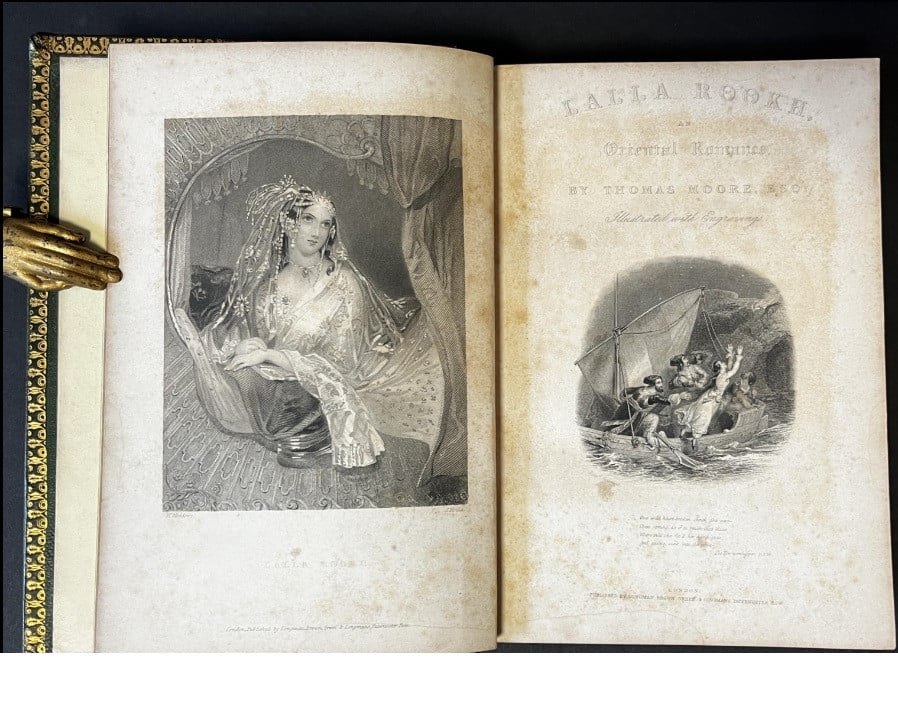
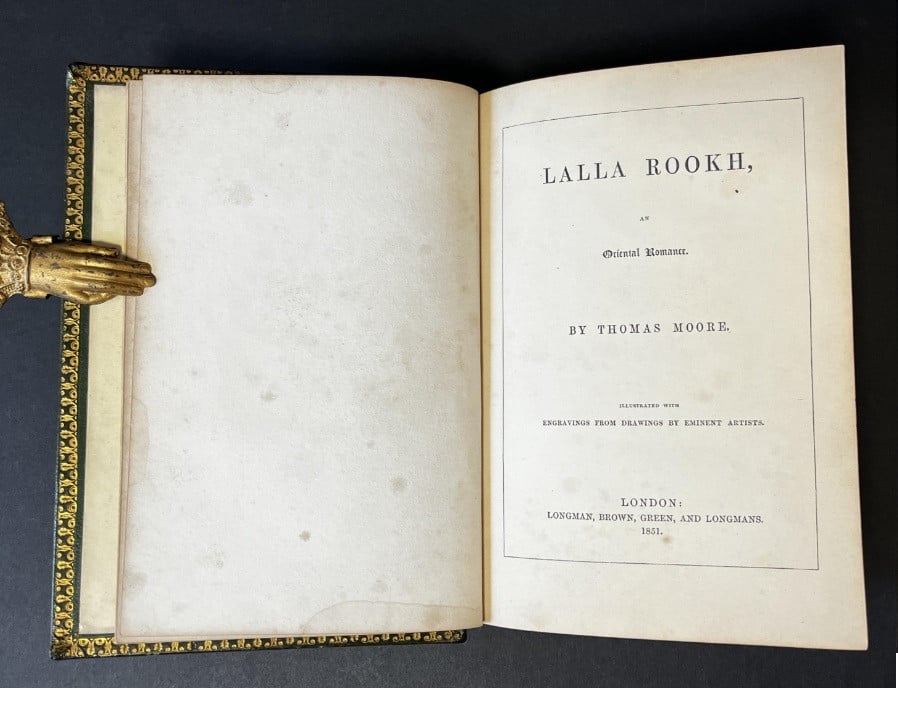
Hashim ibn Hakim, however, made his appearance in a purely literary text in Lalla Rookh, a romance in verse written in 1817 by Irish writer Thomas Moore.
Lalla Rookh, a daughter of Mughal Emperor Aurangzeb, is married to the king of Samarkand. On her way to her husband’s homeland, a young bard entertains her by reciting stories and the first of his stories is about The Veiled Prophet of Khorasan.
In Thomas Moore’s story, Al-Muqanna can be seen as a literary forerunner of Gaston Leroux’s Phantom.
He manipulates a young and vulnerable woman, Zulica, by binding her to submission through a blood oath in a dark catacomb beneath his luxurious castle—a scene reminiscent of Erik’s meeting with Christine Daae at a chapel as The Angel of Music.
In Moore’s story, when Zulica recognises her former lover Azim—now a young commander in Al‑Moqanna’s army—and the two consider fleeing together, a jealous Al‑Moqanna reminds her of her vow in a terrifying voice that seems to come from nowhere.
This disembodied voice echoes throughout The Phantom of the Opera, where Erik primarily exists for Christine as a voice — the “Angel of Music” speaking to her through stone.
At the end of Thomas Moore’s The Veiled Prophet of Khorasan, Al-Moqanna poisons his concubines and companions, then removes his veil. He mocks his loyalists by showing them his “fiendish, demonic” face, horrifying and enraging them amid their death throes.
This description somewhat resembles the description of Erik’s death’s head, a deathly pale face with hollow eyes, a sunken nose, and stretched yellow skin that made him look like a living corpse—although Leroux does not portray the Phantom as inherently evil.
So, can we safely conclude that some of the major masked heroes and anti-heroes in comics, pulp fiction, films and cartoons stem from the historical Al-Moqanna? I stop short of affirming the claim, but it would make an intriguing topic for pop-cultural research.
Now a few words about the veil and the mask.
A veil serves many purposes. It may offer protection to the wearer and to others. Sufi tradition, for example, teaches that there are hundreds of thousands of veils between God and creation, as unmediated divine self-disclosure would be lethal to mortal beings.
A veil is also a symbol of hierarchy, protocol, and trust: all of us lift a few veils over our inner lives when someone earns our confidence, and we gradually initiate others into our most closely held secrets.
A mask as an alternate face, however, implies two-facedness—duplicity, hypocrisy or at least a condition in which reality and appearance are divorced.
The West’s fascination with masked figures—beginning in the 18th and 19th centuries—may therefore signify a growing experience of two-facedness.
After the Renaissance, Western man underwent profound spiritual, intellectual, and emotional upheaval. Emotionally attached to religion—its beliefs, values, and customs—he struggled to provide intellectual foundations for it.
New scientific knowledge created an irreconcilable chasm between heart and mind. When heart and mind could no longer work in concert, they chose to operate separately—each going its own way, creating a kind of two-facedness.
Even when individuals experienced no inner conflict, they faced societies unwilling to relinquish institutions forged in medieval religious eras—clinging to them out of habit.
Such societies compelled people to act contrary to their true selves, forcing public conformity while permitting private divergence—the double lives of libertines in Marquis de Sade’s novels, of Dr Henry Jekyll, of Dorian Gray.
The word “personality” derives from the Latin persona—meaning “mask.” Personality does not reflect a person’s reality; it is merely the mask developed for society.
The true self— ‘Zaat’ in Arabic—remains hidden. Thus, in Islamic tradition, the word “personality” (shakhsiyat in Urdu) is not applied to prophets and holy figures—for what they present is not a mask, an alternate face, but their essential self.
All facts and information are the sole responsibility of the writer
