



* The Lancang-Mekong River winds its way through China, Myanmar, Laos, Thailand, Cambodia and Vietnam.
* In March 2016, leaders of the six riparian countries gathered for the first Lancang-Mekong Cooperation (LMC) leaders’ meeting, marking the full launch of the LMC mechanism.
* A decade on, the mechanism has delivered remarkable outcomes in trade, infrastructure construction, industrial development and people-to-people bonds.
XINING, March 24 (Xinhua) — As spring ice melts along the upper reaches of the Lancang River in northwest China’s Qinghai Province, 37-year-old ranger Chozin sets out on his patrol. Clad in full gear and holding binoculars, he carefully monitors the water source, a routine he has followed for years.
“The river flows into other countries,” he often tells his children. “If the source is healthy, the downstream will benefit.” On holidays, he brings them along for patrol, as his family’s unique version of “parent-child education.”
The Lancang-Mekong River, known as the Lancang in China and the Mekong downstream, originates in Zadoi County in Qinghai’s Tibetan Autonomous Prefecture of Yushu and winds its way through China, Myanmar, Laos, Thailand, Cambodia and Vietnam.

In March 2016, leaders of the six riparian countries gathered in China’s Sanya for the first Lancang-Mekong Cooperation (LMC) leaders’ meeting, marking the full launch of the LMC mechanism.
A decade on, the mechanism has delivered remarkable outcomes in trade, infrastructure construction, industrial development and people-to-people bonds.
When addressing the reception celebrating the 10th anniversary of the first LMC leaders’ meeting on Monday, Chinese Foreign Minister Wang Yi said that LMC has grown from a seed to a towering tree, setting an example for the building of a community with a shared future for humanity.

In 2025, trade between China and the five Mekong countries reached a record high of 500.9 billion U.S. dollars, an increase of over 150 percent from a decade ago. China has remained the largest trading partner of Cambodia, Myanmar, Thailand and Vietnam for many consecutive years, and the second-largest trading partner of Laos, according to China’s foreign ministry.
Downstream in Laos, the life of local resident Nang Neungruk has been transformed by a China-Laos joint venture hydropower plant.
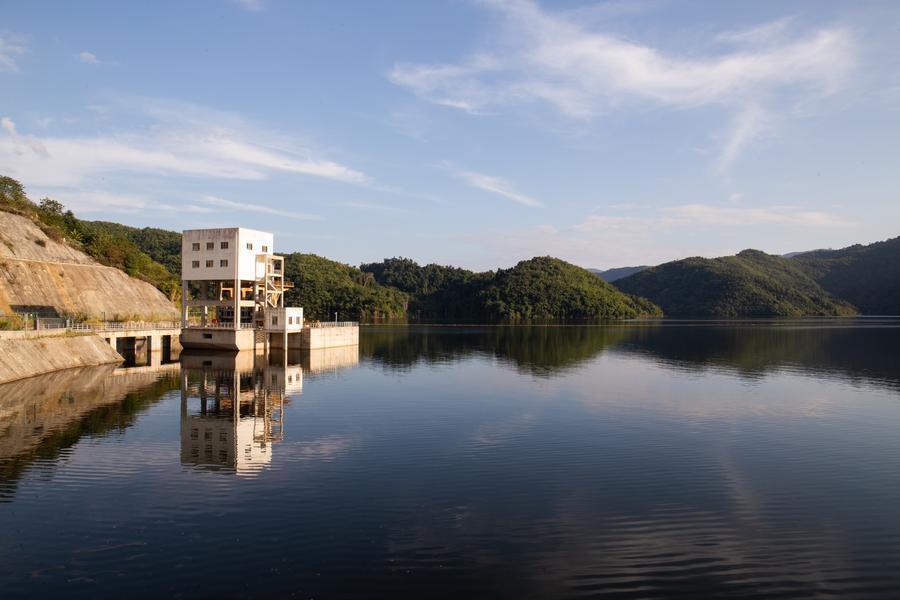
The 45-year-old recalled a time when the village had no electricity and crumbling roads, and the villagers depended largely on wild vegetables and fishing to survive.
With support from the Nam Tha No.1 hydropower station project, locals now have new homes, a stable power supply and paved roads.
Nang Neungruk received training in liquor brewing, poultry raising and rubber planting. “Now we have enough food, a vegetable garden and poultry meat for kitchen use. Life is getting better and better,” she said, adding that brewing has become the family’s main source of income.
Over the years, leveraging the LMC mechanism, China has built a number of much-needed industrial projects in Laos, Thailand and beyond, making the region a top destination for Chinese enterprises going global.
Sectors such as new energy, digital economy and artificial intelligence have taken root. Meanwhile, imported high-quality agricultural products and handicrafts have gained popularity. Thai durians sell well in supermarkets in Xining, capital of Qinghai, while Qinghai-grown fresh salmon reaches Thai restaurant tables in time thanks to direct air routes.
Zhang Sheping, Chinese consul general in Luang Prabang, Laos, said major China-Laos cooperation projects in the consular region, including the China-Laos Railway, Nam Tha No.1 hydropower station and a clean energy project in northern Laos, have boosted local economies, expanded employment and fulfilled social responsibilities by building schools and roads, continuously benefiting local people and strengthening bilateral friendship.
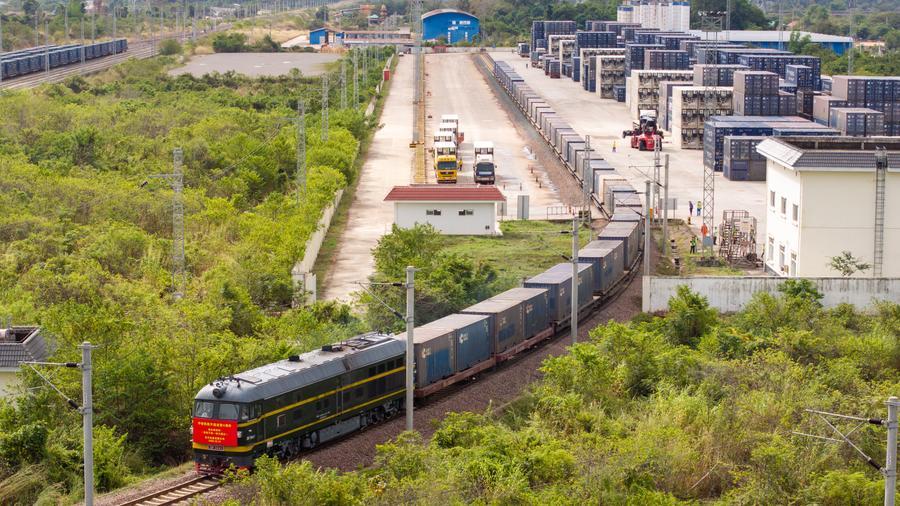
Since its launch in December 2021, the China-Laos Railway has seen steady growth in cross-border cargo volume, reaching 18 million tonnes by March 10 this year. The types of goods have expanded from just over 10 categories to more than 3,800, including electronics, photovoltaic products and cold-chain fruits, with cargo services covering China and 19 Belt and Road partner countries, including Laos, Thailand, Vietnam and Myanmar.
Beyond infrastructure and trade, people-to-people exchanges have emerged as a vital thread connecting the six nations. The “Lancang-Mekong visa” facilitation policy introduced in 2024 has made travel more convenient, with increasing flows of people among the six countries. Cultural activities such as art festivals, photography exhibitions and film weeks have further strengthened the bonds among the people along the river.
Inaugurated in Yushu in 2016, the Youth Innovation Competition on Lancang-Mekong Region’s Governance and Development has traveled to cities across China, Laos, Cambodia, Thailand and Vietnam, drawing over 3,000 participants from governments, enterprises and universities across the six countries and generating more than 530 innovation proposals.
“Regional cooperation is not just a policy-level issue. It is a reality that can be connected through the youth,” said Yang Ziyi, a student at Fudan University, who signed up for this year’s competition. Her focus is on how digital technology, especially artificial intelligence, can help bridge the regional digital divide.
In 2024, a satellite jointly developed by Fudan University and a Shanghai-based aerospace firm was launched to conduct cross-border scientific research on solar spectrum data and atmospheric data in the Lancang-Mekong region. The satellite data is gradually being made accessible to countries in the region, deepening cooperation among them. Some research findings have already been published in top international academic journals.
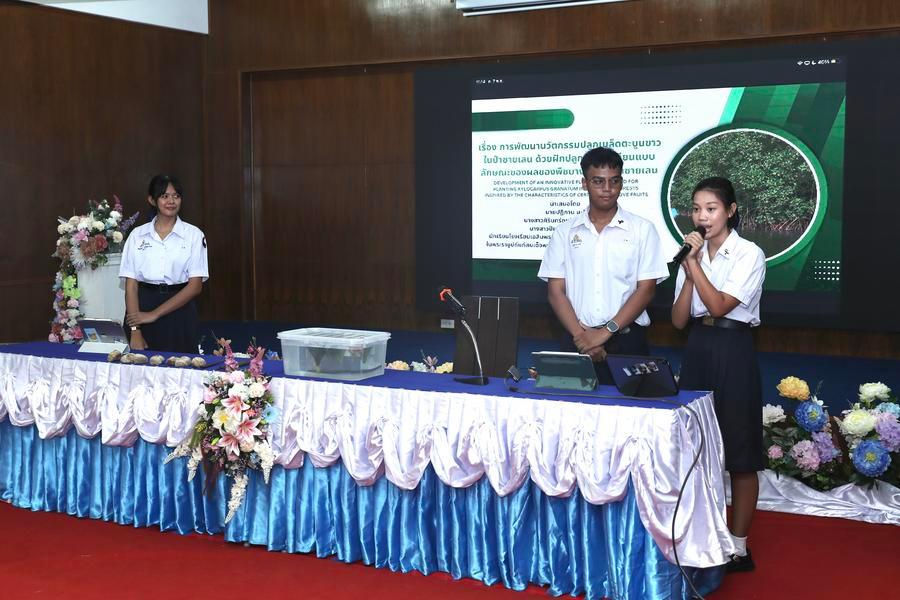
The satellite’s launch also paved the way for an international joint research initiative, inviting young scholars from Lancang-Mekong countries to collaborate on scientific experiments through data sharing and joint research, thereby adding a new dimension to the youth innovation competition.
Wang Yinghao, deputy Party chief of the School of International Relations and Public Affairs, Fudan University, said the competition, initiated by the university, has evolved into a youth diplomacy platform that integrates talent development, innovation and people-to-people exchanges.
“It not only offers young people opportunities for professional growth but also fosters deep interaction and emotional bonds,” Wang said. (Video reporters: Liu Zexing, Du Xiaowei, Chen Jie, Ma Huaizhao, Zhao Xu, Zhao Cailin and Wan Houde; video editors: Zhang Yichi and Luo Hui) ■
