


PUBLISHED
March 29, 2026
We live in nasty times. From east to west, north to south, every country lingers on a geopolitical chessboard, where each position stands either in support of or in defiance of another piece. While international relations experts can perform the arithmetic — calculating the profit and loss of being an ally or a foe, and determining which alignment yields what economic or geostrategic benefits — such calculations are often made, against the backdrop of imperial prerogatives, and on the back of slaughtered human beings, who become the weight and counterweight in service of desired positions in neoliberalism’s competition-centric world.
This is not the first time that we have found ourselves in such an outlandish plight. Humanity has been subjected to the horrors of nuclear weapons and countless colonial misadventures; from the Qissa Khwani massacre to the Army Public School, megalomaniac zeal has claimed the lives of many, including children. We have fought multiple wars with our neighbour—our sibling produced from the same land from which our “moth-eaten” homeland was carved out. Fueling the fire, on the western side, we experienced the Afghan war, along with its devastating consequences, which continue to haunt us even today.
And now we are going through another nefarious mass-killing with Afghanistan, simultaneously, with another potential world war breaking out in the Middle East. There has been a significant mental toll from all of this; these murders have somehow morphed into mere numbers — dehumanising mortals subjected to atrocities — reduced to stories read on news outlet sites and printed in newspapers. Unfortunately, this is the very nature of war: it is not a solution to problems, but rather another problem in itself, with its tentacles besieging both lives and the psychology of the whole country.
What does poetry do?
In these times of blanket inanity, poetry may be our most fitting companion — both as a balm to soften pain and as a catalyst against warmongering, nourishing the flourishing of global anti-war movements. Someone may contend that this proposition is fanciful. After all, what can poetry do to stop this juggernaut devouring men’s flesh? Let us ask, then: what exactly does poetry do?
Historically, Plato banished poets from participating in his ideal state on the grounds that they are distant from the truth — irrational, insubstantial, and merely ornamental, ultimately flimsy. From a strictly truth-centric perspective, this view has force. Yet this expectation is parochial in many ways; it demands from poetry what it never claimed to offer: a singular truth. Poetry, rather, is ambiguous: the more meaning a poet can generate, the more virtuous they are, especially in our Sabk-i-Hindi tradition, brimmed with convoluted metaphorical ploys. After all, as IA Richards, and so too Shamsur Rahman Faruqi, the renowned literary critic, suggest, the poet is a maker of fiction. Or, as WH Auden writes in his famous elegy In Memory of WB Yeats: “For poetry makes nothing happen.” And yet poetry does make something happen, though not through the lens of Homo economicus or Homo politicus.
On one hand, poetry holds up reflections of ourselves, helping us see with vividness what we value, what matters to us, and how we perceive the world. It incorporates experiential weight and consequence, along with an investigative curiosity about the shape of our inner experience. That’s why Edward Hirsch calls reading poetry “an act of the most immense intimacy, of intimate immensity”. This means it allows us to experience poetic imagery at a deeply personal level—not as a mere representation of being, but as an event of being—as Bachelard suggests, an image born in one consciousness can be received by another without explanation. It crosses the boundary between subjects not by argument but by resonance, moving toward a shared, public consciousness. Poetry, then, as the German philosopher Georg Hamann observed, is the mother tongue of the human race. It translates the music flowing through human existence—music deeply connected to memory—and weaves that memory into verse, rendering it enduring. For instance, we still turn to Saadi Shirazi or Ghalib when articulating wisdom. In this way, poetry transforms the rhythms of human existence and the cosmos into words, and thereby stands as humanity’s quiet triumph against ordinary forgetfulness. This makes us, as creators of poetry, fundamentally similar despite geographical, religious, national, and cultural differences—differences that aggressors intentionally inflame in order to otherise the supposed enemy.
On the other hand, its fictionality grants it a hypothetical power: it enables us to imagine the unimaginable. In the words of Anjum Altaf, echoing Wittgenstein, “The reason poetry has this ability to cast a spell in the age of science is because its ocean contains these incredible intuitions that are beyond the grasp of rationality.” It urges us to reflect beyond the departmental stalemate of the chessboard. The transboundary, tradition-rooted nature of poetry—its inner-experience-centric realm, its expression and adornment of language, and, with it, the preservation of memory—safeguards the experiences that our imagination draws upon, while also providing a vista of the impossible realised through poetic imagery, its metamorphosis, and imbibement. Upon these, we exercise our intelligence and critical thinking, transforming pathos into words that endure for coming generations. For instance, Iqbal’s poem, in Bang-e-Dara, ‘A Cow and a Goat’ was inspired by the third-century BCE Sanskrit animal tales of The Panchatantra, as noted by Dr Nomanul Haq.
Poetry, ergo, can protect us from the extinction of a mythical, historical, magical, and inclusive legacy; from compromising pure creativity; from racial and ethnic prejudices; from manipulation by sinister power-thirsty populism; from hate and otherising of other humans; and from many other forms of cultural and intellectual impoverishment. This, then, leads us to an empathising and liberating stance against hegemonic, counter-revolutionary forces that are hell-bent—much like colonial projects—on injecting state-favoured, formulated spectacle ideologies masquerading as history. These narratives favour a few: the top one percent owns more than twice the wealth of the remaining seven billion people; men own about 50 percent more wealth than women; and meanwhile, nearly 10,000 people die every day due to a lack of access to adequate healthcare, even as the world is home to more than 2,000 billionaires. In the words of Bertolt Brecht: “Those who take the meat from the table / Teach contentment. / Those for whom the contribution is destined / Demand sacrifice.”
Such realities produce both a scarcity of resources and deep inequalities of wealth, nationally and globally, often leading to wars driven by jingoistic, neoliberal competitive Weltanschauung and realpolitik (national security upmanship). The result is a renewed alienation on the one hand and an artificial, superficial hostility toward our supposed “foes,” both within and outside the country, which may ultimately lead us into unfortunate times, much like the one we are living in. Notwithstanding, let’s also not overstate it: poetry cannot cure this dismay, in itself, like a divine physician. What we ultimately need is a revamping of our worldview, which requires thinking outside the box. This is where poetry can help—by expanding what can be imagined, stretching the limits of language, overlapping the concrete with the unreal (prima facie implausible), and thereby fomenting a collective anti-war protest.
Some poets
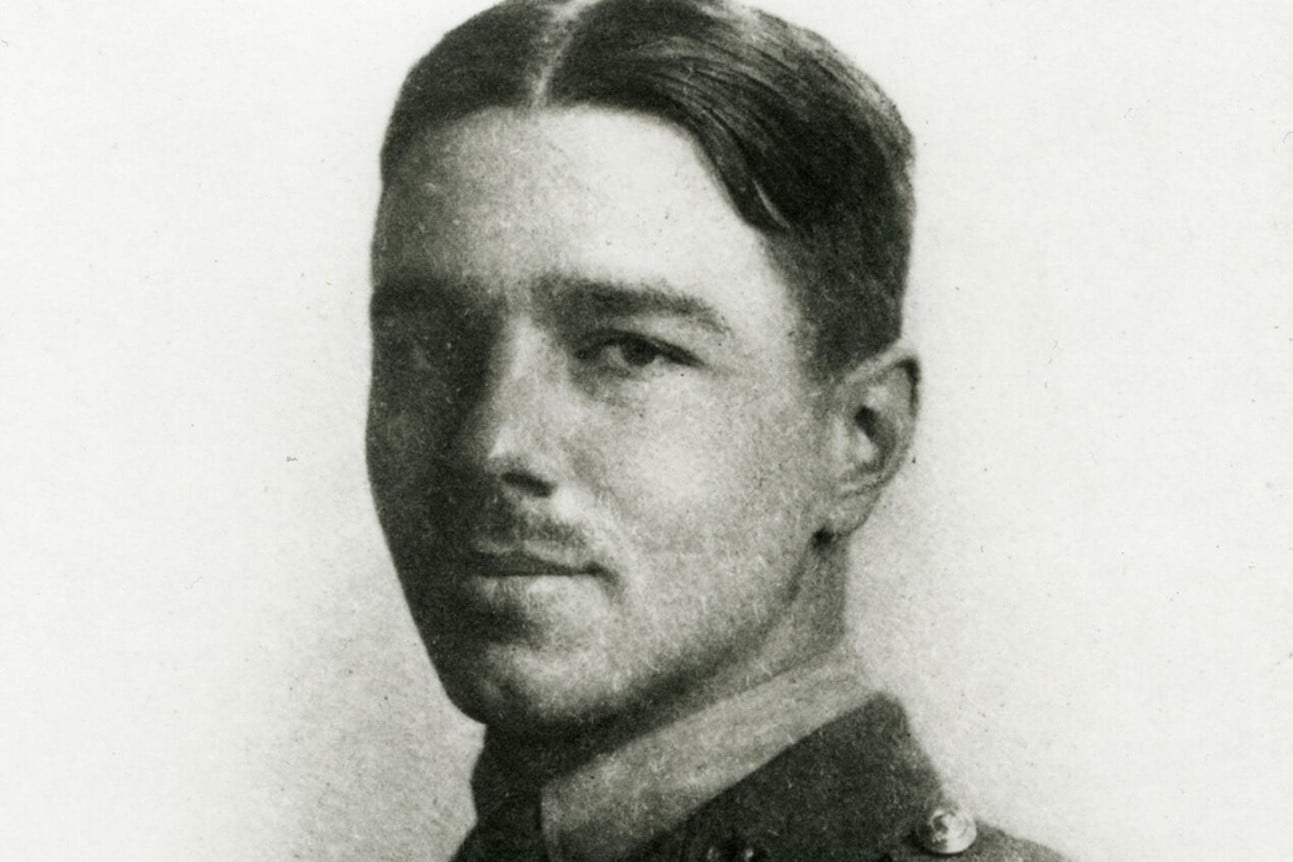
In the past, poetry served as an outlet for the frustrations of troubled times. Wilfred Owen is one such example. Born in 1893 in England, he became one of the greatest war poets in English literature. During the First World War, he experienced mud-filled trenches, poison gas attacks, extreme cold, etc. These traumatic experiences led him to develop what we now recognize as PTSD (then called shell shock), which translated into in his great poem ‘Dulce et Decorum Est’, where he powerfully depicted the horrific realities soldiers endured during the world war: “My friend, you would not tell with such high zest / To children ardent for some desperate glory, / The old Lie: Dulce et decorum est / Pro patria mori.” (The Latin phrase is from the Roman poet Horace: “It is sweet and fitting to die for one’s country.”)
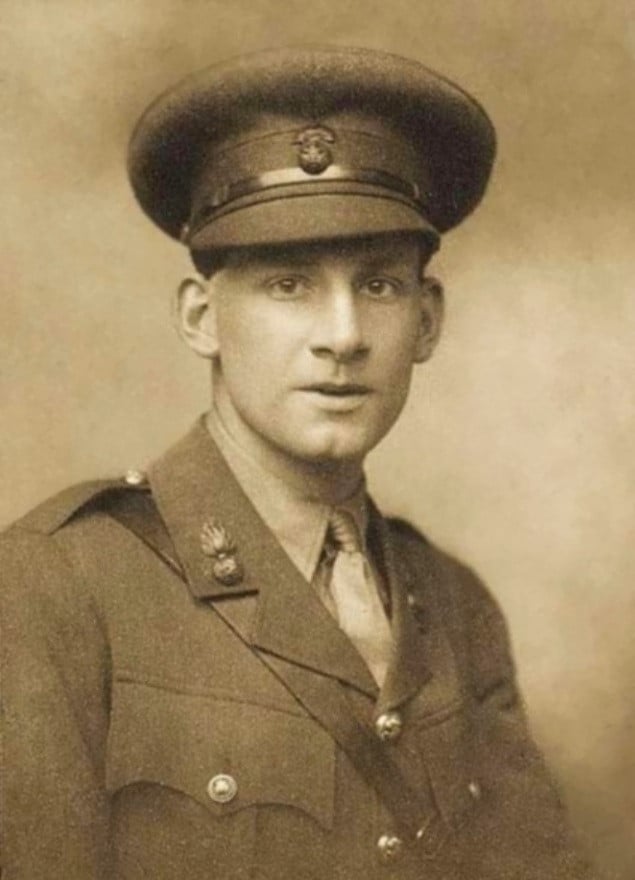
Owen met Siegfried Sassoon at the hospital, who encouraged him and helped him find his poetic voice. Sassoon himself was a prominent war poet of the same period, criticising the fact that soldiers were dying horribly at places like Bapaume while people at home made jokes, he wrote the poem ‘Blighters’: “I’d like to see a Tank come down the stalls, / Lurching to rag-time tunes, or “Home, sweet Home,” / And there’d be no more jokes in Music-halls / To mock the riddled corpses round Bapaume.”
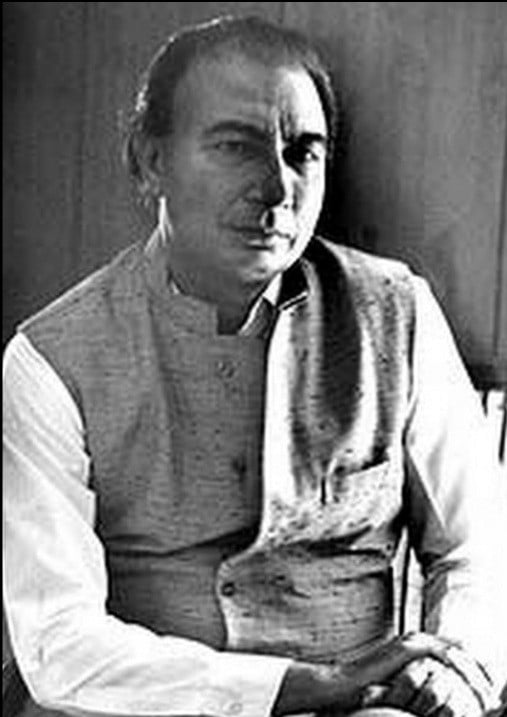
Further, our own Sahir Ludhianvi, against the backdrop of the 1965 Indo-Pakistani War, declared in his famous poem “ai sharif insano” (O noble human beings): bartari ke subut ki khaatir / khoon bahana he kya zaruri hai / ghar ki taareekiyan mitaanne ko / ghar jalana he kya zaruri hai (Just to prove superiority / Is it really necessary to shed blood? / To remove the darkness within a home, / Is it necessary to burn the house down?) Another poet from Peshawar, Farid Gul Momand, penned: “They ruined my schools / Raped my dolls / Orphaned my children / Widowed my sisters / And we kept silent — like stones or tombs.” For all of them: war is pathetic, hatred toward other humans is irrational, and is a corruption of our beautiful souls and sublime nature.
A counter narrative
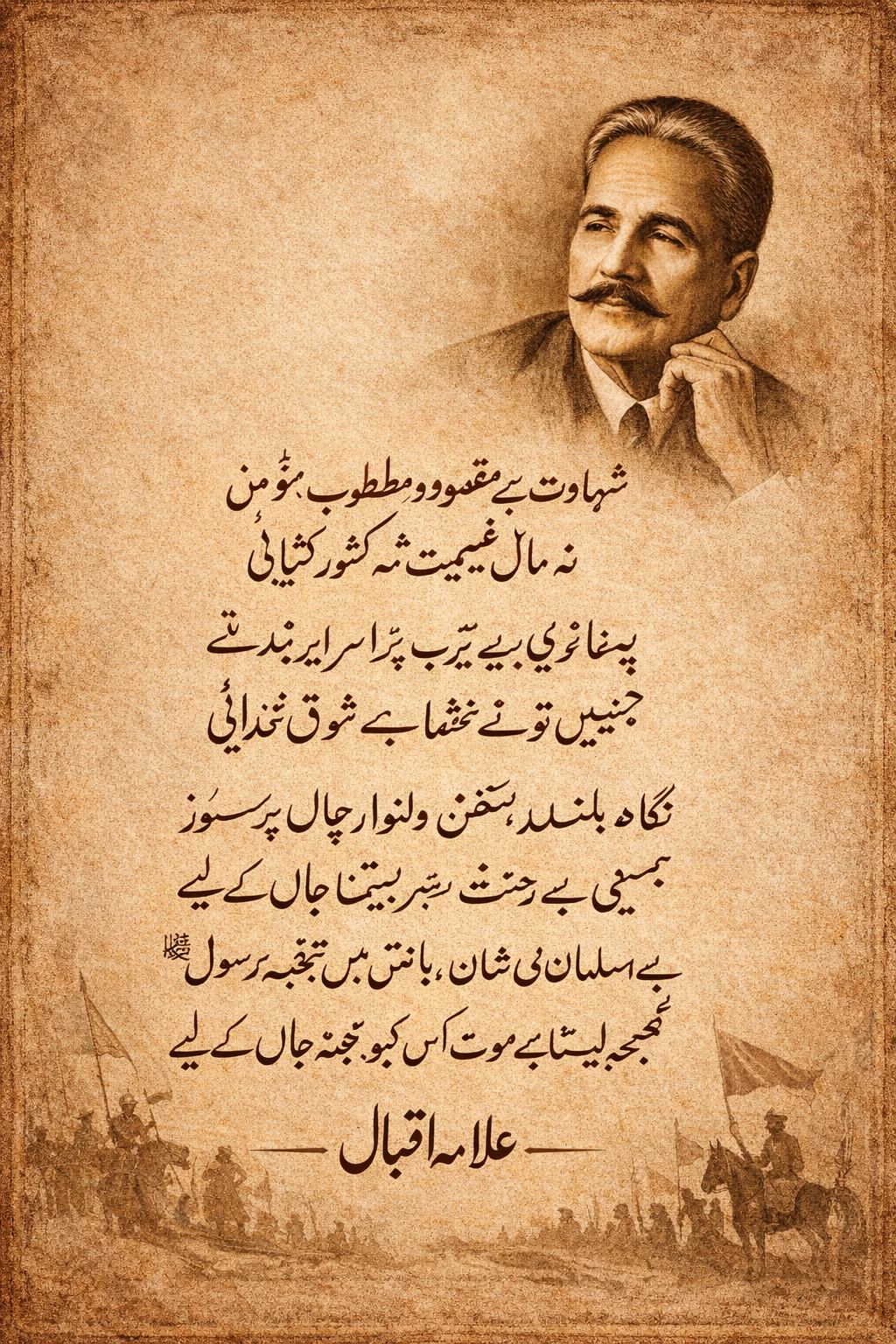
It can be argued that this is a rosy and cherry-picked poetic rendition. There is just as much “pro-war” poetry as there is “anti-war” poetry. Iqbal’s Tarana-e-Milli, for instance, urges for the domination of Muslims over the whole globe. One, therefore, cannot speak of poetry as a monolith. If there is pro-war poetry, how can one expect poetry, as such, to stop war? An easy way out would be to argue that literature works on the moral imagination, as suggested in the writings of Edward Said. According to this view, literature is an exercise in empathy; therefore, literature that perpetuates essentialist, colonial, racist, sexist, or otherwise dehumanising depictions fails not only on a social-justice scorecard but also as literature. And so pro-war poetry is not poetry. I do not agree with this view.
As argued earlier, poetry is a kind of fiction: a distortion of reality that creates multiplicity of meanings, stretches the borders of language, and says what was never considered possible while still working within linguistic limits. In the words of Nobel Laureate Wisława Szymborska, poetry is a support whose uncertainty itself gives us the meaning: “Poetry – / but what is poetry anyway? / More than one rickety answer / has tumbled since that question first was raised. / But I just keep on not knowing, and I cling to that / like a redemptive handrail.”
In this sense, the message qua message is less relevant than how it is said. The primacy, therefore, is not what Wilfred Owen experienced during World War I, but how he described it. “For poems are not, as people think, simply emotions (one has emotions early enough)—they are experiences,” Rilke wrote, in a famous passage from The Notebooks of Malte Laurids Brigge. Then, to abstract from this poetic reality the learnings that are beneficial for us is the job of the reader. The function of poetry is not to stop war; it never can. What it can do, however, is fertilise the ground for egalitarian, inclusive, and reflective minds—minds less likely to wage wars and more inclined toward collaboration, collective prosperity, and critical thinking.
Coda
Countless people have perished in between pre-emptive and preventive wars; the enemy may change with shifting international balances and power brinkmanship, but the brunt remains the same: human beings, despite all their humanity, intelligence, and emotional depth, continue to die ruthlessly. Let us not glorify war, bloodshed, or our most animalistic impulses. Rather, let us turn to poetry—where the imageries of the well-entrenched public memory, shapes our consciousness, and makes us more humane by turning toward sublimity and moving away from savagery—which can help us resist this sinister current by humanising the cost of war through the vivid depiction of human suffering rather than mere statistics; cutting through the illusions and exposing the lies of the powerful; providing a collective voice that transcends cultural and racial barriers, foregrounding a shared moral stance; inviting readers to imagine alternatives to violence; and offering a poetic sensibility at the societal level—shedding the burden of received truths, enabling us to see things afresh, and, above all, encouraging creative thought.
Let’s burn the barbaric playbook of deterrence, retaliation and escalation. Poetry can save us!
Furqan Ali is a Peshawar-based researcher who works in the financial sector. He can be reached at alifurqan647@gmail.com
All facts and information are the sole responsibility of the writer
