


* On April 1, 2017, China announced plans to establish the Xiong’an New Area in north China’s Hebei Province, to relieve Beijing of functions non-essential to its role as the national capital and advance the coordinated development of the Beijing-Tianjin-Hebei region.
* Over the past nine years, more than 400 branches of state-owned enterprises have set up operations in Xiong’an, alongside over 200 companies in fields such as aerospace information, artificial intelligence, and digital technology.
* Since its establishment, Xiong’an has prioritized ecology and green development, laying a solid foundation for an eco-friendly future city. Improved ecological conditions have also elevated local villagers’ quality of life.
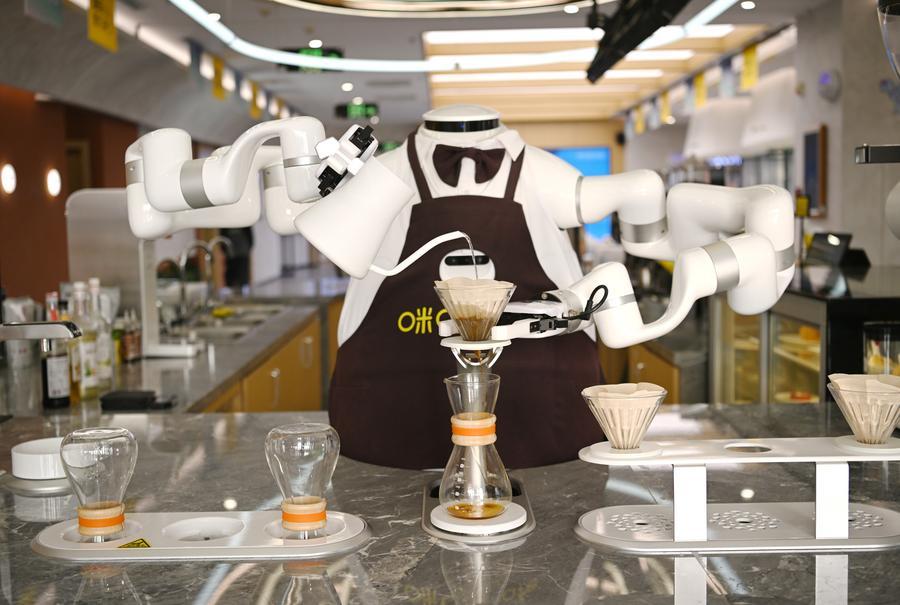
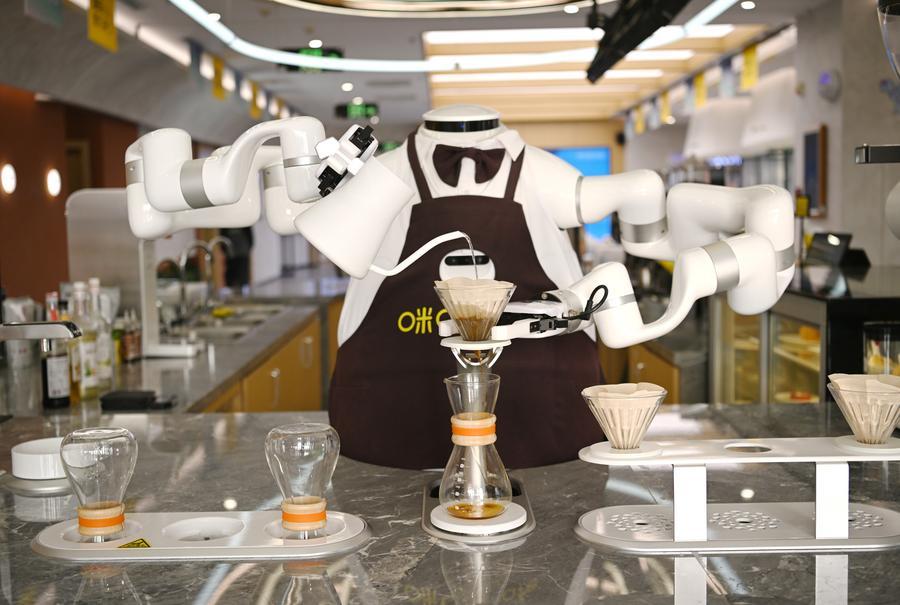
SHIJIAZHUANG, April 1 (Xinhua) — At the Xiong’an Artificial Intelligence (AI) industrial park, blue signage panels line the walls, each bearing the name of a different AI startup. Offices sit just a door apart, and entrepreneurs often meet in the roadshow hall or over coffee in the shared lounge — casual encounters that frequently spark collaboration.
On April 1, 2017, China announced plans to establish the new area in north China’s Hebei Province, to relieve Beijing of functions non-essential to its role as the national capital and advance the coordinated development of the Beijing-Tianjin-Hebei region.
Over the past nine years, more than 400 branches of state-owned enterprises have set up operations in Xiong’an, alongside over 200 companies in fields such as aerospace information, artificial intelligence, and digital technology.
This February, the State Council approved the upgrade of the Xiong’an high-tech industrial development zone to a national-level zone, calling for deeper integration of sci-tech and industrial innovation while attracting high-end innovation resources from home and abroad.
“Xiong’an gives us not just policy support, but real, attentive service,” said Zhang Tianyang, co-founder and CEO of Stable AI. “We feel a genuine commitment to growing together. It’s the ideal place to start.”
INNOVATION VITALITY, WARM SERVICES
For Stable AI, a startup established in Xiong’an in October 2024 by researchers from Tsinghua University in Beijing, the new area has provided the comprehensive support a young company needs.
“What startups need most is the first round of investment. The first 20 million yuan (about 2.9 million U.S. dollars) arrived in less than three months, during which we completed the entire process from initial contact to due diligence, valuation and payment in Xiong’an. The efficiency exceeded our expectations,” said Zhang.
“The AI industrial park is more than just office space. It’s an accelerator that supports companies through every stage, from incubation to growth and expansion,” noted Lu Hao, deputy general manager of China Xiong’an Group City Development Company.
The park provides systematic support in services, application scenarios, nearly rent-free office space, low-cost computing, shared R&D platforms and a full-chain funding system.
“Since we moved in, the park has assigned staff to explain policies to us regularly — everything from housing to commuting,” said Zhu Yu, an employee at Stable AI. “We learned about residency and home-buying policies through these lectures. Some of my colleagues plan to buy houses and settle here.”
Unlike large language models, Stable AI’s large data model, LimiX, focuses on structured data like tables, time series and graphs. It analyzes causal relationships to deliver precise insights and trend predictions with strong industry applications.
Since its landing, Xiong’an has helped the company connect with industrial partners. A local energy firm employed the model to optimize gas purchasing. Using historical sales, heating data and weather information, the model predicts annual gas demand, helping the company control costs. Forecast accuracy rose to 93 percent, compared with 76 percent achieved by human forecasters.
In just a year and a half, the company has grown from fewer than 10 employees to over 60. It has been involved in several smart city projects as the new area gradually opens up data flows to businesses, including a flood control system. Its model is now being tested for application in more than 40 industrial scenarios.
“We will continue to advance the upgrade and iteration of LimiX, fully empowering the intelligent transformation of various industries,” Zhang added.
SMART CITY CULTIVATES FUTURE INDUSTRIES
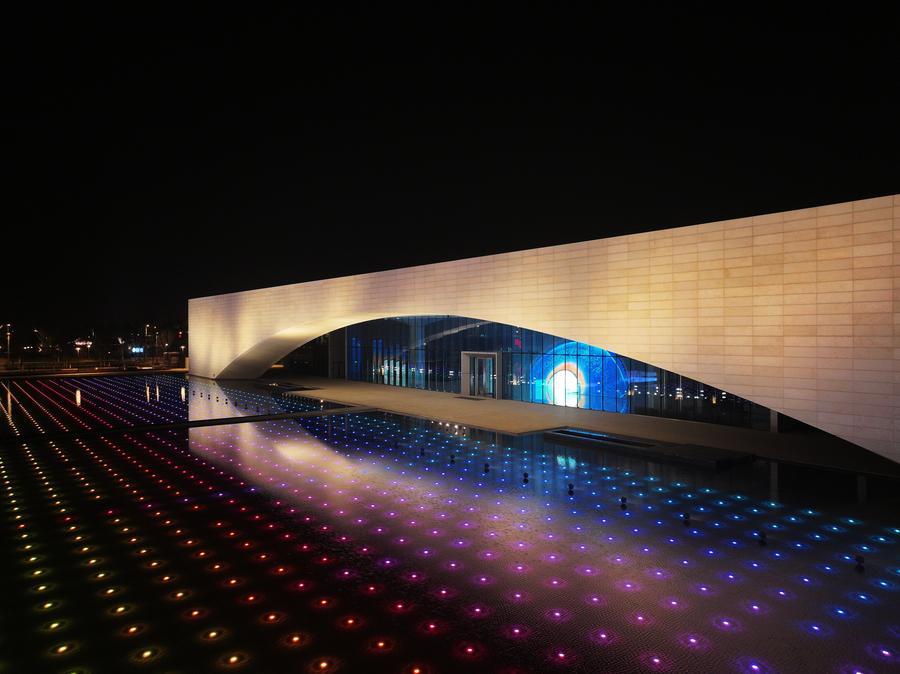
In April 2021, China Satellite Network Group Co., Ltd. became the first central SOE to establish its headquarters in Xiong’an. Since then, these relocated SOEs have attracted upstream and downstream companies, forming a vibrant science and technology innovation cluster in the new area.
“Xiong’an is building a smart city from scratch, which gives startups plenty of room to grow,” said Li Qiang, founder of Huaqing Zhiyan, an AI agent company in Xiong’an. “There are also many large SOEs relocated from Beijing. They anchor the industrial cluster. Elsewhere, it would be nearly impossible for a startup like ours to partner with them.”
Huaqing Zhiyan’s AI agents are already being used in projects involving China Satellite Network, including satellite-based farmland imaging, crop monitoring and agricultural insurance assessment.
As this smart city takes shape and more researchers move in, flexible computing power has become a growing need.
“Traditional computing services are usually sold on a monthly subscription basis, which makes it hard to meet flexible demand,” Li explained. “But our AI agents are connected to a computing dispatch platform. Even a researcher who only needs a small amount of computing power can use it on demand, and pay only for what they use and stop anytime.”
This example shows that as Xiong’an advances towards constructing a high-standard smart city, and generating significant opportunities for AI and other future industries, innovators are stepping forward to offer technical support that facilitates researchers relocating to the city, thereby fostering a virtuous cycle of growth and development.
Since arriving in Xiong’an in early 2025, Huaqing Zhiyan has seen rapid growth. Its contract value rose from 3 to 4 million yuan when it first set up in July 2024 to 26 million yuan by the end of 2025, with more than one-third of that coming from local projects in Xiong’an.
Li is confident about further growth and is already working on the company’s next technological step.
“As people use AI agents for more tasks, data security will become increasingly important,” he said. “That’s why we’re partnering with our neighbor tech company. In the future, we plan to integrate encryption modules into agent decision-making, ensuring tasks are processed securely and results are safely returned, providing full protection for users’ data and information.”
GREEN DEVELOPMENT IMPROVES LIVELIHOODS
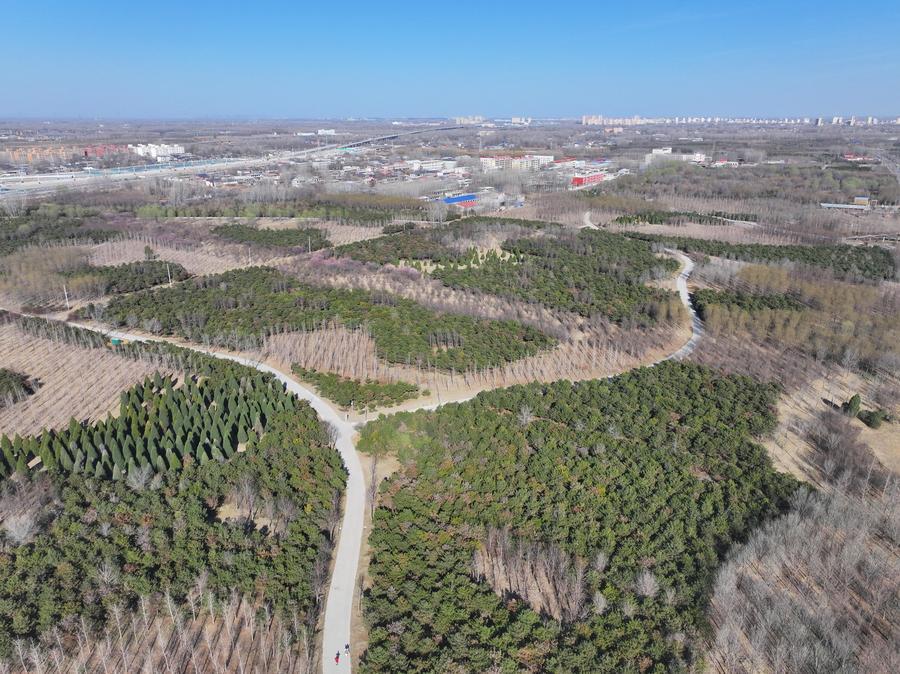
Since its establishment, Xiong’an has prioritized ecology and green development, laying a solid foundation for an eco-friendly future city. Improved ecological conditions have also elevated local villagers’ quality of life.
In Mapu Village, near Baiyangdian Lake, clear water, reeds and trees form a pleasant landscape. Dozens of RVs are parked in the woods. Liu Liqing, 56, grows morel mushrooms in greenhouses and enjoys leisure time by the village pond.
“In the past, it was a fetid, stagnant pond teeming with mosquitoes. People stayed away from it,” Liu recalled.
Since 2019, Xiong’an has embarked on a comprehensive initiative to treat rural sewage, garbage, and toilet waste in the vicinity of Baiyangdian Lake. Eighty-nine sewage treatment stations were built in 78 villages, purifying domestic wastewater to meet Grade IV standards suitable for industrial and recreational applications. The facilities in Mapu Village alone cater to the needs of over 10,000 residents, providing 400 to 500 tonnes of purified water used daily for irrigation of morels, tomatoes and strawberries. The once-malodorous pond has become a clean waterscape within an ecological park.
Better ecology has boosted incomes. Liu Chuanghui, village Party secretary, said villagers once grew corn on limited land with an annual per capita income of around 1,000 yuan, and now the village runs a morel planting base and an RV campsite.
“Tourists come here for fishing, barbecues and RV stays,” Liu said. The village earns 230,000 yuan annually from woodland leasing. The morel project brings villagers 14,000 yuan per worker each growing season, with expected sales of 20,000 to 30,000 yuan per mu (about 0.067 hectares) in the future.
With rising collective income, the village has enhanced subsidies for medical insurance, built a football field, and opened a free canteen for villagers aged 75 and above. “Since Xiong’an New Area was established, our environment and services have kept improving,” Liu said. (Video reporters: Zhang Tao, Mu Yu, Zhang Shuo, Qu Lanjuan, Gong Jinglu, Fu Xuyao, Su Kaiyang; Video editors: Zhou Yang, Yu Jiaming, Liu Xiaorui) ■
