


IRGC says it attacked Amazon cloud data center in Bahrain, Oracle data centre in Dubai
WASHINGTON/TEHRAN:
Hopes for a swift end to the Middle East war faded on Thursday after US President Donald Trump vowed more aggressive strikes on Iran, sending oil prices sharply up again in a blow to consumers around the world.
Iran’s Islamic Revolutionary Guard Corps (IRGC) said it had attacked an Amazon cloud computing center in Bahrain in retaliation for recent “assassinations.”
“In the first action against spy and terrorist technology companies, the cloud computing center of Amazon company in Bahrain was attacked and destroyed,” the IRGC said, without providing evidence.
The navy command of Iran’s Islamic Revolutionary Guard Corps (IRGC) claims it launched an attack on a data centre belonging to US technology firm Oracle in Dubai, according to state media.
Earlier, the IRGC said it had targeted an Amazon cloud computing centre in Bahrain.
“In the first action against spy and terrorist technology companies, the cloud computing center of Amazon company in Bahrain was attacked and destroyed,” the IRGC said, without providing evidence.
Iran’s army chief warned that “no enemy troops should survive” if the US attempts a ground invasion. “In the event the enemy attempts a ground operation, no one should survive,” Amir Hatami said in comments carried by state broadcaster IRIB.
Hatami said the military leadership has instructed operational commands to closely monitor movements by the US forces and respond in a timely manner.
“It is necessary to monitor the enemy’s movements and actions with utmost precision and extreme caution, moment by moment, and to implement plans to counter its attack methods at the appropriate time,” he said. “The spectre of war must be removed from our country, and security must prevail for all, as it is unacceptable for places to be safe while our people are in danger,” he added.
Earlier, Iranian Foreign Ministry spokesperson Esmaeil Baqaei said Iran will take ‘necessary actions’ to prevent the Strait of Hormuz from being exploited for ‘military aggression’ against the country, according to Tasnim News Agency.
Baqaei also said that a US missile strike on a sports hall in Lamerd, Fars, killed 21 civilians on Feb. 28, including teenagers, denouncing the attack as a “despicable war crime.” “The American new #PrSM missile struck a crowded sports hall filled with innocent teenagers,” he said in a statement on X.
Baqaei accused the US of deliberately targeting civilians and described the attack as a “despicable war crime.”
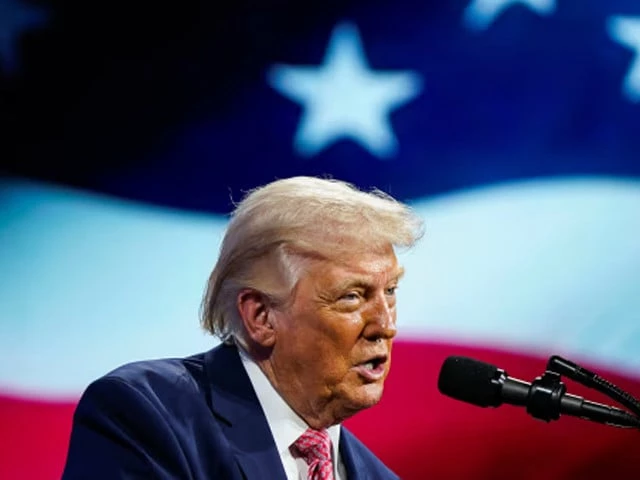
Trump said in a televised speech on Wednesday night that the US military had nearly accomplished its goals in Iran, but offered no clear timeline for ending the monthlong war and vowed to bomb the country back into the “Stone Ages.”
But he declined to lay out a concrete plan to wind down the war, now in its fifth week, beyond saying that the US would finish the job “very fast.” “We have all the cards,” Trump said from the White House in his first primetime address since the US and Israel launched the war on February 28. “They have none.”
He glossed over some major unresolved issues, such as the status of Iran’s enriched uranium and access through the Strait of Hormuz, a conduit for global oil supplies which Iran has effectively closed.
The strait, he said, would open “naturally” once the war ended.
Trump said he expects the war to continue for another two to three weeks but believes the conflict is approaching an end.
In response, a spokesperson for Iran’s Khatam al-Anbiya Central Headquarters, cited by the Fars news agency, said US and Israeli assessments of Iran’s military strength are flawed.
“As we said, we announce to the Zionist-American enemies that your information about our military power and equipment is incomplete. You are completely ignorant of our enormous and strategic capabilities,” the spokesperson said.
He dismissed claims that Iran’s missile production centers and advanced systems had been destroyed.
“Do not think that you have destroyed our strategic missile production centres, our long-range offensive drones, modern air defence and electronic warfare systems, or our special equipmentbecause such assumptions will only make matters worse,” he said.
The spokesperson said Iran’s strategic military production continues in undisclosed locations beyond the reach of its adversaries. “The centres you imagine are of little importance, and our strategic military production is taking place in places you do not know and will never be able to reach,” he added.
He warned that the scale of Iranian attacks would increase. “After the powerful and unbelievable blows you have received so far, expect from us actions that are stronger, wider, and more destructive,” he said.
He added that the war would continue until Iran’s adversaries “wither, are humiliated, regret completely, and surrender.”
A US-Israeli strike on a major bridge just outside Tehran killed at least two people, according to local media, and severed a key new route under construction between the Iranian capital and the city of Karaj.
Several strikes hit the B1 bridge about 40 kilometers (25 miles) west of the Iranian capital on Thursday, the semi-official Fars News Agency reported, citing a local security official.
Iranian media say that the US and Israel have targeted the B1 bridge in Karaj.
The crossing was “the tallest bridge in the Middle East”, the judiciary-affiliated news agency Mizan claimed. It was designed to cut down the one-hour travel time between Tehran and Karaj to 10 minutes and was seen as a “point of pride for Iranian engineers,” according to local media.
More than 40 countries came together for a virtual meeting to discuss “every possible” measure to free up Iran’s chokehold on the Strait of Hormuz.
The meeting, hosted by the UK, had no formal conclusions. It came amid an increasingly tense – and at times personal – exchange between France’s President Emmanuel Macron and his US counterpart, Donald Trump, who has put the onus on allies to reopen the strait by any means necessary.
Iran’s effective closure of the strait has left nearly 2,000 vessels trapped inside the Persian Gulf, according to the International Maritime Organization. But the strait remains open to Russia, an aide to President Vladimir Putin said today.
Meanwhile, United States President Donald Trump urged the members of NATO to gather the courage to send naval vessels to the Strait of Hormuz, again disparaging the longtime military alliance.
Asked why he had not mentioned NATO in his Wednesday night address to the nation, Trump said it was not a NATO speech but that he had referenced the strait and those who were absent. “They gotta get guts and go in and just send your ships up there and enjoy it,” he told Politico.
Pressed on whether he was frustrated with the alliance, Trump said: “I couldn’t care less. I didn’t need them.”
He added: “But if I ever did need them, they wouldn’t be there.”
NATO has invoked Article 5 – its collective defence clause – just once in its history, after the 2001 terrorist attacks on the US. NATO allies have criticised Trump for starting the war with Iran without consulting them.
The remarks are the latest in a string of pointed criticisms Trump has directed at NATO over its response to the Strait of Hormuz crisis. He has previously called alliance members “cowards” and, in a separate interview with British daily The Telegraph, described NATO as a “paper tiger” and said leaving the alliance was “beyond reconsideration”.
Leaving NATO unilaterally – a move Trump has hinted at since his first term – would face significant legal hurdles. A 2023 law bars any US president from withdrawing from the alliance without the backing of a two-thirds majority in the US Senate.
Trump will meet with NATO chief Mark Rutte in Washington next week, according to The Wall Street Journal.
Meanwhile, a former Pentagon adviser said recent remarks by Trump suggested he was “desperate” to secure a deal with Iran to end the ongoing conflict in the Middle East.
“What the Iranian regime is getting from President Trump’s speeches is that he is actually desperate to make a deal,” former Pentagon adviser Jasmine El-Gamal told CNN.
“They know that if they continue to impose these costs on the US, Gulf allies, global energy markets, they have a better chance of getting to the negotiating table on their terms,” she added.
Her comments came after Trump said on Wednesday that the US would hit Iran “very hard” over the coming weeks.
“We’re going to bring them back to the Stone Age, where they belong,” he added.
El-Gamal said Trump’s back-and-forth between calls for negotiations and threats of escalation was hindering progress towards ending the conflict.
“We’re not closer than we were last week because he keeps doing the same thing, vacillate between these two positions,” she said.
“We want a deal but we’re also going to bomb you to the Stone Age if you don’t give it to us. That’s not the way you bring an adversary to the negotiating table,” she added.
Lebanon
Two Israelis were injured, and a building was damaged, on Thursday after rockets fired from Lebanon struck northern Israel, local media reported.
Channel 12 said that more than 30 rockets were launched toward the Galilee region within a short time, bringing the total number of rockets fired since midnight to around 50.
Israel’s public broadcaster KAN said two people sustained “minor” injuries after rockets fell in the settlement of Kiryat Shmona, adding that a building was also damaged.
Hezbollah said it targeted the settlements of Avivim, Metula, and Kiryat Shmona in northern Israel twice in succession with rockets.
More than 1 million people have been displaced in Lebanon, representing over 18% of the population, following intensified conflict and mass evacuation orders since early March 2026, according to Al Jazeera and other international sources.
The displacement crisis is overwhelming, with over 130,000 fleeing across borders, and massive numbers seeking refuge in shelters.
As of April 1, the Lebanese Ministry of Health reported that 1,318 people have been killed in Lebanon due to Israeli airstrikes and ground operations.
UAE
Authorities in Abu Dhabi said Thursday that falling debris from an intercepted missile caused minor damage near an industrial area, with no injuries reported.
The incident occurred near Khalifa Economic Zones, Abu Dhabi, after air defence systems intercepted a missile, the Emirates News Agency reported.
Officials said the debris caused limited material damage and confirmed there were no casualties.
(With input from News Desk)
