


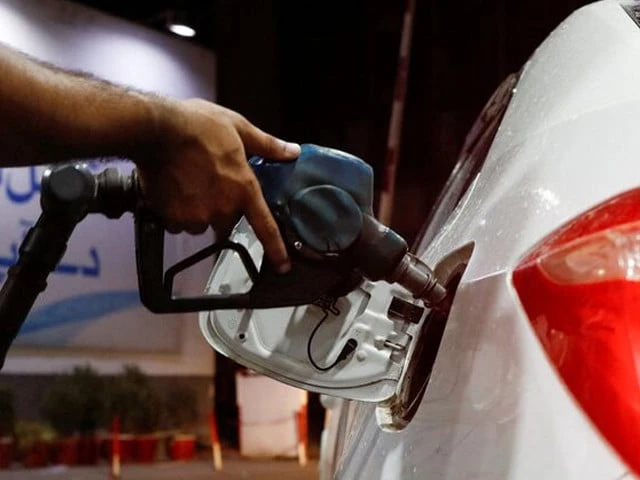
Pakistan faces rising fuel costs due to imports; govt balances price hikes with targeted subsidies and relief measures
KARACHI:
Fuel price increases in Pakistan almost always trigger a strong public reaction. That response is understandable, given the direct impact on household budgets. But these recurring adjustments, and the policy responses that follow, are best understood in the context of a deeper structural reality: Pakistan’s significant reliance on imported energy.
The figures illustrate the point clearly. Domestic refineries meet roughly 30 per cent of the country’s petrol demand, while the remaining 70 per cent is fulfilled through imported refined fuel. When crude imports are included, Pakistan sources nearly 80 per cent of its oil requirements from abroad. This is not a temporary imbalance but a longstanding feature of the country’s energy economy.
One important consequence of this dependence is the way fuel prices are determined. Even locally refined products are priced on import parity. In effect, whether petrol is produced domestically or imported, its price is linked to international oil benchmarks and the rupee’s exchange rate against the dollar. This limits the extent to which domestic policy alone can shield consumers from global market movements.
At the same time, Pakistan’s fuel consumption patterns make these price changes particularly impactful. The country uses an estimated 50 to 75 million litres of fuel daily. While petrol is widely used, diesel plays an equally vital role in supporting transport, agriculture, and logistics. As a result, any increase in fuel prices tends to ripple through the broader economy, affecting transport costs, food prices, and overall inflation.
Against this backdrop, the recent price adjustment can be seen as part of a broader effort to align domestic prices with international realities. The initial increase of Rs137 per litre — from Rs321 to Rs458 — reflected the scale of external pressures. Shortly thereafter, however, the government revisited the decision. Following intervention by Prime Minister Shehbaz Sharif, the increase was moderated by Rs80, bringing the final price to Rs378 per litre.
While the revised price still represents an increase, the adjustment indicates a willingness to respond to public concerns while navigating fiscal and external constraints. As Shehbaz Sharif has emphasised, the government is seeking to balance economic necessity with social protection, particularly in the context of rising global uncertainty.
This balancing approach is also evident in the relief measures introduced alongside the price revision. These initiatives are wide-ranging and aim to cushion the impact on both households and key sectors of the economy.
In Punjab and Islamabad, public transport has been made free to support daily commuters. In Sindh, a proposal has been put forward to provide registered motorcycle owners with Rs2,000 per month, helping offset basic fuel expenses.
At the federal level, targeted measures have been designed to reach both individuals and productive sectors. Motorcycle users are to receive a subsidy of Rs100 per litre, capped at 20 litres per month for an initial period. Small farmers will benefit from a one-time payment of Rs1,500 per acre, recognising the importance of diesel in agricultural activity.
Particular attention has also been given to the transport and logistics sector, where fuel costs have broader economic implications. Goods transport vehicles are set to receive Rs70,000 per month, with additional support for those carrying essential commodities.
Larger transport operators will receive Rs80,000 monthly, while inter-city and public service vehicles may receive up to Rs100,000 per month to help maintain stable fares. There is also a commitment to subsidise rail travel for lower-income passengers.
Importantly, the prime minister has also pointed out that the federal government is absorbing a substantial fiscal cost to protect vulnerable groups. The prime minister has said recently that a subsidy of Rs129 billion is being provided to shield poorer segments of society from the spillover effects of the Gulf war and rising international oil prices.
Taken together, these measures are intended to ease the transmission of higher fuel costs into overall inflation—especially food inflation. By supporting transport and supply chains, the government aims to limit secondary price increases that affect a wider segment of the population.
Of course, such interventions come with challenges. They require fiscal space and careful implementation to ensure that benefits reach the intended recipients. At the same time, they reflect an effort to provide targeted relief within the constraints of available resources.
More broadly, the current situation highlights an underlying vulnerability that extends beyond any single policy decision. As long as Pakistan continues to import the majority of its fuel, it will remain sensitive to global price movements, exchange rate fluctuations, and external supply conditions. In that sense, recent developments serve as a reminder of the structural nature of the issue.
Looking ahead, the path forward involves both immediate management and longer-term reform. In the short term, a combination of calibrated price adjustments and targeted relief measures remains a practical approach given existing constraints.
Over the medium to long term, however, reducing this vulnerability will be key. Expanding domestic refining capacity, diversifying the energy mix, and strengthening macroeconomic stability to support the rupee can all play a role in easing exposure to external shocks.
These are gradual processes rather than quick fixes. Yet they are essential if Pakistan is to move toward a more resilient energy framework.
The recent fuel price adjustment, and the steps taken to soften its impact, should therefore be seen as part of a broader and ongoing effort to navigate complex economic realities. Managing this balance between external pressures and domestic needs will remain a central policy challenge in the years ahead.
The writer is a research economist.
