


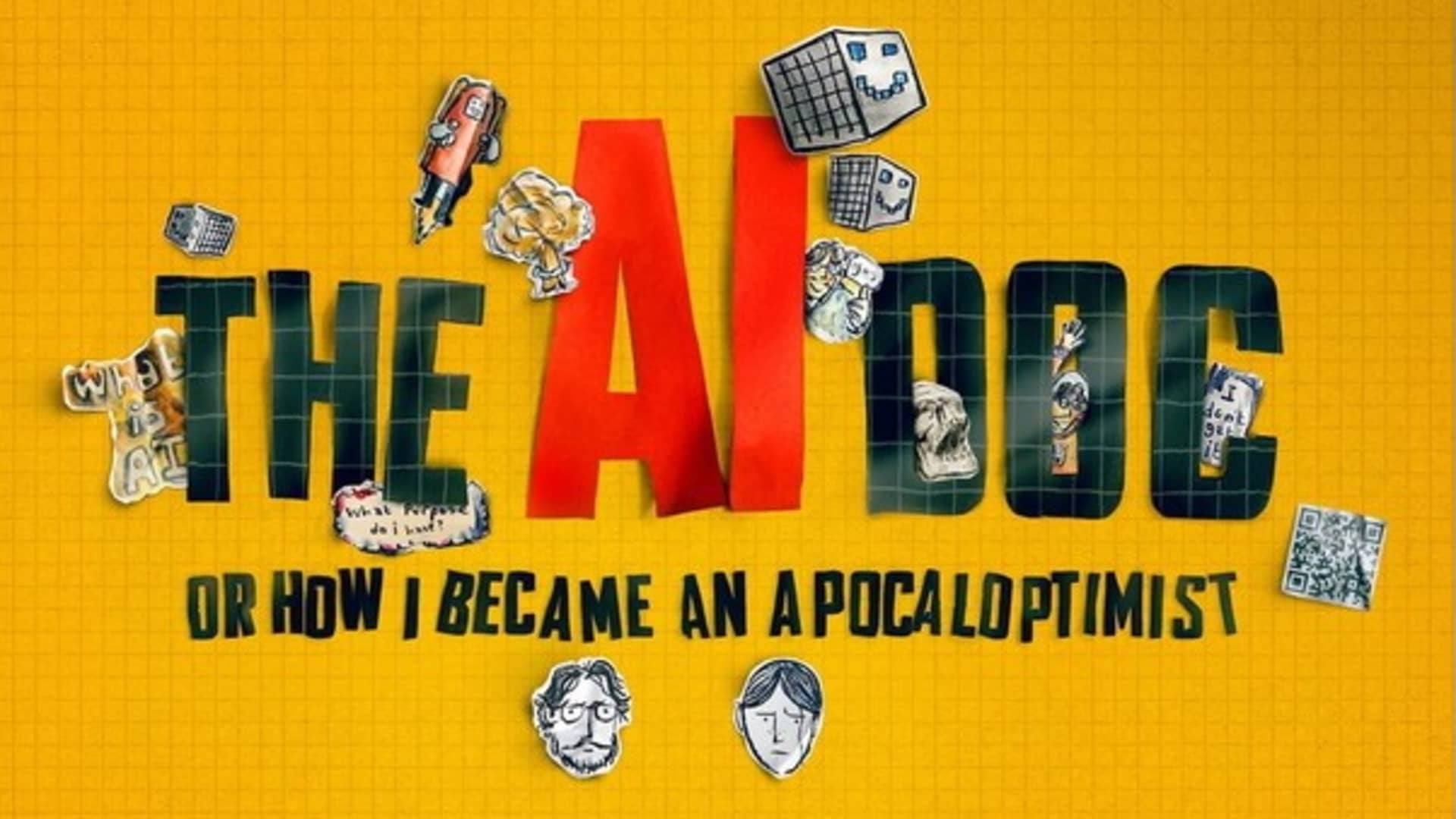
When filmmaker Daniel Roher and his wife were expecting their first child, it brought to the surface many of the questions that new parents ask: How would life be different? What kind of world would their child be entering? And because Roher was hearing so much talk about artificial intelligence and its potential impact on life and work as we know it, he wanted to find out: Was he crazy to be having a kid now? Would AI make everything better or be the beginning of the end of humankind?
Roher took those existential questions and, along with co-director Charlie Tyrell, made “The AI Doc: Or How I Became an Apocaloptimist,” which opened in theaters on March 27.
A few days before the film’s debut, two of its producers — Diane Becker and Ted Tremper — spoke at a dinner for CNBC’s Technology Executive Council to give a behind-the-scenes take on making the movie, how they wrangled some of tech’s biggest names to sit down with them, and what they learned along the way.
Tremper acknowledged that most of the people involved in the making of the film knew very little about AI other than what they heard about in the news. “I had to listen to hundreds and hundreds of hours of podcasts just to begin to figure it out,” he said.
Tremper’s first task was to reach out to all the major players in AI and ask them to sit for an on-camera interview for the documentary. “I basically sent 90 emails out and then got a total of six replies,” he said.
Eventually, Roher wound up interviewing 40 people on-camera, including three of AI’s biggest-name CEOs: Sam Altman of OpenAI, Dario Amodei of Anthropic, and Demis Hassabis of Google DeepMind. (Mark Zuckerberg and Elon Musk declined.) Tremper said he spoke with hundreds more people at every major AI lab for background.
‘What is AI?’
Roher, who won an Oscar for his documentary “Navalny,” comes across as anxious and a bit cynical as he questions the experts in the film. “That’s not an act, that’s who Daniel is,” said Becker. From the most enthusiastic boosters of AI to the pessimists who think it will bring about horrific change, Roher starts with the simplest question: What is AI?
“That was the most interesting part,” said Tremper. “Because we’re asking a Nobel Prize-winning scientist and all these incredible people to just take it down to a very simple human level and explain it and they were like, ‘Oh no.’ I think that question was harder than they thought.”
But Tremper was quick to point out that the film wound up being a sort of meta commentary on AI.
“It’s very binary the way people think about AI,” he said. “It’s either going to cure cancer or it’s going to kill everybody. It’s going to lead to the apocalypse or to a utopia, and that creates a lot of whiplash, and that whiplash is something that we really felt was important to lead someone through in the documentary.”
One of the biggest revelations early on was that the filmmakers could not chase the AI headlines. “We had finished our first set of interviews and then Sam [Altman] was ousted from OpenAI and we immediately started scrambling, planning for how to re-interview all these people,” Becker explained to the TEC members. “And then, 72 hours later, he was back.”
“That was the moment we realized that if we try to chase headlines, we’re done,” added Tremper. “We had to make a movie that’s as relevant, six minutes, six months, six years after it comes out. And so what do you have to say about AI, about technology moving quickly, that can be evergreen?”
In the weeks leading up to the film’s release, both Becker and Tremper said they were heartened to see the early reaction the film received at the Sundance Film Festival and other venues. “We loved hearing from people that they didn’t expect a doc about AI could make them laugh and cry,” Tremper said.
“We just showed the film to 700 students in Copenhagen and they thought that AI was just a rich, white people problem in America,” Becker said. “And then the lights come on and complete strangers start talking to each other about what they saw, what they believe, and have completely different takeaways and that’s really cool.”
A TEC member asked Becker and Tremper if they now have a different view of AI compared to before filming began.
“I used to think there were adults in the room who were going to take care of this and would figure it out,” Tremper said. “I don’t feel like that anymore. And that makes me very scared but also it’s a great invitation to be part of the conversation.”
Becker said she realizes now that when people are using tools like OpenAI’s ChatGPT or Anthropic’s Claude, they don’t understand it fully but take the results as truth.
“What I now want folks to know is that this technology is going to affect you in ways that you haven’t even thought of yet, and that we all have to be part of this conversation,” she said. “We all have a seat at the table, and we cannot let the tech companies tell us how we’re going to use AI. We have to be part of the answer and remain skeptical.”
