




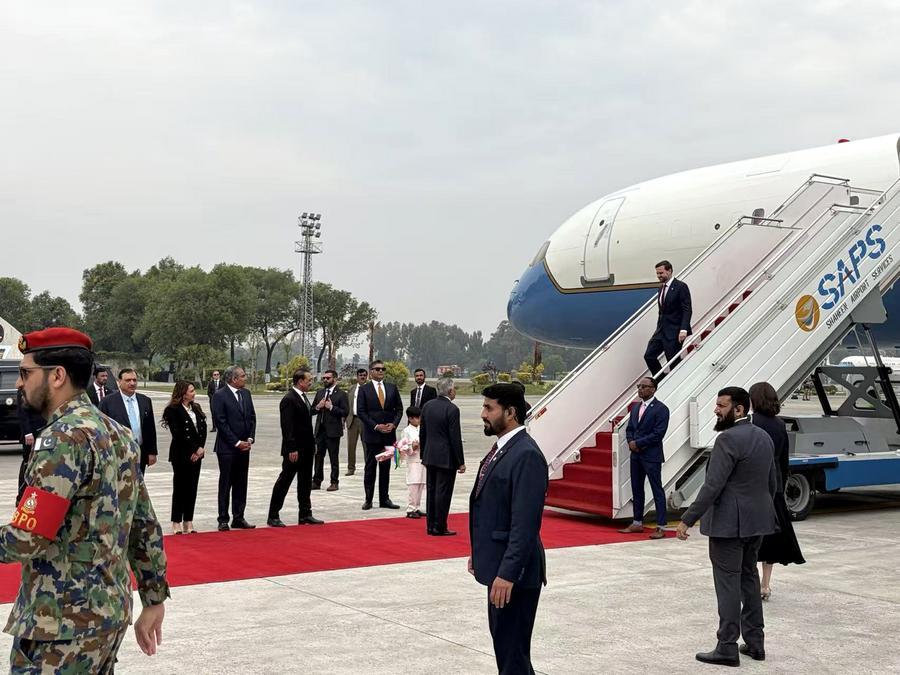
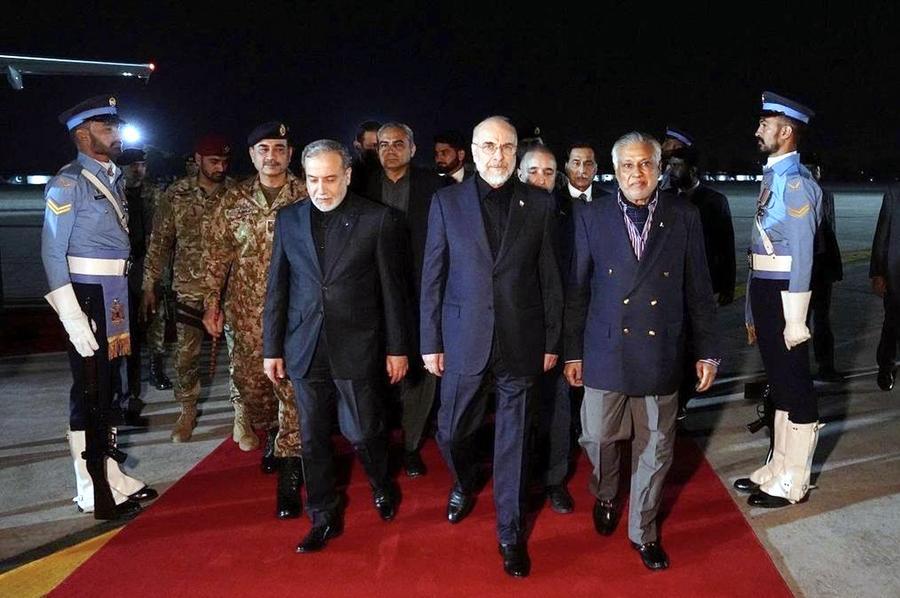
ISLAMABAD/TEHRAN, April 11 (Xinhua) — The Iranian and U.S. delegations for peace talks arrived here Saturday and would hold negotiations later.
After more than 40 days of intense hostilities, the two rivals are finally coming to the negotiating table. While U.S. President Donald Trump stated that the outcome of the talks would become clear “within 24 hours,” analysts believe that, given the hardline stances of both Washington and Tehran and their sharp differences on key issues, the negotiations are highly uncertain.
MAJOR DIFFERENCES FROM PREVIOUS TALKS
Experts believe that compared to U.S.-Iran negotiations before the current conflict, the dialogue in Islamabad has two major differences.
First, the level of representation is higher.
The U.S. delegation is led by Vice President JD Vance, while Iran is represented by Parliament Speaker Mohammad Bagher Ghalibaf. Experts suggest that the composition of both delegations carries “political weight,” reflecting a higher political level compared to the indirect U.S.-Iran talks just a few months ago.
The second difference lies in the change of mediator.
Before the conflict, U.S.-Iran negotiations were mainly mediated by Middle Eastern countries such as Oman. However, many Middle Eastern nations, particularly Gulf states, have been affected by the conflict and harbor significant grievances against Iran. Pakistan, by contrast, remains relatively detached while maintaining good relations with Iran, the United States, and Gulf states alike.
International observers widely agree that the biggest obstacle to the talks in Islamabad is a severe lack of mutual trust. Tughral Yamin, Pakistani retired brigadier and a regional security analyst, said the arrangements for these talks could help clarify each side’s position and clear up misunderstandings.
“Even if no major breakthrough is achieved, the dialogue itself can be seen as progress in building trust,” Yamin said.
CLASH OF PROPOSALS
From the outset, the negotiations are fraught with suspense and tension. Ghalibaf wrote on social media Friday evening that two conditions must be met before talks begin: a ceasefire in Lebanon and the unfreezing of Iran’s assets.
Analysts say these two points are just a small part of the many key issues and disagreements between the U.S. and Iran.
The Strait of Hormuz is considered the most critical issue in the talks. The U.S. demands that Iran open the strait as “free waters” with no tolls. Iran, however, sees the strait as a crucial bargaining chip and insists on a secure passage agreement that maintains its dominant role.
Geopolitically, Iran demands an end to all hostilities against “resistance forces in the region,” including Hezbollah in Lebanon. The U.S. and Israel, however, describe Lebanon as a “separate conflict” and demand Iran stop supporting “regional proxies.”
On the nuclear issue and uranium enrichment, the U.S. demands that Iran commit to never developing nuclear weapons and cease all uranium enrichment activities on its soil. Iran insists on its right to peaceful nuclear energy, including uranium enrichment. This has been a core point of contention for decades.
Experts believe that nearly every item on the agenda could potentially derail the talks. “The worst-case scenario is that if neither side gives the other a way out this weekend, the ceasefire could be suspended, and the war could reignite,” said Zhang Jie, dean of the School of International Studies of Xi’an International Studies University.
TALKS LIKELY TO PROCEED IN STEPS
Currently, there are no details about the format of the talks. Media and experts speculate that the negotiations may proceed step by step.
Some media outlets believe the talks may continue indirectly, with the U.S. and Iranian delegations in separate rooms, communicating through the mediator. If direct face-to-face talks are achieved, it would mark the first such negotiations between the two sides since 2015.
Wan Jia, an assistant professor at the Institute of Chinese Boundary and Ocean Studies, Wuhan University, believes the talks will likely follow a model of “high-level political engagement, third-party coordination, and technical-level elaboration.” Under this model, with Pakistan mediating, senior U.S. and Iranian officials would first outline the broad direction of the talks, while technical-level officials would later address specific issues.
Yamin noted that the U.S. and Iran have entered negotiations just before further escalation of conflict, leaving little time to develop a detailed framework or reach procedural consensus. The two sides must first agree on how to negotiate, then on what to negotiate, before delving into specific issues.
Experts argue that the most realistic path for the U.S. and Iran is to quickly reach a consensus on crisis management and de-escalation before addressing core sensitive issues. “Ideally, both sides could first agree on a framework agreement before moving to detailed negotiations, postponing the most contentious issues,” Wan said.■
