


Defence claims case ‘politically motivated’ as court agrees with prosecution arguments
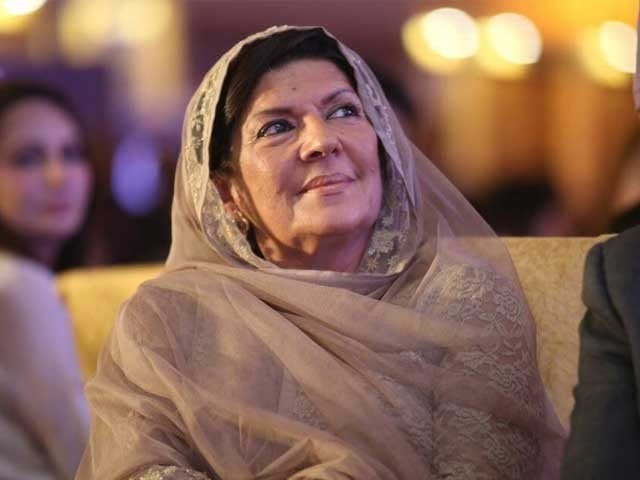
Former prime minister Imran Khan’s sister Aleema Khanum. PHOTO: FILE
The acquittal petition filed by Aleema Khan regarding the case registered against her in connection with the 26 November, 2024, D-Chowk protest has been rejected by the Rawalpindi anti-terrorism court (ATC).
ATC Judge Amjad Ali Shah delivered the reserved verdict, agreeing with the prosecution’s arguments after hearing submissions from lawyers representing both sides.
Advocate Faisal Malik, Aleema Khan’s lawyer, argued during the hearing that his client’s only fault during the protest was that she met her brother, former prime minister Imran Khan, in jail.
Malik added that Aleema Khan conveyed the message of the Pakistan Tehreek-e-Insaf founder to the party and public. “Peaceful protests enjoy democratic and constitutional protection,” Malik said, noting that Aleema Khan communicated the protest message through the media, but no journalist or media channel was named or called in as a witness in the case.
Read: ATC issues non-bailable arrest warrant for Aleema Khan
The court asked if this meant the media should also be implicated in the case. The defence lawyer responded that he meant only that Aleema Khan and the journalists reported the same message, and that there were no witnesses to the conversation that took place during the jail visit.
When the court asked if the defence claimed that Aleema Khan only conveyed the protest message, Advocate Malik replied affirmatively, adding that the charges included in the case do not prove the allegations against the accused.
“The law does not state that a person conveying a message is automatically culpable. The sections under Section 6 of the Anti-Terrorism Act (ATA) do not prove the accused’s guilt. This case does not hold legal merit and is a politically motivated retaliatory action,” he argued.
The prosecutor, Zaheer Shah, countered that the accused was charged under five clauses of the ATA based on the investigation report. He argued that during political protests, control lies with the organisers.
“The ‘theory of control’ states that in any such protest, the accused holds full control. The media has no connection to this case; they did not appoint their own prime minister,” Shah said.
He added that people did not come out at the media’s instruction, questioning why the media should be made a witness when the protesters themselves admitted in the case that they organised the protest.
During his arguments, the prosecutor read out the transcript of Aleema Khan’s media talks and informed the court that the constitution stipulates that any protest or rally must remain within the law. He claimed the accused, with others, organised a violent protest aimed at toppling the government.
Read More: Aleema says Imran won’t compromise
“Aleema Khan said in her media talk that the PTI founder instructed that, whether the protest had an NOC or not, they would not comply. How can this be called a peaceful protest?” the prosecutor questioned.
He further argued that one police officer was martyred, 170 were injured, and business activities across the country were suspended during the protest. “At the time of the protest, the accused themselves admitted, ‘We shut down the country,’ and armed groups were brought from Khyber Pakhtunkhwa to Punjab”.
Shah informed the court that 18 witnesses have already been recorded in the case, arguing that under these circumstances, there is no justification for the acquittal petition. He requested that the court reject the accused’s petition, which the court agreed with.
D-Chowk Protest
On November 13, Imran Khan made a “final call” for nationwide protests to be held on November 24, demanding the restoration of PTI’s electoral mandate, the release of imprisoned party members, and the reversal of the 26th Amendment, which he claimed had empowered a “dictatorial regime.”
The protest took place in D-Chowk, Islamabad, where supporters travelled from different provinces to heed Khan’s call.
The state rejected any possibility of negotiation, and an operation was conducted against the protestors, prompting the PTI leadership to flee the scene. The protest ended with the operation on November 26.
