


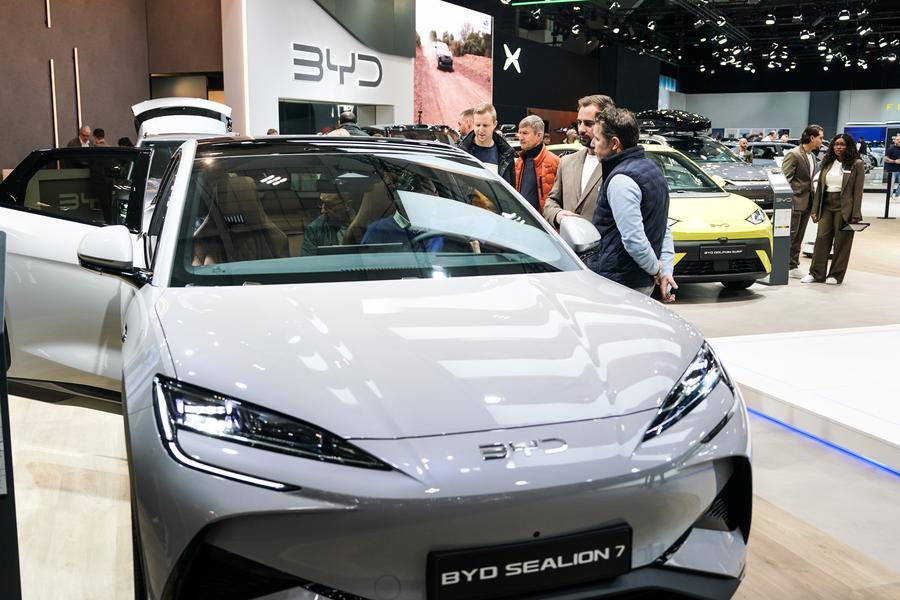
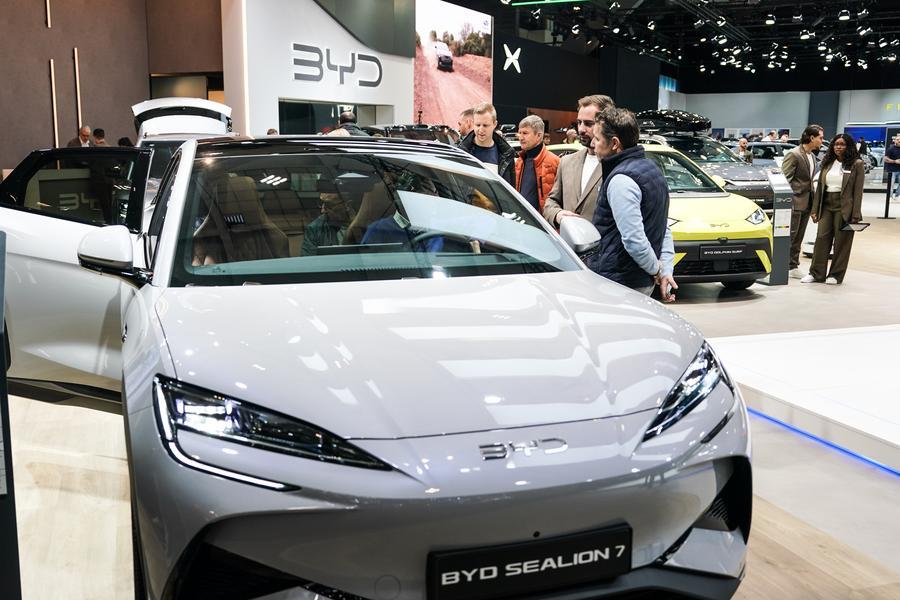
BEIJING, Jan. 15 (Xinhua) — The latest significant progress in addressing friction over electric vehicles (EVs) between China and the European Union (EU) once again demonstrates that dialogue and mutual respect remain the most effective path to managing differences.
After multiple rounds of consultations, China and the EU have achieved pragmatic and encouraging outcomes in the dispute, with the European Commission issuing a guidance document on the submission of price undertaking offers by Chinese EV exporters on Monday.
According to the commission, each offer will be subject to the same legal criteria, and the commission will assess them in a fair and objective manner, in line with the principle of non-discrimination and World Trade Organization (WTO) rules.
Price undertaking offers are a common practice allowed by the WTO as an alternative to anti-subsidy tariffs. This development marks an important breakthrough in the electric vehicle case, which saw the EU begin imposing definitive countervailing duties of up to 35.3 percent on Chinese-made EVs in 2024.
The outcome of these consultations “is conducive not only to ensuring the healthy development of China-EU economic and trade relations, but also to safeguarding the rules-based international trade order,” the Chinese commerce ministry said in a statement on Monday.
A soft landing of the EV dispute is the optimal outcome and serves the interests of both sides. It would not only help maintain the stability of automotive industrial and supply chains in China, the EU, and the wider world, but also create a stable and predictable environment for Chinese EV makers to strengthen cooperation with their European counterparts and better advance the EU’s green transformation agenda.
The triumph of pragmatism over protectionism demonstrates that China and the EU have both the ability and the willingness to resolve differences properly through dialogue and consultation, based on mutual respect and within the framework of WTO rules.
China and the EU are the world’s second and third-largest economies. They are each other’s second-largest trading partners. China-EU economic and trade relations are characterized by complementary advantages and mutual benefit. Such relations should — and absolutely can — achieve dynamic balance through development. The progress in resolving the EV dispute is both telling and exemplary.
Upholding a strategic and long-term vision and the spirit of dialogue, China and the EU, as constructive forces for multilateralism, openness and cooperation, should continue working together and deepen mutually beneficial economic and trade cooperation to provide greater certainty and stability for the world. ■
