


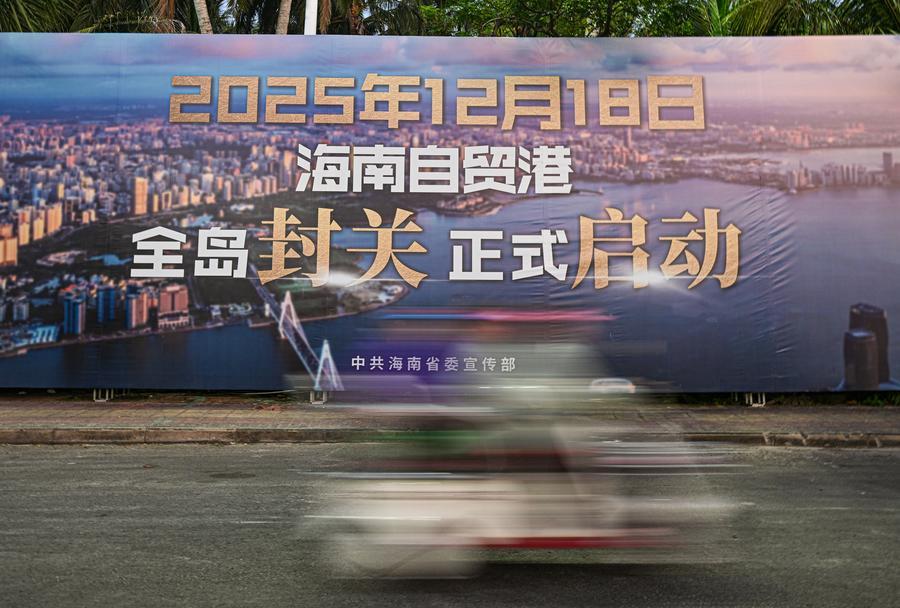
*China on Thursday launched island-wide special customs operations in the Hainan Free Trade Port (FTP), the world’s largest FTP by area.
*The launch of island-wide special customs operations marks a new stage in the development of the Hainan FTP, which enables freer flows of goods, capital, personnel and data, supported by zero tariffs, low tax rates and a simplified tax system.
*The move is widely seen as a landmark in China’s efforts to promote free trade and expand high-standard opening-up amid rising protectionism worldwide.
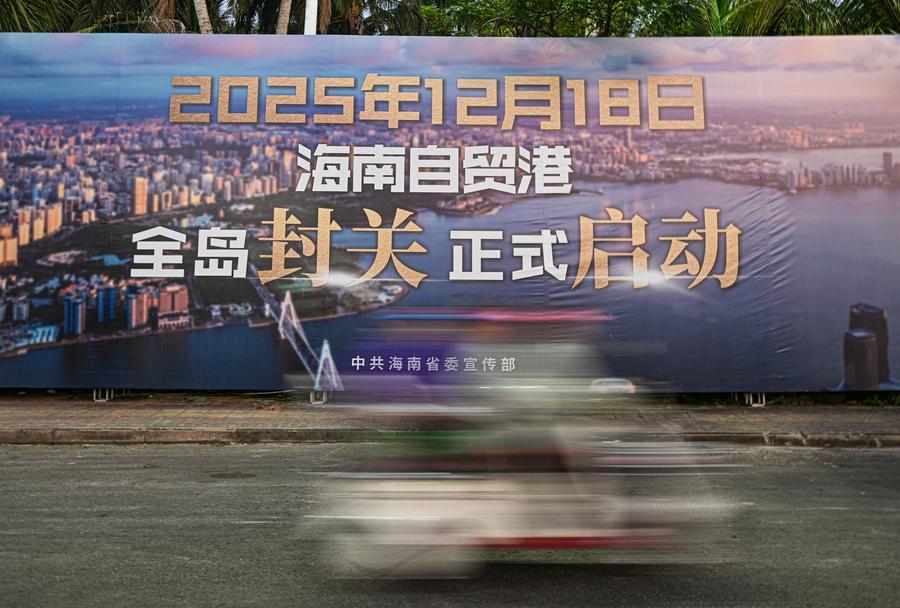
HAIKOU, Dec. 18 (Xinhua) — China on Thursday launched island-wide special customs operations in the Hainan Free Trade Port (FTP), the world’s largest FTP by area, allowing freer entry of overseas goods, expanding zero-tariff coverage, and introducing more business-friendly measures.
The move is widely seen as a landmark in China’s efforts to promote free trade and expand high-standard opening-up amid rising protectionism worldwide.
Under the new arrangements, the tropical island, covering more than 30,000 square km and about a 1.5-hour flight from Hong Kong, has been designated a special customs supervision zone. This marks a new stage in the development of the Hainan FTP, which enables freer flows of goods, capital, personnel and data, supported by zero tariffs, low tax rates and a simplified tax system.
Substantial progress has been achieved in developing the Hainan FTP, and the essential conditions for its island-wide special customs operations have been met, Chinese Vice Premier He Lifeng said at the launch ceremony in Haikou, the capital of south China’s Hainan Province.
The island-wide special customs operations should serve as an opportunity to deepen reforms in key sectors, steadily advance high-quality development, improve the risk prevention and control system, and build the Hainan FTP into a leading gateway for China’s opening-up in the new era, said He, also a member of the Political Bureau of the Communist Party of China (CPC) Central Committee.
NEW STAGE
Officials describe the special customs system as offering “freer access at the first line,” referring to freer trade between Hainan and areas outside China’s customs borders, and “regulated access at the second line,” which involves applying standard customs controls for goods moving from Hainan to the mainland.
The share of zero-tariff products in the Hainan FTP has been raised from 21 to 74 percent, expanding the list of related items from 1,900 to over 6,600.
Zero-tariff goods processed in Hainan may be sold to the mainland duty-free if their local processing generated an added value of 30 percent or more.
Chi Fulin, president of the China Institute for Reform and Development, said this move demonstrates China’s push to expand institutional opening-up.
“It signals that China’s doors will not close, but open wider,” Chi said, describing the FTP as the “highest level of openness in the global economy.”
As the policy came into force, major ports across Hainan saw a surge in activity on Thursday.
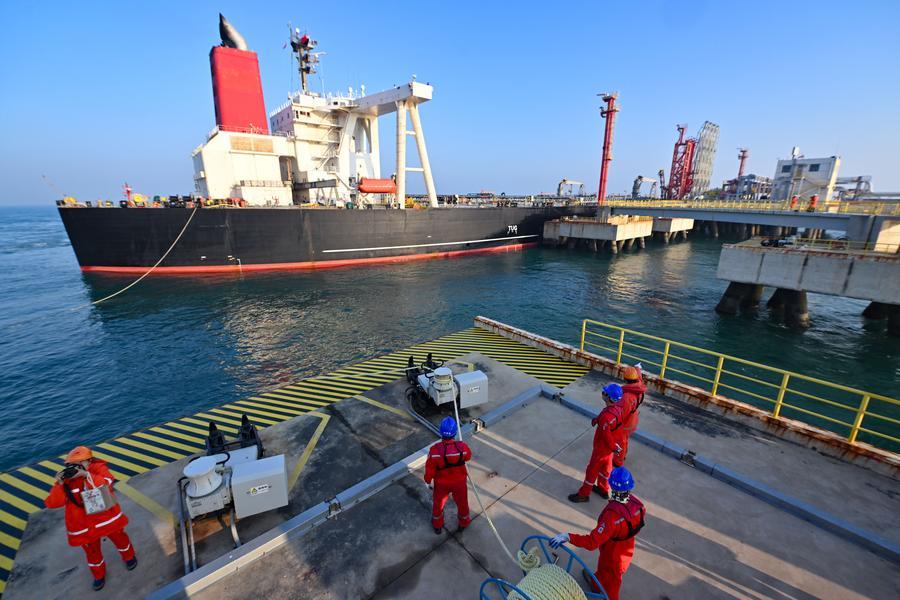
At Yangpu Port, one of the island’s eight “first-line” customs ports, the first batch of zero-tariff petrochemical imports, totaling 179,000 tonnes, arrived, with the shipment expected to save close to 10 million yuan (about 1.42 million U.S. dollars) in import-stage costs compared with before the launch.
Local authorities expect that on Thursday alone, key “first-line” gateways such as Yangpu and Sanya Phoenix International Airport are expected to clear a range of zero-tariff imports, including crude oil, medical equipment, aviation materials and food ingredients, with the total value exceeding 500 million yuan.
At Haikou Meilan International Airport, Jia Green Chocolate Works (Hainan) Co., a joint-venture chocolate producer based in the Hainan FTP, began shipping its products to Beijing and Hanzhong in northwest China after completing customs clearance.
“We have already benefited from the special customs operations of the Hainan FTP,” said Wu Huijuan, general manager of the company’s marketing department. “For this batch of chocolate products, we have cut costs by about 10 percent.”
OPEN DOORS WIDER
Once an underdeveloped frontier outpost, Hainan became China’s largest special economic zone in 1988. A master plan released in 2020 set the goal of developing the island into a globally influential, high-level FTP by the middle of the century. The Hainan FTP Law has been implemented to provide a legal guarantee for the port’s development.
Foreign companies can benefit from a business environment more closely aligned with international standards, lower tax and production costs, broader access to service sectors like healthcare and education, and use Hainan as a platform to tap into the vast Chinese market.
Official data showed that since 2020, more than 9,600 foreign-invested enterprises have been established in Hainan. To date, the province has attracted investors from over 170 countries and regions.
“For Dun & Bradstreet, these policies in Hainan are highly aligned with our business and development direction in China,” said Andrew Wu, CEO of Dun & Bradstreet China. The United States-based commercial data and analytics firm registered a company in the Hainan FTP in 2022.
“We aim to establish a data hub in the Free Trade Port, with Hainan as the center for aggregating global data and building a digital economy ecosystem oriented toward the world,” Wu said.
Next, China will support Hainan in aligning its institutional framework with a high-standard FTP, including support in areas such as trade administration, investment environment and cross-border data flows, said Wang Changlin, deputy head of the National Development and Reform Commission.
The island-wide special customs operations reflect the CPC Central Committee’s recommendations for formulating the 15th Five-Year Plan (2026-2030), which called for a broader opening-up to the world.
“The move will inject new momentum into China’s pursuit of high-quality development and its goal of basically achieving socialist modernization by 2035,” said Xu Deshun, a researcher at the Chinese Academy of International Trade and Economic Cooperation under the Ministry of Commerce.
Chinese economist Huang Hanquan said it also underscores the world’s second-largest economy’s opposition to protectionism.
The launch date, Dec. 18, coincides with the anniversary of a landmark CPC meeting in 1978, which was widely considered the start of the country’s reform and opening-up era.
Over recent decades, China has established 22 pilot free trade zones, eliminated foreign investment restrictions in manufacturing, and expanded market access in sectors including telecommunication, healthcare and education. (Video reporters: Hong Ling, Zhou Yang, Zhao Yuhe, Liu Yutian, Guo Liangchuan, Guo Cheng and Zhou Huimin; video editors: Hong Ling, Li Qin and Wang Han.) ■
