


China’s shift toward high-quality, innovation-driven development is creating new global cooperation opportunities — especially for Portugal and other Portuguese-speaking countries — by offering more stable trade, advanced technology, and expanded partnership potential.
LISBON, Nov. 30 (Xinhua) — China’s transition toward high-quality development not only reflects its internal economic upgrading but also creates “a new platform of global cooperation,” offering shared opportunities for Portuguese-speaking countries, a business leader has said.
In a recent interview with Xinhua, Bernardo Mendia, secretary-general of the Portugal-China Chamber of Commerce and Industry, said China’s stable economic growth in the third quarter shows that the world’s second-largest economy “is consolidating its transformation while navigating successfully through a complex global environment.”
“A stable China means a stable trading environment for us all. It is a reliable partner and a major engine for global growth,” he said.
“China is clearly moving from quantity to quality, from being the ‘world’s factory’ to becoming an innovation-driven, sustainable and consumption-based economy,” he said, adding that the shift “means more sophisticated cooperation, better technology transfers and more predictable trade.”
Mendia said Portugal sees China’s transformation “not as a threat, but as a door open to mutually advantageous cooperation.”
“Portugal, with its diplomatic tradition, global reach and strategic location, can benefit from this transformation if it acts proactively and with foresight,” he said.
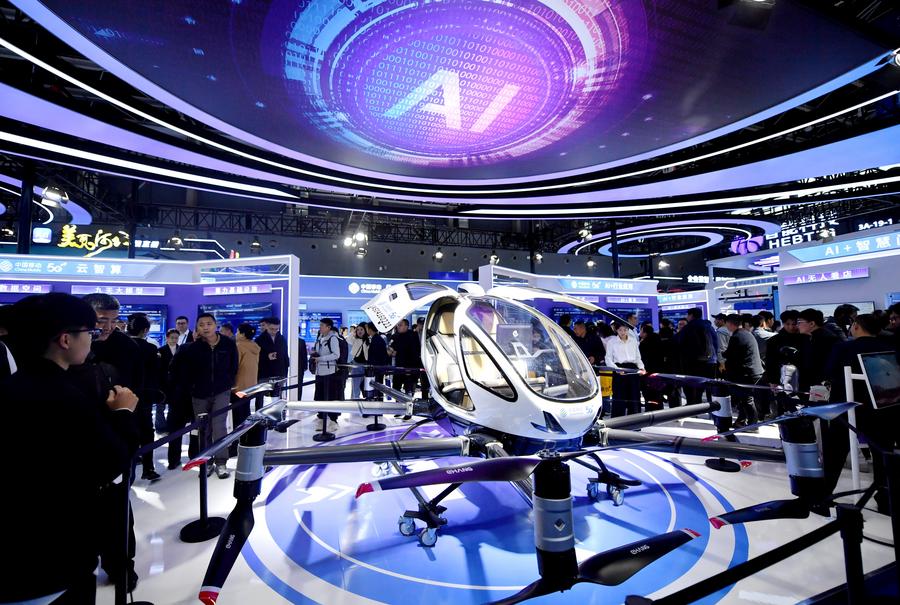
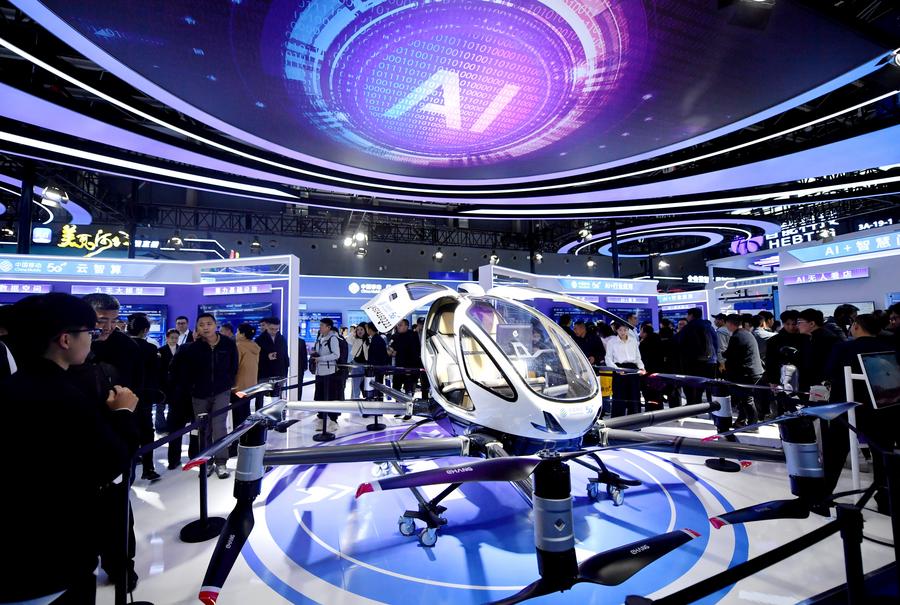
According to Mendia, China’s focus on high-quality development has yielded visible results in renewable energy, new-energy vehicles, advanced manufacturing and digital services.
“China’s ability to innovate and make green technology affordable is changing the rules of the game,” enabling developing countries to decarbonize their economies, he said.
China’s intensive investment in R&D, digitalization and automation is making production better and smarter, he said. Such transformation is not only reshaping China’s own economy but also redefining its global partnerships, creating new fields of synergy for Portugal and other Lusophone countries, he added.
“Portugal and China are highly complementary partners in energy, agriculture and services,” Mendia said.
He pointed to China’s clean energy technology and industrial capacity, alongside Portugal and Brazil’s renewable resources, as a foundation for joint solar and wind projects. He also cited China’s advances in precision agriculture and biotech as key to boosting productivity in Brazil and Mozambique.
He said China’s domestic rebalancing, such as a growing middle class and increased travel spending, will also create opportunities for tourism and service sectors. Portugal, with its language advantage, serves as a gateway for Chinese companies that want to expand into the EU, Africa and Latin America, he added.
In October, at the fourth plenary session of the 20th Central Committee of the Communist Party of China, participants deliberated over and adopted the Recommendations of the Central Committee of the Communist Party of China for Formulating the 15th Five-Year Plan for Economic and Social Development.
Mendia underlined the importance for Portuguese decision-makers to understand China’s policy direction.
Seizing new opportunities arising from China’s long-term vision “is not just an academic exercise, but a strategic necessity,” he said.■
