


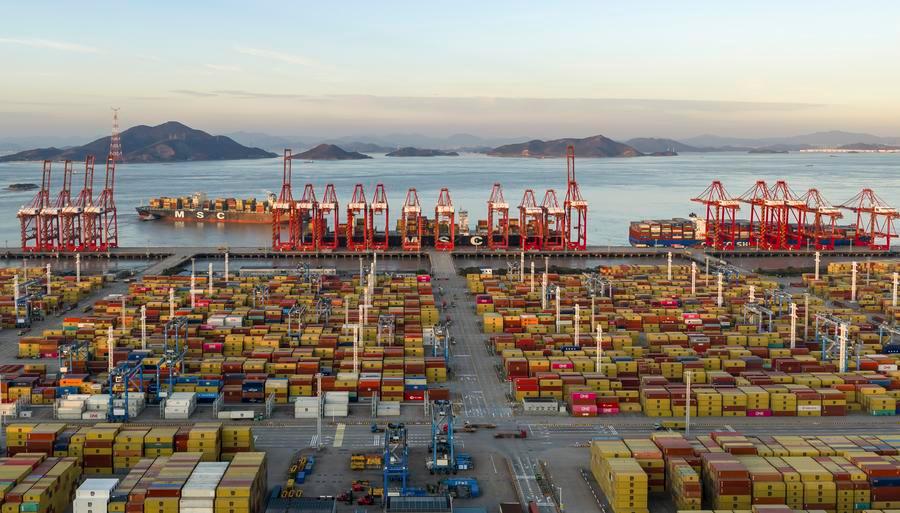
*China’s foreign trade posted resolute expansion in 2025 despite global headwinds, with the country retaining its position as the world’s largest goods trading nation.
*In 2025, China’s trade network continued to expand, covering more than 240 countries and regions worldwide, with import and export value registering growth in over 190 of these markets.
*While China was once known for exporting mostly labor-intensive, low-end products in the global value chain, its export structure has undergone remarkable upgrading, with exports becoming increasingly greener and more technology-intensive.
BEIJING, Jan. 14 (Xinhua) — China’s foreign trade posted resolute expansion in 2025 despite global headwinds, with the country retaining its position as the world’s largest goods trading nation.
Last year, China’s foreign trade value hit 45.47 trillion yuan (about 6.48 trillion U.S. dollars), up 3.8 percent year on year, according to data released by the General Administration of Customs on Wednesday. This marks the ninth consecutive year of growth for China’s foreign trade since 2017.
Exports grew 6.1 percent year on year to 26.99 trillion yuan in 2025. Imports reached a record 18.48 trillion yuan, with year-on-year growth of 0.5 percent, cementing China’s status as the world’s second-largest import market for 17 years in succession.
During the 14th Five-Year Plan period (2021-2025), China’s cumulative import and export value exceeded 200 trillion yuan, representing a 40-percent surge from the 13th Five-Year Plan period and an average annual growth rate of 7.1 percent.
At a government press conference held in Beijing on Wednesday, Wang Jun, deputy head of the General Administration of Customs, said that China’s 2025 foreign trade achievements are “truly remarkable and hard-won” amid global economic challenges.
Wang attributed the steady growth of China’s foreign trade to three major drivers: The country’s pro-trade stabilization policies, the sustained release of import demand from its vast domestic market, and a sophisticated industrial system that continuously adapts to evolving overseas needs.
While the external environment facing China’s foreign trade this year remains severe and complex, the fundamentals of the country’s foreign trade remain solid, which will inject more certainty into global economic and trade development, he said.
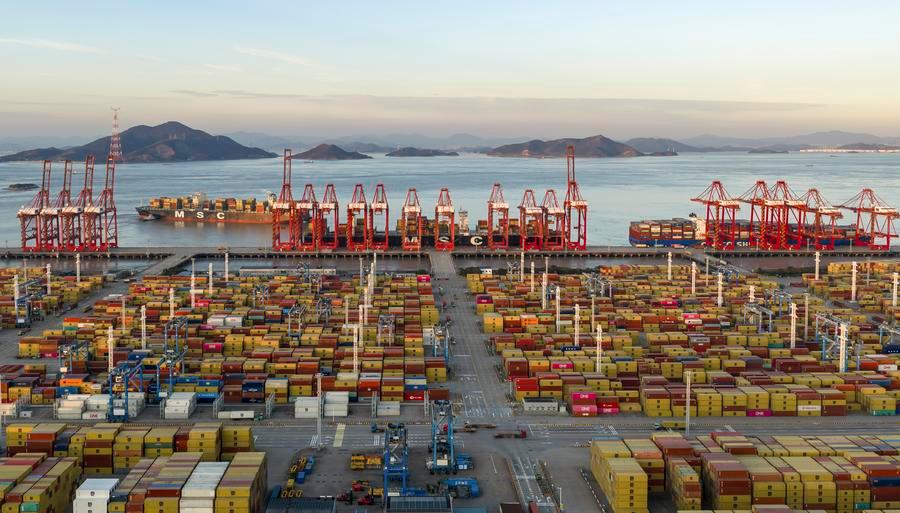
DIVERSIFIED TRADING PARTNERS
In 2025, China’s trade network continued to expand, covering more than 240 countries and regions worldwide, with import and export value registering growth in over 190 of these markets.
Notably, trade with countries participating in the Belt and Road Initiative (BRI) became a key growth engine. Bilateral trade with BRI partner countries reached 23.6 trillion yuan, increasing 6.3 percent year on year and accounting for 51.9 percent of the country’s total foreign trade value.
Meanwhile, trade with emerging markets maintained robust momentum in 2025. Exports to and imports from the Association of Southeast Asian Nations (ASEAN), Latin America and Africa hit 7.55 trillion yuan, 3.93 trillion yuan and 2.49 trillion yuan, respectively, posting respective growth rates of 8 percent, 6.5 percent and 18.4 percent.
“Over the past five years, China’s foreign trade ‘circle of partners’ has kept expanding,” Wang said, citing the latest international data which shows that China has become a major trading partner of more than 160 countries and regions worldwide — an increase of over 20 compared with 2020.
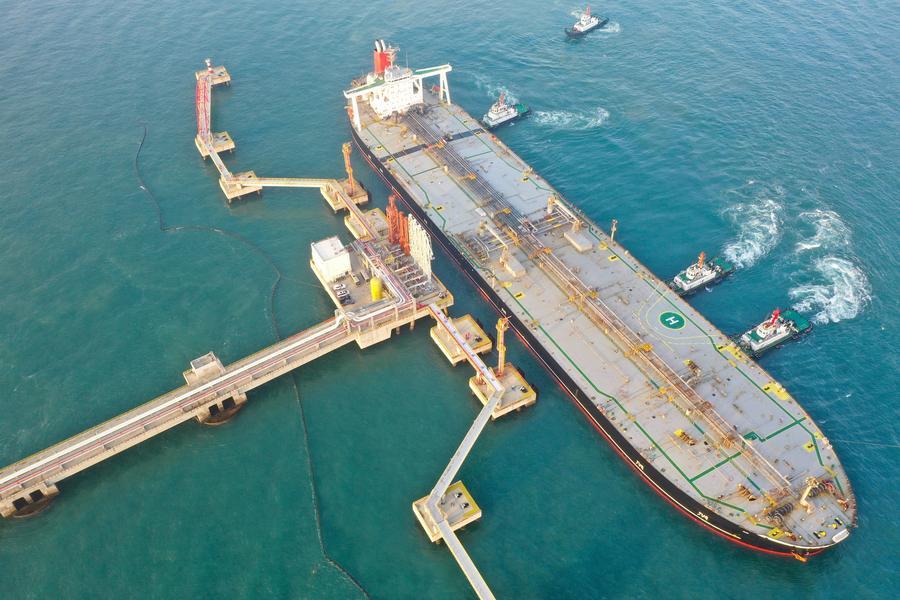
EXPORT UPGRADING
While China was once known for exporting mostly labor-intensive, low-end products in the global value chain, its export structure has undergone remarkable upgrading, with exports becoming increasingly greener and more technology-intensive.
Its exports of high-tech products stood at 5.25 trillion yuan in 2025, representing a year-on-year increase of 13.2 percent. Among these, exports of special-purpose equipment, high-end machine tools and industrial robots registered year-on-year growth of 20.6 percent, 21.5 percent and 48.7 percent, respectively.
“In particular, the country’s exports of industrial robots surpassed its imports last year, making China a net exporter of industrial robots,” Wang said.
Beyond high-tech products, green exports have also emerged as a new growth point, helping advance the global green transition. In the field of green energy, exports of lithium batteries and wind turbines soared by 26.2 percent and 48.7 percent, respectively, in 2025. Within the green mobility sector, exports of electric motorcycles and bicycles rose by 18.1 percent last year.
China has continued to provide the world with a steady, reliable supply of high-quality, cost-effective products, playing an important role in safeguarding the stability of global industrial and supply chains, Wang noted.

BROAD-BASED GROWTH IN IMPORTS
One of the most impressive aspects of China’s foreign trade performance in 2025 was its steadily expanding import value, with positive growth momentum gaining strength as the year progressed.
Starting in June 2025, imports maintained year-on-year growth for seven consecutive months, with the growth rate accelerating further to 4.4 percent in December.
In terms of commodity structure, China last year imported nearly 3 billion tonnes of bulk commodities, representing a year-on-year increase of 1.1 percent. The country also imported mechanical and electrical products worth over 7.4 trillion yuan, posting a year-on-year growth rate of 5.7 percent.
In addition to commodity structure, the scope of import partners also expanded. Specifically, China achieved growth in its imports from over 130 countries and regions worldwide last year, an increase of 7 compared with 2024.
Broken down by region, its import values from Asia, Latin America and Africa rose by 3.9 percent, 4.9 percent and 6 percent, respectively, reflecting balanced development in import trade across different regions in 2025.
To further boost imports from developing economies, China implemented zero-tariff treatment on 100 percent of tariff lines to the least developed countries having established diplomatic relations with China. This policy yielded tangible results, with imports from these countries growing by 9 percent.
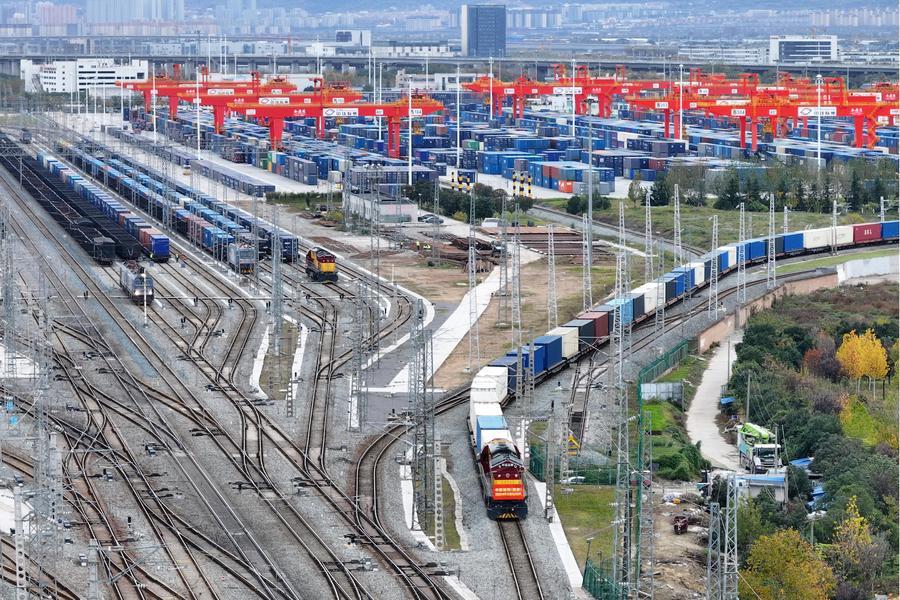
China’s imports from developed countries also maintained robust growth, driven by strong domestic demand for high-quality goods. For instance, China’s imports of edible aquatic products and dairy products from Oceania rose by 37.2 percent and 18.6 percent, respectively, last year. Meanwhile, more than 40 percent of China’s imports of passenger vehicles and cosmetics came from the European Union.
It should be noted that some countries politicized economic and trade issues and restricted high-tech product exports to China under various pretexts, without which China would have imported even more in 2025, Wang said.
“Looking ahead, China will open its door wider to the world, boasting broad room for import growth. China’s huge market will always be a great opportunity for the world,” Wang added.
(Video reporters: Jiang Tingting, Zou Duowei; video editors: Zhao Tianlin, Zhu Cong) ■
