


* China’s cultural diversity has become a vital resource for local economies seeking to tap the potential of the ice-and-snow tourism industry.
* The infusion of diverse cultural resources is transforming ice-and-snow tourism, compelling visitors to extend their stays and increase their spending.
* During the 2025-2026 winter season, the number of ice-and-snow leisure trips is expected to reach 360 million, with related revenue tipped to total about 450 billion yuan.
CHANGCHUN, Jan. 15 (Xinhua) — A 42-pound “lucky fish” recently fetched a staggering 1.7 million yuan (about 242,000 U.S. dollars) at auction, marking a vibrant start to the Chagan Lake ice fishing season, turning the lake into the latest ice-and-snow magnet in China’s snow belt.
The “lucky fish,” a bighead carp, caught in the first net of the lake’s winter haul in northeast China’s Jilin Province, serving as a traditional symbol of good fortune, was sold to the Chinese e-commerce giant JD.com. The entire amount raised was donated to a local ecological protection fund.
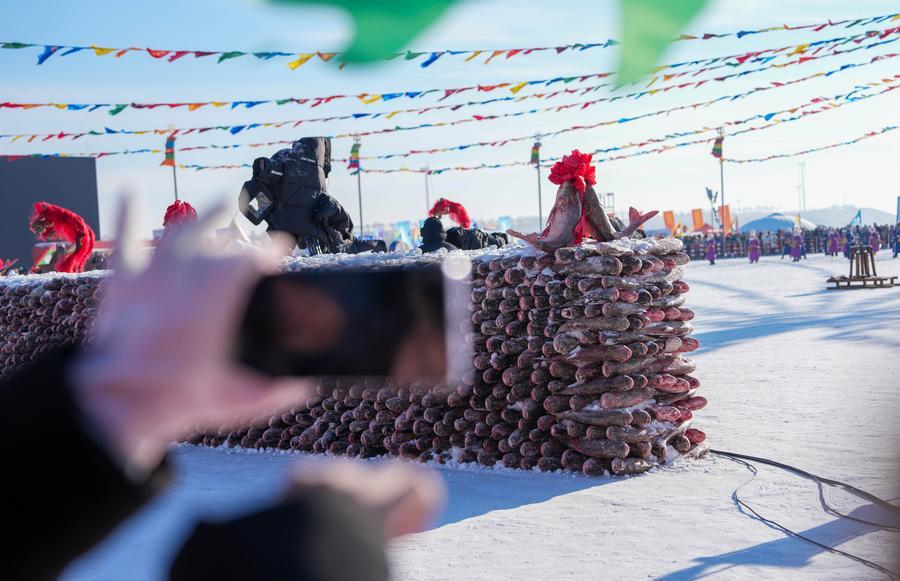
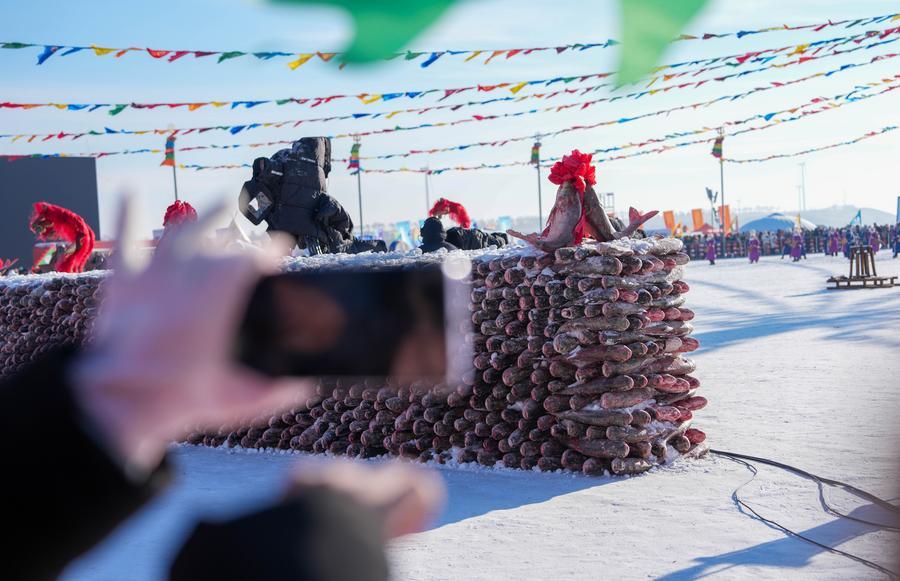
The lively auction was held to highlight an ancient winter fishing ritual with a history stretching back over a millennium to the Liao and Jin dynasties. The ritual, notably, was recognized as a national intangible cultural heritage in 2008.
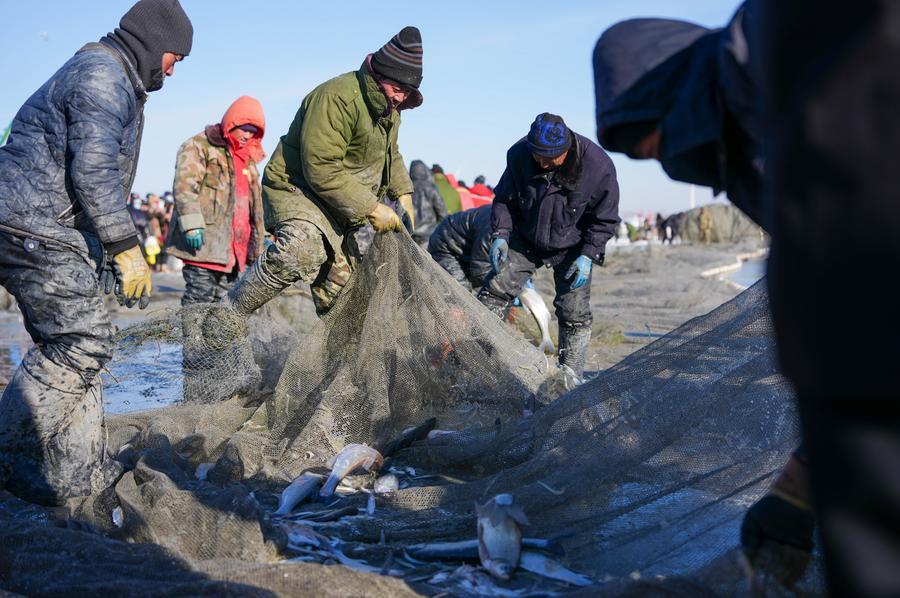
To thunderous drumbeats, horses pulled winches at the icy expanse of Chagan Lake, hauling up a kilometer-long net from beneath the frozen surface.
Today, this ritual has evolved from a basic form of livelihood into a preserved cultural heritage item and a modern attraction in cultural tourism.
Tourists jostled around the fishing hole, phones aloft to capture images or live-stream the silvery frenzy of fish leaping on the ice.
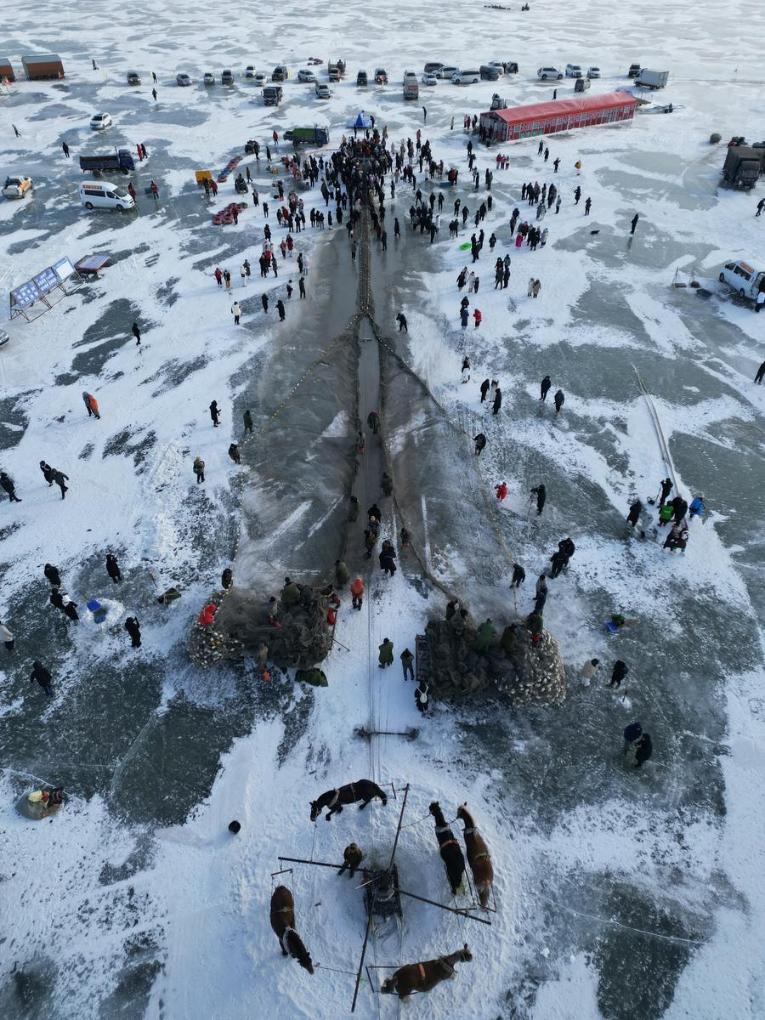
These proceedings kicked off the 2026 Chagan Lake Ice and Snow Fishing and Hunting Cultural Tourism Festival on Jan. 8, with the event set to run through February to cover the whole winter fishing season.
The festival has already attracted tens of thousands of visitors to this frozen lake in the city of Songyuan. The event’s impressive opening day saw approximately 81,000 tourists, generating over 70 million yuan in comprehensive tourism revenue.
Beyond this traditional spectacle, this year’s festival highlights a strategic shift from sightseeing to immersive experiences. New offerings include a 230,000-square-meter ice-and-snow amusement park, an ice lake ski resort and the Dragon Fish Tribe immersive night tour area featuring cultural performances. This evolution reflects a broader trend in China’s ice-and-snow tourism sector, which is aiming to transform “cold resources” into sustained “hot” economic drivers by deepening cultural engagement and extending visitor stays.
FROM SIGHTSEEING TO IMMERSIVE EXPERIENCES
“It’s transformed,” said Zhou Yao, a returning visitor from east China’s Shandong Province, who was on his second trip to Chagan Lake. “Seven years ago, it was about watching. Now, it’s about doing.”
Instead of simply watching the ice fishing, Zhou brought his child to enjoy a hands-on experience. The two helped haul smaller nets, while listening to local fishermen explain how this thousand-year-old tradition combines everyday fishing practices with ethnic rituals and ceremonies.
To further tap into the cultural potential of ice and snow, new facilities including a winter fishing culture museum, fish-themed paper-cutting exhibitions and an intangible heritage distillery have been introduced, integrating cultural content with consumption scenarios.
According to Luo Ying, manager of the core scenic area of the so-called Dragon Fish Tribe, this winter’s cultural and tourism programs have undergone a comprehensive upgrade. “We’ve launched immersive night tours spotlighting morin khuur performances featuring the Mongolian musical instruments and ethnic songs and dances,” Luo explained. “Activities such as molten-iron fireworks and fish-fighting competitions combine visual appeal with visitor participation.”
Qu Lijie, a local fisher-woman who has run a restaurant near the lake for many years, said that on average, she sells more than 50 set meals of lake fish priced at 398 yuan each day. “Now there are much more winter entertainment activities than before, and many tourists choose to stay several days for a deeper experience,” she noted.
“Ice-and-snow cultural scenes such as Chagan Lake’s winter fishing are becoming key parts for unlocking the value of cold-climate resources,” said Xin Benlu, director of the Ice and Snow Tourism Key Laboratory under the Ministry of Culture and Tourism and a professor at Jilin University.
“The focus is shifting from spectacle to engagement,” explained Xin. “By turning cultural heritage into something you can do and buy, the cultural tourism building generates a longer, more valuable industry chain.”
The transformation seen at Chagan Lake is not an isolated case. As China’s ice-and-snow tourism moves from simply “heating up” to becoming more refined, regions across the country are shifting their focus from scale expansion to differentiated cultural expression and higher-quality offerings.

TURNING COLD RESOURCES TO HOT CONSUMPTION
China’s cultural diversity has become a vital resource for local economies seeking to tap the potential of the ice-and-snow tourism industry. In Jilin, home to several world-class ski resorts, traditional Chinese medicine (TCM) wellness centers have been set up in resort areas, where the combination of winter sports and TCM therapy has become a prime choice.
Max Macron, a ski instructor from Canada who works at the Beidahu Ski Resort in Jilin, is a regular at the local TCM center, where he receives massage treatment.
“The Chinese therapy can quickly relieve exercise fatigue. The effect is very good in relaxing sore and swollen muscles. This is a unique charm that you can’t find in ski resorts in other countries,” he said.
Irina Mineeva, a tourist from Russia, who experienced TCM therapy combining moxibustion and massage after skiing in Jilin, told Xinhua that her body felt relaxed and warm following the therapy.
“After exercising in the icy and snowy weather, the therapy not only relieved my physical fatigue but also sparked my strong interest in traditional Chinese health culture,” she said.
The infusion of diverse cultural resources is transforming ice-and-snow tourism, compelling visitors to extend their stays and increase their spending.
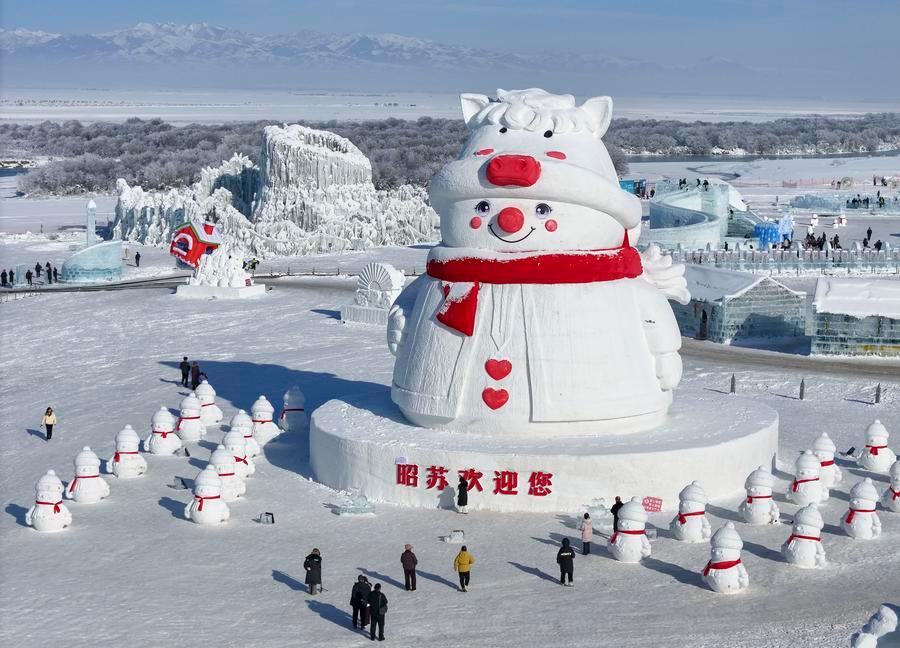
According to the China Ice and Snow Tourism Development Report (2026) released by China Tourism Academy, China’s ice-and-snow tourism has entered a new phase of sustained growth. During the 2025-2026 winter season, the number of ice-and-snow leisure trips is expected to reach 360 million, with related revenue tipped to total about 450 billion yuan.
The report released earlier this month at the Ice and Snow Tourism Development Forum 2026 in Harbin, capital of northeast China’s Heilongjiang Province, noted that the scale of the country’s ice-and-snow economy exceeded 1 trillion yuan in 2025. The figure represents an almost fourfold increase in scale compared with the 2015 figure of 270 billion yuan, based on industrial data.
The report attributes the increased scale to a surge in innovative tourism products across China, including ice sculpting, themed travel, and ice-and-snow photography experiences. Iconic destinations like Harbin Ice-Snow World and the Changbai Mountain ski resort have played a key role in driving such growth.
Han Yuanjun, a researcher at the academy, said many northeast China cities such as Harbin, Shenyang and Changchun, as well as Zhangjiakou in north China, are moving beyond reliance on natural resources and placing greater emphasis on service quality and cultural features in their quests to retain visitors.
(Video reporters: Si Xiaoshuai, Yan Linyun; video editors: Yang Zeyi and Luo Hui) ■
