


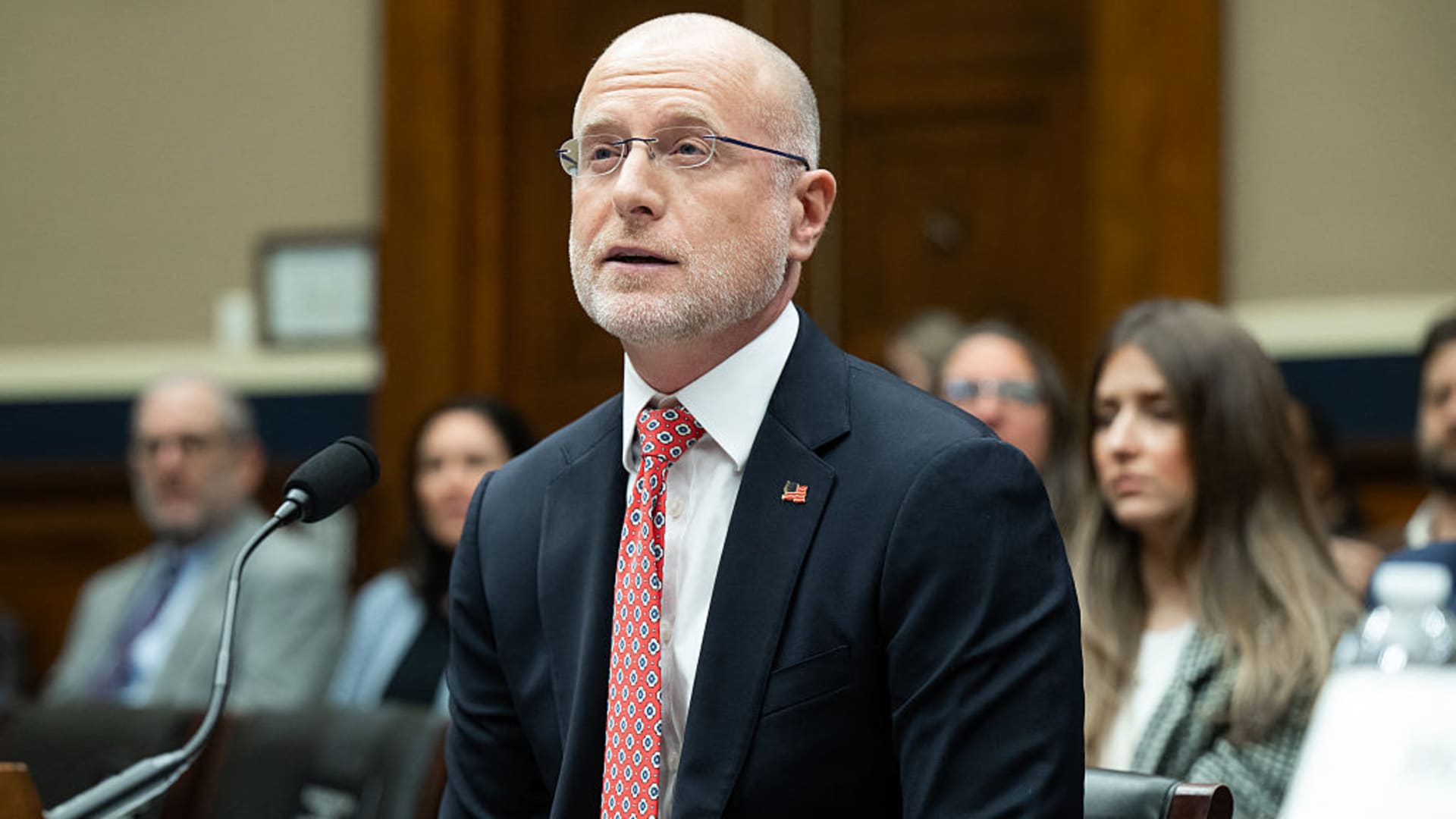
FCC Chairman Brendan Carr testifies during a House Energy and Commerce Communications and Technology Subcommittee hearing on “Oversight of the Federal Communications Commission” on Capitol Hill in Washington, DC, on Jan. 14, 2026.
Saul Loeb | AFP | Getty Images
Federal Communications Commission Chair Brendan Carr on Saturday blasted broadcasters shortly after President Donald Trump called reports that Iran struck five U.S. tanker planes “fake news.”
In a post on X, Carr also warned that broadcasters will lose their licenses if they don’t “operate in the public interest.”
“Broadcasters that are running hoaxes and news distortions – also known as the fake news – have a chance now to correct course before their license renewals come up,” Carr wrote in the post, which attached Trump’s statement on Truth Social earlier Saturday.
“It is very important to bring trust back into media, which has earned itself the label of fake news,” Carr added.
The Wall Street Journal reported on Friday that five refueling tankers were struck during an Iranian missile strike on the Prince Sultan air base in Saudi Arabia.
In the Truth Social post on Saturday, Trump called that an “intentionally misleading headline,” citing the Journal, The New York Times and what he called other “Lowlife” papers. The president also said four of the five Air Force refueling planes hit in the Iranian strike on Saudi Arabia sustained “virtually no damage, and are already back in service.”
Trump claims one had “slightly more damage,” but will be in the air again shortly.
Also on Saturday, Trump renewed calls for more nations to send warships to the Strait of Hormuz to defend oil interests there.
Late Friday, Trump said Iran is “totally defeated and wants a deal” but not one he “would accept,” two weeks after the U.S. and Israel launched joint military operations on the Middle Eastern country.
The statement came shortly after the president announced that the U.S. had bombed Kharg Island, a vital oil hub that serves as Iran’s main oil export terminal. Iran’s military has vowed to strike U.S.-linked oil and gas infrastructure in the Middle East if more of its own energy sites are attacked.
