


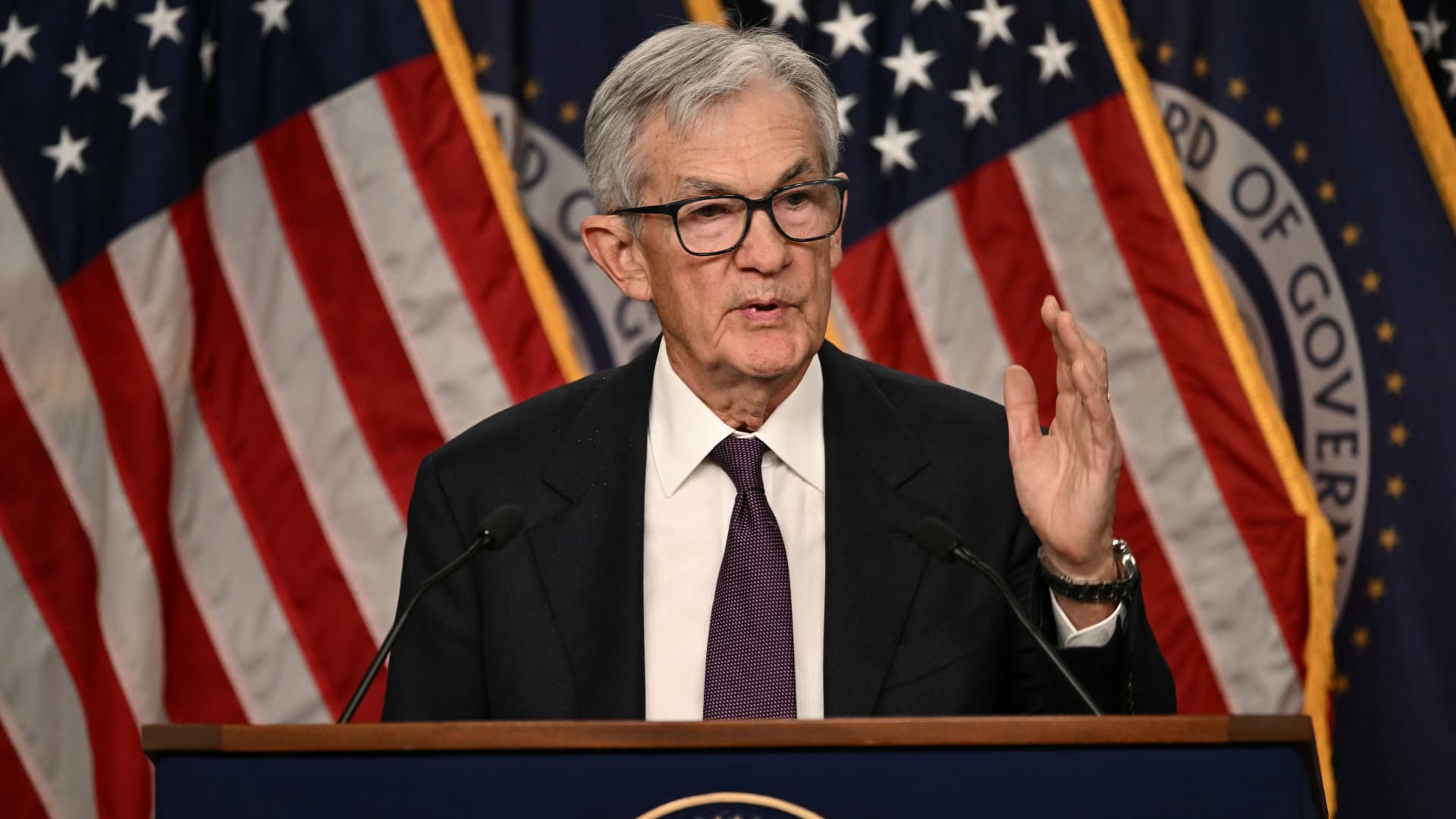
US Federal Reserve Chair Jerome Powell speaks during a press conference following the Federal Open Market Committee meeting at the Federal Reserve Board Building in Washington, DC, on March 18, 2026.
Brendan Smialowski | AFP | Getty Images
Federal Reserve chair nominee Kevin Warsh wants to lower interest rates. Fed officials signaled Wednesday that it may be even harder than expected for him to make that happen, should be he confirmed into that job any time soon.
Fed officials raised their predictions for the path of inflation and interest rates in data the central bank released Wednesday. That was largely expected given the spike in oil prices due to the Iran war. But Chair Jerome Powell said oil wasn’t the only factor his colleagues were considering.
Higher forecasts for inflation are also “a reflection of the slow progress we’ve seen on tariffs,” Powell said.
The Fed publishes a survey of its top officials’ expectations for interest rates and the economy in a document known as the Summary of Economic Projections. The SEP released Wednesday showed the median official’s expectation for a closely watched measure of inflation, known as core personal consumption expenditure inflation, rising from 2.5% for 2026 in December to 2.7% for the year as of March.
Meanwhile the SEP showed several Fed officials raising their expectations for interest rates in the so-called dot plot. It shows where the Fed’s members believe interest rates will go. The March dot plot showed several Fed officials ruling out the possibility of multiple cuts this year.
Those projections are anonymous, but a Fed official who had previously voted publicly for rate cuts changed his position in March. Fed governor Christopher Waller had dissented in favor of lower interest rates in January, when the Fed also opted not to change interest rates. At the most recent meeting, Waller agreed with Powell not to change rates.
President Donald Trump, who has not been shy about wanting lower interest rates, appointed Waller to his job and considered him for chair before opting for Warsh.
All that means Warsh could face a tough crowd were he to be quickly confirmed. Warsh wants to cut interest rates, in line with what Trump has demanded of his nominee. But the chair has only one out of 12 votes on the Fed’s rate-setting committee. He will need to bring the rest of the Fed along with him, and it appears many of the Fed’s members are positioning themselves to make cuts difficult ahead of Warsh’s potential confirmation.
Those officials are, in Powell’s telling, not only wary about what sustained oil-price increases could do to the economy, but also what effects Trump’s tariffs are having. That remains the case even though the Supreme Court recently ruled a swath of Trump’s tariffs illegal. The administration has moved to reimpose tariffs under alternate authorities.
When Warsh could be confirmed is an open question. Sen. Thom Tillis, R-N.C., has said he won’t vote to confirm Warsh until a criminal investigation into Powell involving office renovation cost overruns is resolved.
Powell denies the accusations. A federal judge last week moved to quash subpoenas against the Fed. The Department of Justice said it will appeal. As long as that process continues, Powell will remain in his job. And Warsh’s confirmation remains on hold, likely delaying the moment when he will have to contend with inflationary pressures that may get in the way of delivering lower interest rates.
