


PUBLISHED
January 11, 2026
ISLAMABAD:
Is Islamabad in the process of becoming unrecognisable a few years down the road? Some residents and experts seem to be concerned about the rapid development and outward expansions.
A city that enchants us with its beauty and neatly planned districts (an anomaly in Pakistan’s urban centres), has a business-as-usual side to it that is not as talked about. Local public sentiment and expert opinion is beginning to shift, for a host of reasons, which includes poor organisation, displacement of settlements, and a shrinking of green spaces.
“The original city planner commended we amend the plan every 20 years. That master plan has not been amended till today,” says Danyal Ahmed Khan, an urban governance specialist.
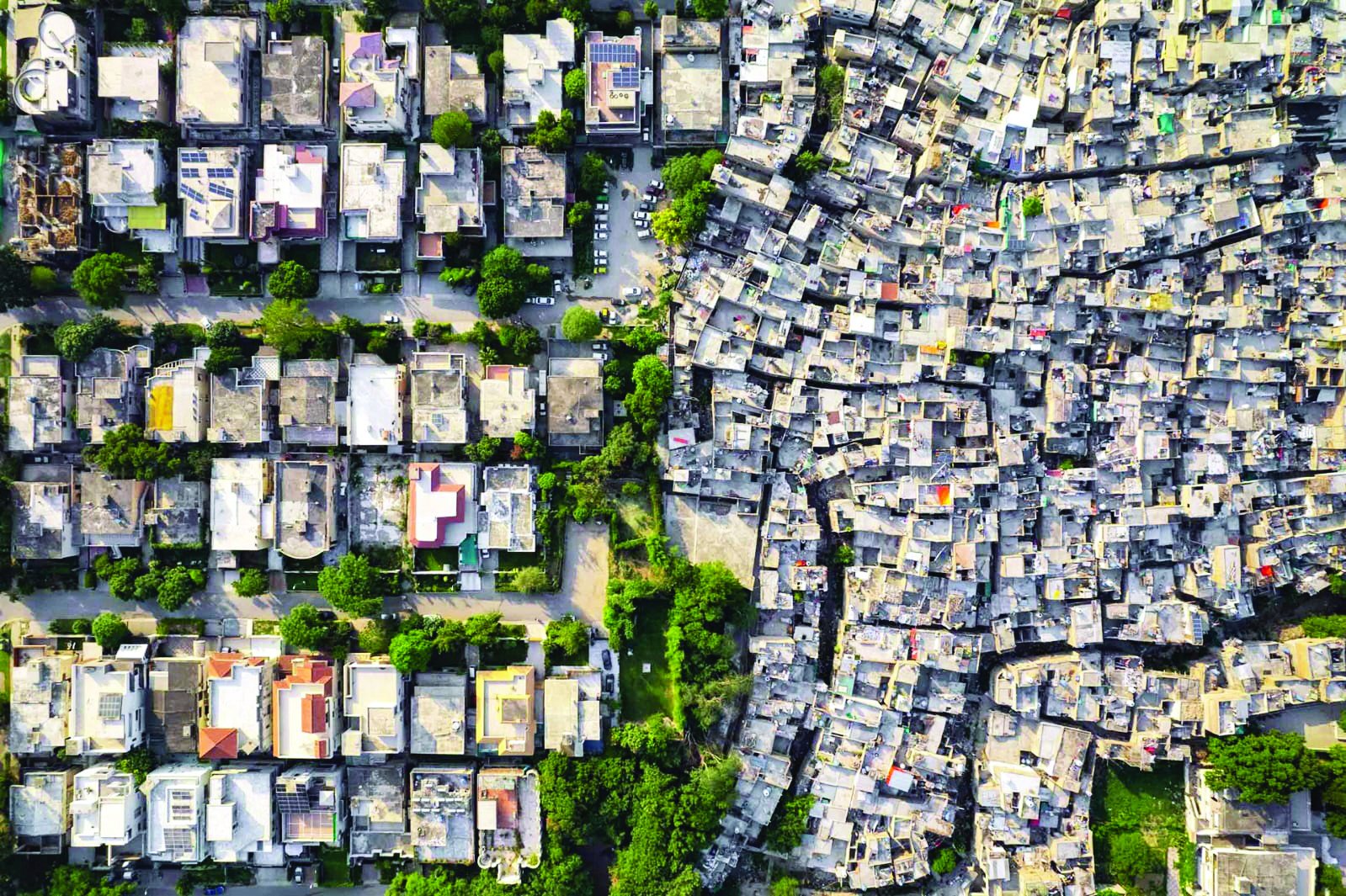
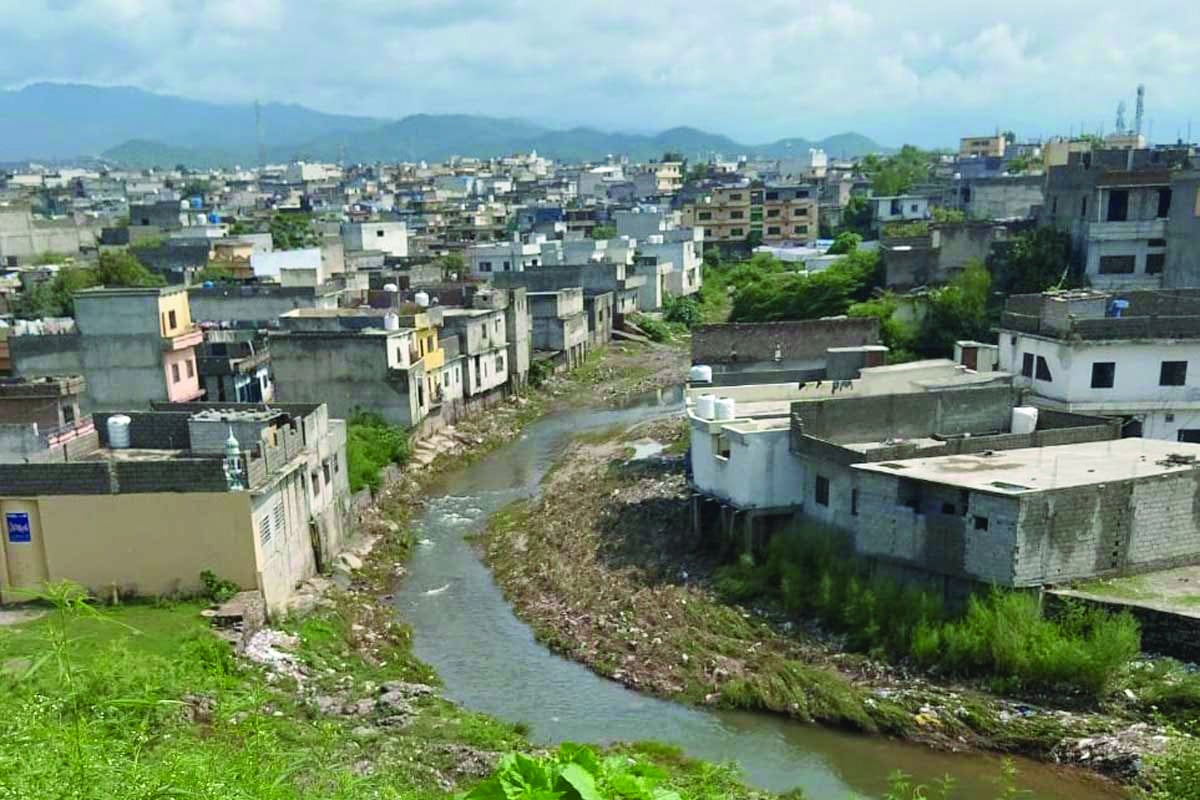
“In the Islamabad master plan, there are no informal settlements. The reality does not correspond to this idealistic vision. “There are 63 slums in Islamabad,” says Khan. According to Khan, “The difference between the haves and the have-nots is the greatest in Islamabad amongst Pakistani cities.”
To make matters worse, Vaqar Zakaria, an expert in energy and environment management, says that these informal settlements are increasing at an alarming rate, “6-8% growth rate.”
The common instinct in Pakistan, to deal with the issue of urban informal settlements, also known as “encroachments” colloquially, is to simply demolish them from time to time, as seen in the example of the “Afghan Basti”, according to Khan. This forces an elementary question: how and why does this happen in the first place?
Often, the poor residents of these informal settlements belong to the lower working class. “These are the people who run the entire city”, and more specifically, “people who came to build the city,” explains Khan. We rely on builders, gardeners, drivers, cleaners and a whole host of similar types of labour. And yet, we pay little attention to where and how they live.
Khan explains how the encroachers are caught between a rock and a hard place, “Don’t drill bores, but we will also not provide you with water. Don’t pollute, but we also won’t provide you with a sewerage system…Don’t encroach, but we will also not provide you with shelter.” This, he says, is the way in which the social contract is not upheld by the government from their end, and only expected to be adhered to by the poor.
The profit model
The Capital Development Authority (CDA), is the de facto government of the city of Islamabad, claims Zakaria. Their official mandate is not to govern though, it is to develop land and infrastructure. According to Zakaria, “Chairman CDA is such an important position that even the Ministers don’t matter. They have a direct line to the PM and President”.
The CDA, according to both Zakaria and Khan, has a profit model of selling land as a source of income. According to Zakaria, “This money needs to come out of taxes”, like other countries. He believes that, “Water and property needs to be taxed,” because according to him, citizens in Pakistan pay a fraction of what is expected to be paid in the form of property tax in many other countries. He argues that, “If the land developed by the CDA is to be sold, it should be sold to the government.”
Horizontal thinking
Referencing mega cities like New York City, Zakaria mentions, “You go small and vertical,” when you have an increasing population. This solution requires creativity and common sense, as it bypasses the need to expand into green areas.
According to Khan, though, there is “encroachment into the Margalla forests as well”, despite the hills being “one of the largest protected urban parks”.
However, it’s not all bad, reminds Zakaria., mentioning that it is, “Better regulated and cleaner and greener than any other city in Pakistan”.
The CDA, in their defence, claims that, “The Master Plan of Islamabad is being revised to meet the future needs. For this purpose, a Federal Commission composed of professional experts of Urban Planning, Environment, Engineering, Architecture, Climate Change. Urban Design. Transportation. Urban Economy. Industry, Sociology, etc.”, a tall order.
The statement reads as follows, “The Federal Government has been requested to approve this Commission. As soon as this Commission is approved, the overall revision of the Master Plan of Islamabad will be started.”
According to the CDA, “CDA, on the recommendations of the previous Federal Commission has introduced vertical growth in Islamabad and the same has also been approved by the Federal Government. However, it will be further improved.”
More specifically, the development authority claims that, “CDA is planning to increase density along major corridors to promote Transit Oriented Development in Islamabad. It will decrease urban sprawl and increase the optimum utility of land in the city centre.”
It is yet to be seen if these changes will be made in a timely manner to the satisfaction of residents and experts. The lack of pressure over a democratic election in Islamabad has the potential to incentivise sluggishness, such that there is no hurry to construct and future planning, as seen in Karachi. Karachi, after all, was once quite pristine as well.
Solution? Democratic Transition and Iterative Improvement
Khan says that the way to deal with the problem is to have iterative local governance.
Let a system be built and run again and improve”. The iterative model only works in improving the system if there is a routine election that fosters competition. Just as competition in the free market incentivises better products in certain areas of the economy, more democratic competition leads to better outcomes in the very long term as parties have to compete for votes and their performance is informally evaluated by the voters on a regular basis.
When asked about potential local elections in the future, Khan doesn’t seem optimistic, “Local elections are supposed to happen, but they will be party based”, which many people fear will simply consolidate more power at the centre.
“The Master Plan of Islamabad is being revised to meet the future needs. For this purpose a Federal Commission composed of professional experts of Urban Planning, Environment, Engineering, Architecture, Climate Change. Urban Design. Transportation. Urban Economy. Industry, Sociology, etc. The Federal Government has been requested to approve this Commission. As soon as this Commission is approved, the overall revision of the Master Plan of Islamabad will be started.”
“CDA on the recommendations of the previous Federal Commission has introduced vertical growth in Islamabad and the same has also been approved by the Federal Government. However, it will be further improved. CDA is planning to increase density along major corridors to promote Transit Oriented Development in Islamabad. It will decrease urban sprawl and increase the optimum utility of land in the city centre.”
However, this does not address the problem of the informal settlements (“kachi abadi”). “Katchi Abadis are not regulated,” emphasises Zakaria. Since they are not regulated, it remains a question whether they will ever be provided a dignified way out of the informal nature of the settlements, or be formalised by law, making it obligatory on the government to provide them with basic amenities. As things stand, it would be easiest for the government to simply bulldoze any such settlements when preferable.
Without revising the master plan for Islamabad, and without formalising the informal population of Islamabad, Khan says, the plan is used as it was.
Furthermore, instead of a profit driven model with the CDA at the head of it, Zakaria seems to think that the whole financial model needs to shift. He believes that, “Property and water should be taxed.” He claims that the taxes on our property in Pakistan are “one of the lowest in the world” and that CDA money should come from tax collected from people, instead of through a profit driven business model. “Selling land to generate money to build roads is never a good idea. That money should come out of taxes”, Zakaria says that this unfortunate practice began in Zia Ul Haq’s time.
Islamabad earned its title as one of the most beautiful capitals not because of the beauty of the bureaucrats who work there, but because of its biodiversity, forests, pleasant weather, and streams.
Zakaria ends on a positive note, he reminds us that Islamabad is “Better regulated and cleaner and greener than any other city in Pakistan”, explaining that, “In the Islamabad of the 60s, the tree cover was very low because there were cultivated fields. Margalla hills didn’t have as much tree life because people were cutting wood for fuel”.
This reminder is crucial for many environmentalists, and could be interpreted as evidence that one doesn’t have to necessarily choose between development and protection of greenlands. What’s more important is a shift in the value system such that development is done in a way that is in harmony with the ecosystem and the rest of the indigenous life.
The author is a freelance writer
All facts and information are the sole responsibility of the writer
