


As outages cripple region, community-led solar solutions offer resilience from homes to farms
For Shamim Ara, a resident of Aliabad, the onset of winter in Gilgit-Baltistan has long been synonymous with paralysis. As the mercury plunges below freezing between November and May, the region’s power grid effectively collapses, leaving households to grapple with outages that can last up to 20 hours a day.
“Life becomes paralysed,” says Shamim, describing the annual ordeal where the simple act of maintaining a home turns into a battle against the cold and the dark. Cooking meals by candlelight and worrying about keeping children warm have been the defining features of winter for generations in these high-altitude valleys.
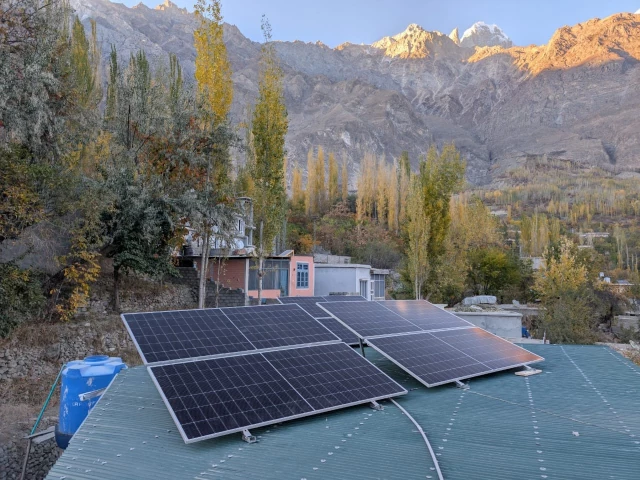
However, this winter tells a different story. “Solar has reduced our monthly expenses and made our home more comfortable,” Shamim observes, marking a shift from helplessness to resilience. “We now have enough power for basic appliances throughout the day”.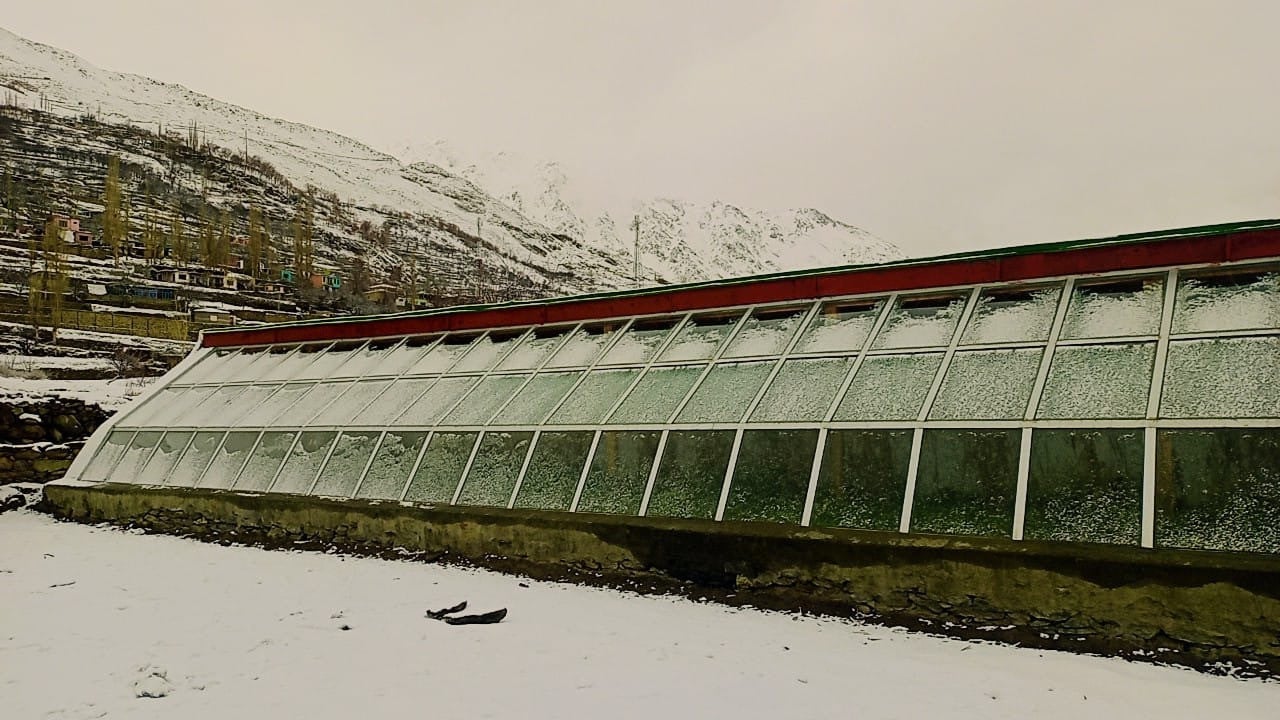
Shamim is among a growing number of residents in Gilgit-Baltistan who are bypassing the unreliable hydel power in favour of renewable energy solutions. Faced with a chronic energy crisis that halts life for half the year, communities are turning to the sun to reclaim their winters.
The paralysis of powerlessness
The crisis is not seasonal but chronic, escalating in both extremes. While the long winter loadshedding is devastating, the power problem in Hunza and Skardu often aggravates further during the summer, coinciding with the peak tourism season. This deficit cripples the local economy, forcing hotels and restaurants, the lifeblood of these valleys, to rely on costly petrol and diesel generators, which adds stress to the existing infrastructure and negates climate goals.
The psychological and civic toll of the outages is immense. During these extended blackouts, even cellular companies cannot afford to run generators for 20 hours a day, leading to widespread mobile and internet shutdowns across the whole of Gilgit-Baltistan, including the capital town of Gilgit. This loss of connectivity compounds the isolation and arrests economic activity.
The political transition last week, which saw the end of the elected G-B government’s tenure and the installation of an interim setup, has brought the chronic power crisis into sharper focus. Addressing the structural failures, the former Chief Minister Haji Gulbar Khan recently stated that he was not solely responsible for the energy deficit, attributing the crisis to the previous governments that he alleged failed to invest in necessary infrastructure. ‘’We alone are not responsible for the power crisis,’’ he said just a day before his exit from CM house. ‘’All previous governments are equally responsible’’.
This crisis has been severely compounded by recent natural disasters. The region suffered extensive losses this year due to devastating floods, which caused damage estimated at up to Rs30 billion. This financial setback further hampered the government’s ability to allocate funds for critical energy projects, exacerbating the problem and leaving communities increasingly vulnerable.
The frustration has often spilled into the streets of Gilgit, where citizens stage protests against the extended hours of loadshedding.
Muhammad Yaqoob, a resident of Gangupi Mohallah in Skardu, recalls the years spent waiting for electricity that rarely came. “For years we lived with an unreliable supply,” he says.
Muhammad Saleem of Khargrong, Skardu, describes the anxiety of the “schedule”, the stressful wait for a fleeting hour of electricity to charge phones or run essential chores. “Before this, we had frequent power cuts,” Saleem notes.
It was this vacuum in service delivery that prompted the Aga Khan Rural Support Programme (AKRSP), in partnership with HBL Microfinance Bank, to launch the Accelerate Clean Energy (ACE) Pilot Project. The initiative was designed to offer affordable financing for rooftop solar systems, providing a sustainable alternative to the failing grid.
A shift in fortune: Community-led solutions
For Saleem, the installation of a 3.5 kW solar system has been transformative. “With solar, our home has steady light, and we can manage our daily tasks without stress,” he says.
The impact is perhaps most critical for the region’s youth. Irfan Karim, a father from Hunza, views the transition to solar as a safeguard for his children’s future, ensuring their studies are not dictated by the power department’s operational hours.
Read: Solar against fossil fuel-led energy generation dilemma
“Solar energy has made a clear difference,” Karim explains. “The children study without interruption, and our household routine has become much easier”.
Currently, the pilot phase benefits at least 200 households, with the financing model designed for scalability to mitigate the region’s energy deficit.
Structural reforms and long-term vision
The effort to achieve energy security is also moving at a structural level. The Government of Gilgit-Baltistan recently signed a historic set of agreements with NPAK Energy Limited, a subsidiary of Industrial Promotion Services (IPS)—the industrial and infrastructure development arm of the Aga Khan Fund for Economic Development.
This agreement marks the region’s first major public–private partnership in the energy sector. Under the structure, the Government of Gilgit-Baltistan will retain ownership of all energy assets in Hunza, while operational control will be transferred to NPAK Energy for 30 years. ‘’The ambitious goal is to ensure reliable, affordable, and uninterrupted 24/7 electricity for all residents of Hunza, thereby supporting economic growth, enhancing public services, strengthening climate resilience, and improving living standards in this prominent tourism region,’’ said Eiman Shah, former advisor to the chief minister on information.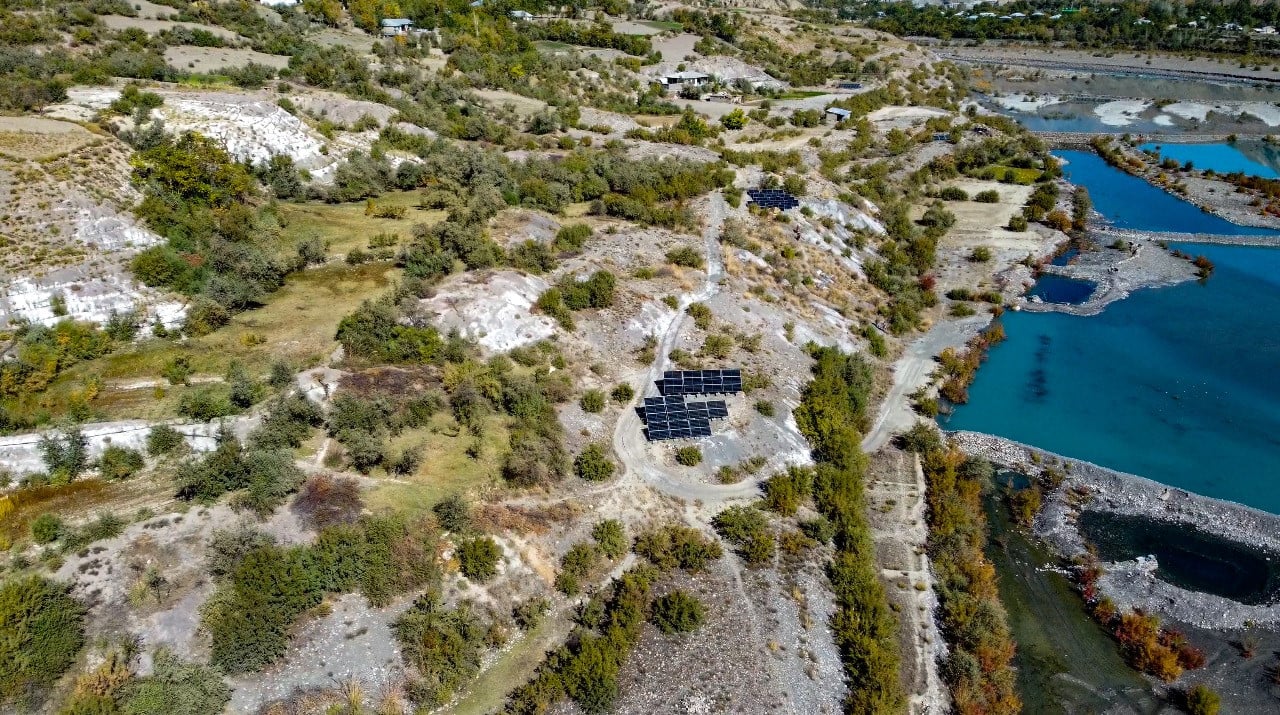
Beyond domestic use
The utility of solar energy in G-B is extending beyond domestic confines to address broader economic and environmental challenges, specifically targeting the breakdown caused by the power deficit.
To keep the local economy running despite the communications failure in Gilgit-Baltistan, AKRSP is establishing eight solar-powered Digital Technology Hubs. The first of these, already functional in Skardu, provides a workspace with reliable internet and power, allowing youth to work online and maintain digital connection even during regional blackouts.
Furthermore, nearly 60 solar-powered lift irrigation systems have been installed across the region. In valleys where water scarcity once left land barren, these pumps now lift river water to higher elevations, facilitating crop production and afforestation. To combat the challenges posed by harsh winters and ensure food security, AKRSP has supported the construction of over 500 passive solar greenhouses. These structures harness solar energy to maintain optimal temperatures, allowing continuous cultivation even during severe weather conditions. These greenhouses have not only improved food security but also increased household incomes and nutrition levels.
Climate resilience and COP30
The shift towards renewables in G-B is not merely a local stopgap but aligns with global climate adaptation strategies, a key theme for the COP30 in Brazil.
Gilgit-Baltistan remains one of Pakistan’s most climate-vulnerable regions, facing glacial melt and erratic weather patterns. The move towards decentralised energy is a critical step in building local resilience. Alongside solar initiatives, AKRSP has supported local communities in establishing 163 micro-hydropower plants (MHPs) with a combined capacity of 18 MW, supplying clean electricity to over 30,000 households in G-B and Chitral.
As winter tightens its grip, the lights in Aliabad Hunza and Khargrong Skardu remain on, signaling that for the people of Gilgit-Baltistan, the answer to the dark months lies not in protests against the grid, but in harnessing the sun.
