


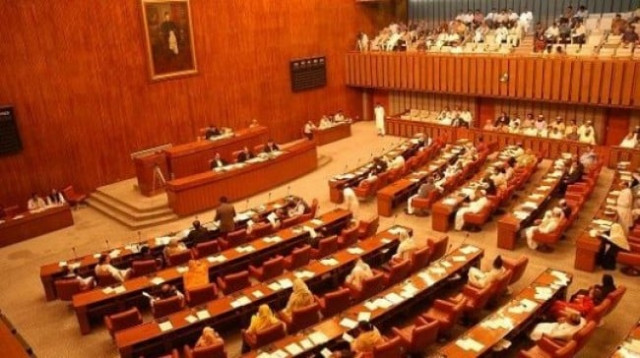
The Senate Standing Committee on Human Rights on Thursday heard that reported cases of gender-based violence (GBV) in Punjab have surged over the past four years, raising concerns among lawmakers about weak law enforcement and shortcomings in the criminal justice system.
A Punjab government representative told the committee that 30,757 GBV cases were reported in 2021, rising to 35,477 in 2022, reflecting a 15% increase. The figure climbed to 46,036 in 2023, a 30% rise, and reached 61,097 in 2024, showing a year-on-year increase of 33%.
Senator Sherry Rehman, chairperson of the committee, expressed alarm over the rising trend and questioned whether existing laws were being properly enforced. “We are repeatedly asked to legislate, but who ensures implementation of the law?” she said, adding that court judgments were often ignored.
Read: Shortage of female medico-legal officers in Karachi slows rape, domestic violence investigations
“Courts give decisions, but they are not implemented,” she noted.
The committee also criticised remarks reportedly made by Justice Ali Baqar Najafi, with Senator Rehman describing them as “incomprehensible.” She noted that despite the existence of around 480 courts nationwide, victims still face systemic barriers to justice.
Justice Ali Baqar Najafi, earlier described the Noor Mukadam murder case as the result of a “vice” in society, referring to live-in relationships as a “living relationship.” His remarks, included in an additional note to the Supreme Court’s judgment, introduced a new moral perspective to one of the nation’s most widely scrutinised criminal cases. The note upheld the conviction and framed the crime as indicative of changing social behaviour.
Senator Tahir Sandhu raised concerns over a ruling by Justice Azam Khan, in which a 15-year-old girl was declared eligible for marriage. He questioned the basis of the decision and the judge’s appointment, also referring to Justice Khan’s previous role as a prosecutor in a high-profile case.
Read More: Psychological abuse is a ground for divorce: SC
On the issue of violence against women more broadly, Senator Rehman said that although legislation on domestic violence had finally been passed, the conviction rate remained “shockingly low” at 0.5%. She referred to the television drama Case No. 9, which illustrated the challenges women face after reporting rape, including social stigma and institutional insensitivity.
Committee members cited incidents where police personnel allegedly welcomed accused persons by beating drums and garlanding them, as well as cases where killings were justified in the name of so-called honour. Senator Rehman said women were frequently discouraged from registering complaints, adding that in rape cases, police often blamed victims, while other forms of violence were dismissed as “family matters”.
Also Read: From ratification to reality — enforcement gap in rights cases
The Senate Standing Committee on Human Rights stressed that legislation alone was insufficient to curb gender-based violence and called for meaningful enforcement, police reform, and accountability to ensure protection for victims and public confidence in the justice system.
