


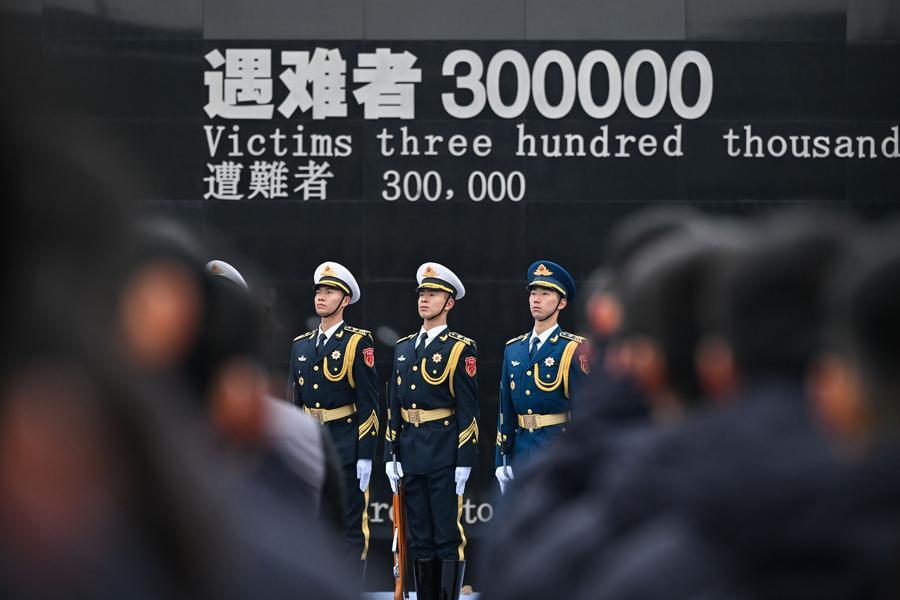
TOKYO, Dec. 13 (Xinhua) — During Japan’s invasion of China, it imposed strict control of the press, and many facts about the Nanjing Massacre were not reported. However, no reports of the 1937 Nanjing Massacre from Japan’s media coverage at the time do not mean it never occurred, said Japanese scholar Yoichi Jomaru.
Historical facts of the massacre cannot be distorted or denied, Jomaru, who studies the Nanjing Massacre, told Xinhua in a recent interview.
After retiring in 2020, Jomaru, a former journalist with Asahi Shimbun, spent more than three years writing a book about the selective reporting of the Nanjing Massacre by the Japanese media, refuting the fallacy of Japanese historical revisionists who claimed that “the newspapers did not report the massacre at the time because the massacre did not happen.”
Jomaru’s review of relevant media reports reveals that although the Japanese army implemented strict news control at the time, it can still be seen from some of the reports that the Japanese soldiers were involved in all sorts of atrocities.
“Those reports did not use ‘plunder’ to describe the looting, or ‘massacre’ to describe the slaughter. Instead, it was written like this: When hungry, they would pick tomatoes or cucumbers from the fields to eat; they would get chickens and pigs and have a hearty meal.” Jomaru said that although the word “plunder” was not used directly, it was actually an act of plundering.
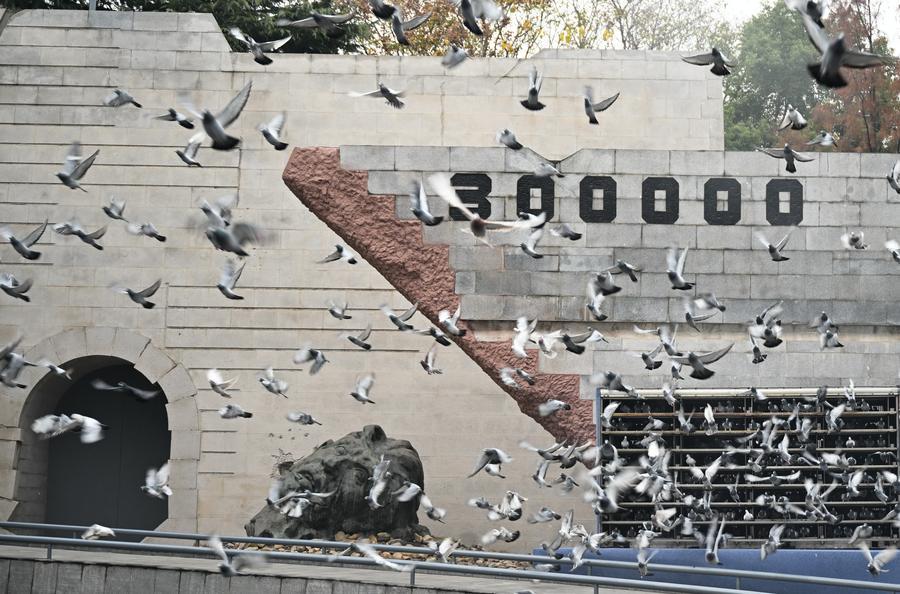
Regarding the massacre, Jomaru said that Japanese news reports at the time did not directly mention that prisoners of war were killed but would write things like “the prisoners sat on the ground in fear” and “some prisoners were very resilient.” Anyone could tell that this was a scene before the prisoners were killed, and what followed was the massacre, he added.
“Some articles mentioned ‘someone single-handedly killed 100 people, or killed 30 people in a battle.’ But more likely, it was the case where the defeated soldiers who had lost their will to fight and laid down their weapons were made to sit there and be massacred, and then this was reported as “individual combat achievements.” Jomaru said that these articles have portrayed the massacre as a kind of “heroic tale.”
When asked how he viewed the remarks denying the Nanjing Massacre, Jomaru said straightforwardly: “They are all nonsense.”
He pointed out that regarding the historical facts about the Nanjing Massacre, the testimonies come from Chinese victims, European and American individuals who participated in the rescue operations for Chinese refugees, European and American journalists, foreign diplomats who remained in Nanjing at that time, Japanese diplomats, and Japanese soldiers, among many others. However, Japanese historical revisionists completely ignore this and instead use various sophistry to claim that the Nanjing Massacre did not exist.
“It is not shameful to admit what has happened. What is truly shameful is to pretend that something that has occurred never happened at all,” Jomaru said.■
