




Ultimately, the Greenland episode may act as a litmus test that exposes the enduring divide between Europe’s autonomous ambitions and its fragmented realities.
ROME, Jan. 7 (Xinhua) — A renewed push by U.S. President Donald Trump to acquire Greenland from Denmark has forced Europe to confront a stark question: when the territory of an EU member is threatened, can the bloc ensure its own security?
This direct challenge to European sovereignty has once again catapulted Europe’s strategic autonomy back to the forefront in 2026. Analysts point to fragmented national priorities, over-reliance on U.S. defense supplies, and coordination gaps, as reasons why true strategic independence remains a distant prospect.
TRANSATLANTIC SECURITY SHIFTS
The growing transatlantic divide has weakened U.S.-EU security relations and increased pressure on the EU to pursue strategic autonomy.
The U.S. National Security Strategy (NSS) has indicated that Washington intends to move away from unconditionally guaranteeing European defense, instead pressing European allies to assume primary responsibility for their own security. “The days of the United States propping up the entire world order like Atlas are over,” the NSS stated.
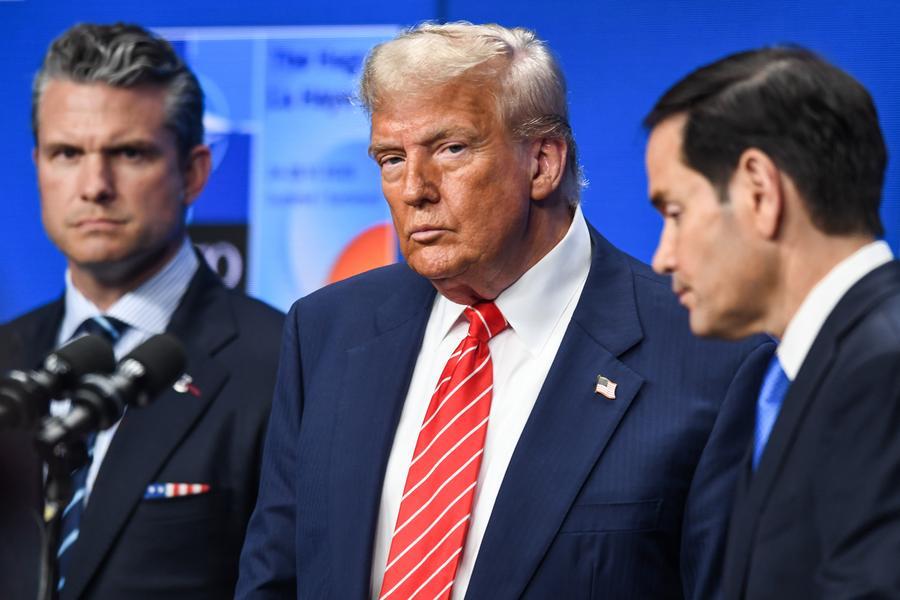
The shift could serve as a catalyst for change. Eberhard Sandschneider, a political expert at Berlin Global Advisors, told Xinhua that the NSS might be a further push for Europe to pursue a real strategic autonomy.
“For the time being, it (strategic autonomy) does not exist, but the criticism from the U.S. is, of course, changing the general equation. Europe cannot rely on American support concerning its own security automatically,” he added.
Dan Krause, programme director for European and International Politics at Bundeskanzler-Helmut-Schmidt-Stiftung, a German think tank, told Xinhua that if Europe achieves genuine strategic autonomy, it can actually improve relations with all states, including the United States, because only on this basis can Europe “speak on equal footing, from an independent position.”
However, significant constraints remain. The primary challenge is the lack of collective determination to reduce reliance on the United States.
According to the Irish-based media outlet Eureporter, not all member states share the same priorities. Eastern countries such as Poland and the Baltic states continue to view the U.S. as an essential security partner, complicating EU-wide coordination, particularly in defense planning and industrial integration.
According to Krause, many European countries still accept the U.S. course through flattery and concessions, and this approach is not conducive to reliable results. As the U.S. is targeting the EU on its values and even its civilization, and is opposing multilateralism, the traditional ally can’t be compatible with European interests.
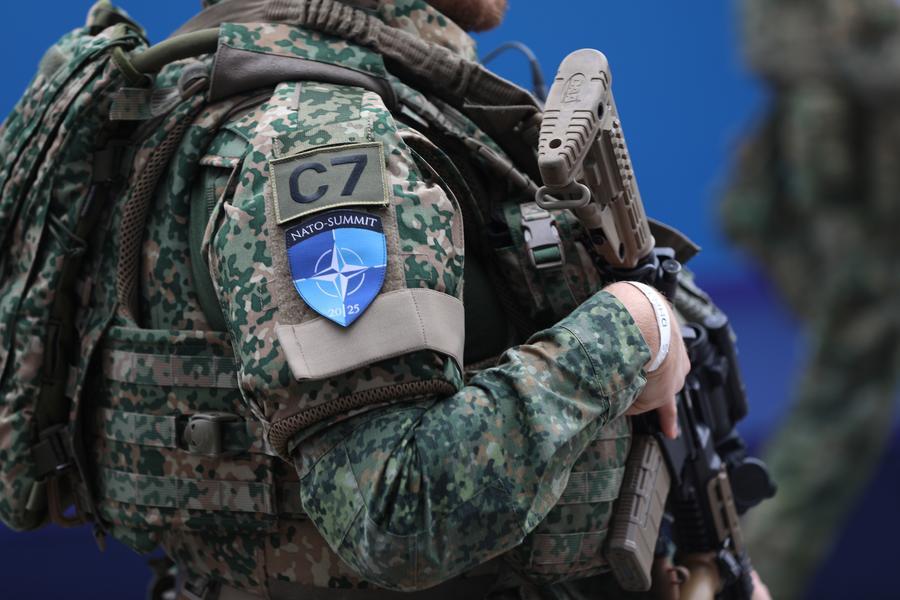
Sandschneider said Europe’s resolve to reduce its security dependence remains a big question mark, as differing approaches toward the U.S. continue to divide European countries and complicate coordination.
GAPS IN DEFENSE CAPABILITY
European strategic autonomy centers on Europe’s ability to defend itself without external reliance, particularly on the U.S. This goal includes independence in military industry, intelligence, and cross-border operations.
In 2025, the Ukraine conflict and tensions with the U.S. prompted the EU to strengthen self-defense. The ReArm Europe Plan/Readiness 2030 project aims to invest over 800 billion euros (941 billion U.S. dollars) in the defense industry. The creation of a Military Schengen zone is intended to improve cross-border military movement. Additionally, France, Germany, and Spain agreed to jointly develop a next-generation fighter jet.
Krause noted that while significant financial resources are being mobilized at both the EU member state and European Commission levels, major changes are unlikely by 2026. A key challenge, according to the think tank Atlas Institute for International Affairs, is the EU’s deep reliance on the U.S. and NATO for security guarantees.
Although the EU has emphasized its push for strategic autonomy, the institute noted that military procurement from the U.S. surged from 28 billion U.S. dollars in 2022 to 68 billion in 2024, underscoring a long-term technological lock-in.
For example, the F-35 and Patriot air defense systems rely entirely on U.S. software and maintenance. Zarko Puhovski, a Croatian political analyst, said that almost all European intelligence services are completely dependent on the U.S., which is decisive to establishing the core power of an independent military force.
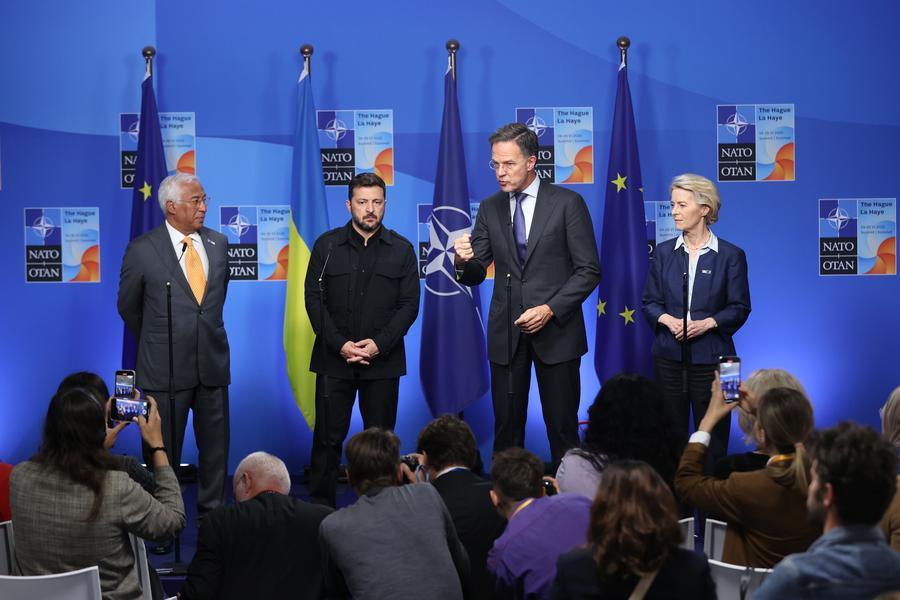
“In fact, they (Europe) are not even capable of achieving it, because for decades they have been organized in such a way that ‘Big Uncle’ on the other side of the ocean takes care of them,” he said.
Difficulties in pooling funds are another obstacle. The investments remain fragmented across member states, such as divisions between France and Germany on investing with non-EU partners, which have delayed the joint fighter jet project.
According to the French Institute for International and Strategic Affairs, the European Council favored a more intergovernmental approach to military procurement, prioritizing national control over joint investment, which has weakened the EU’s collective defense capability.
Krause emphasized the urgent need for Europe to establish an autonomous and effective decision-making process for defense. Otherwise, as Sandschneider noted, the European strategic autonomy will take at least five to 20 years.
ENERGY AND ECONOMIC SECURITY DEPENDENCE
Amid the Ukraine conflict and trade disputes with the U.S., the EU is prioritizing economic security by reducing dependence on Russian energy and increasing investment in semiconductors and critical raw materials.
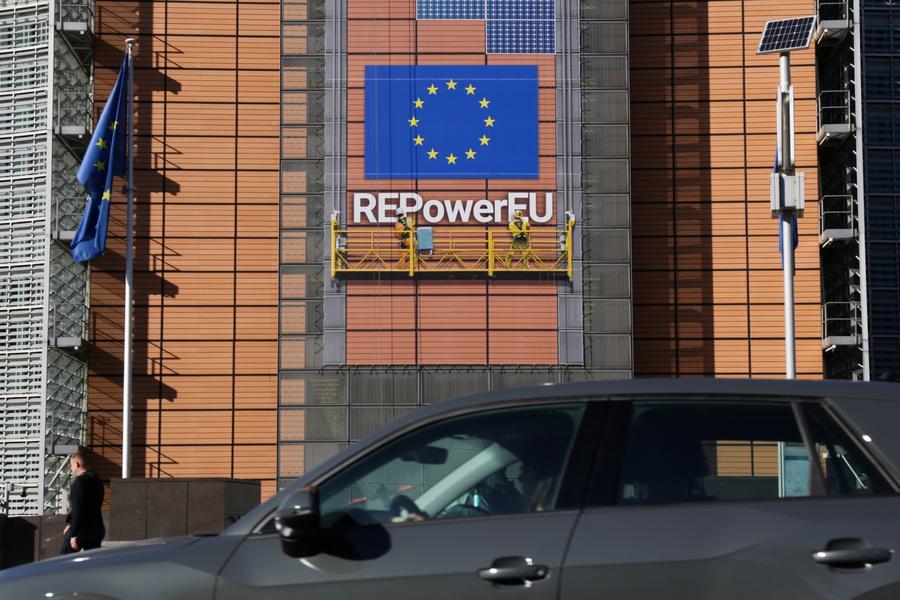
In December 2025, the EU agreed to phase out liquefied natural gas (LNG) and pipeline gas imports from Russia, with full bans effective at the end of 2026 and autumn 2027, respectively. Simultaneously, the EU introduced the RESourceEU plan, allocating 3 billion euros (3.53 billion U.S. dollars) to support alternative critical raw material supplies in the following year.
Analysts praised these ambitions but cautioned about potential pitfalls. Reducing Russian gas imports has not improved Europe’s energy security, as the U.S. has filled the gap, largely due to an “unbalanced” trade deal reached this summer.
ECCO, an Italian climate think tank, noted that the EU has committed to purchasing up to 750 billion U.S. dollars in U.S. energy products by 2028. The U.S. is already the EU’s largest LNG supplier, providing about 55 percent of supplies in 2025. This shift increases Europe’s dependence on Washington, reducing strategic autonomy and heightening exposure to external political and commercial pressures.
Purchasing U.S. fossil fuels would also be a missed opportunity for equivalent investments in energy independence based on renewable sources and energy efficiency. According to the Institute for Energy Economics and Financial Analysis, the 750 billion U.S. dollars could have otherwise helped the EU to realize a 90 percent increase in renewable capacity.
“The EU’s shift from Russian gas to U.S. gas imports fails to deliver true energy security: It’s merely trading one dependency for another. The EU must choose a different path: phasing out fossil gas and investing in clean, fair, homegrown energy,” said Enrico Donda, a campaigner officer of Food and Water Action Europe.

In the semiconductors and key raw materials sectors, observers question the EU-wide coordinated joint procurement. According to Krause, the EU holds competencies for foreign general trade and economic policy, but security-related investments are still organized nationally. The 27 member states must agree among themselves and with the EU on a common economic security strategy and implement it jointly.
Olivia Lazard, a fellow at Carnegie Europe, told The Parliament magazine that past failures in gas procurement raise doubts about Brussels’ ability to address these challenges in critical raw materials in the future.
Ultimately, the Greenland episode may act as a litmus test that exposes the enduring divide between Europe’s autonomous ambitions and its fragmented realities. Closing that gap would require political will and substantial investment. Until then, strategic independence will remain distant, and Europe’s security will continue to hinge on choices it has yet to fully make.■
