



PUBLISHED
April 05, 2026
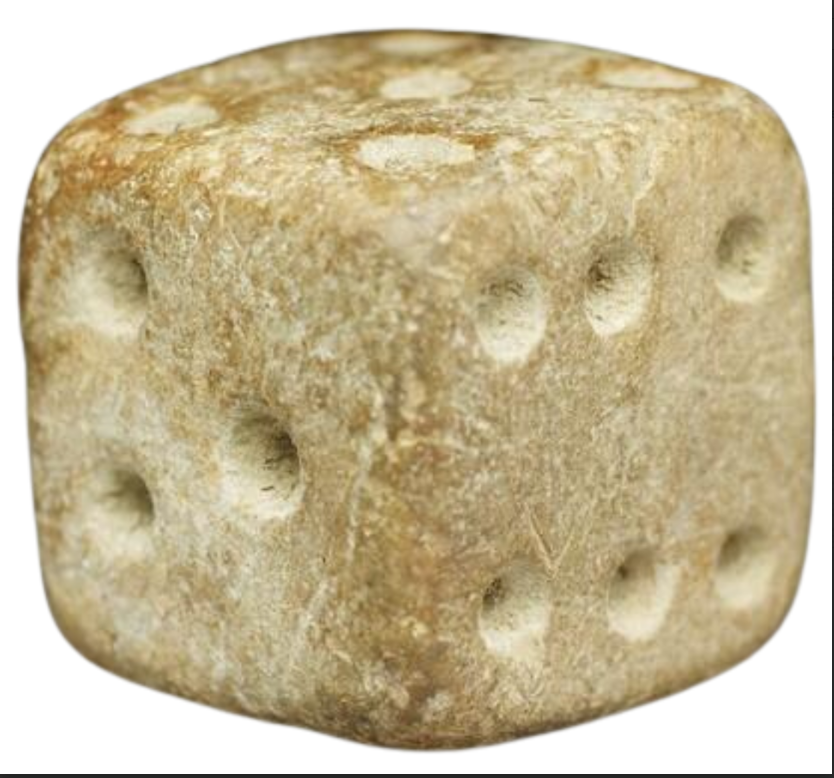
Among the countless intriguing artefacts excavated from the Indus Valley Civilisation, the finding of cubical dice stands out as one of the most captivating. These ordinary, unassertive objects offer an unusual preview into the socio-cultural fabric of a civilisation that flourished over 4,000 years ago. Distinctive, splendid monuments or elegant sculptures, the dice convey a craftier yet correspondingly convincing tale, one of leisure, stratagem, and perhaps even ceremonial.
Their presence across numerous dig sites hints at a shared cultural activity, highlighting the prominence of amusing activities and the enduring human interest in chance games and skill. These dice, now housed in museums throughout Pakistan and India, reveal a society that prized work and play.
The widespread use of dice in the Indus Valley Civilisation offers insights into the daily lives of its people. Leisure and recreation were not exclusive but were drawn across different social sections, from artisans to traders. The standardisation in the dice design implies consistent practices, indicating unified trade networks and cultural connections across regions within the civilisation.
These meek artefacts, hence, carry substantial implications for the everyday experiences of the Indus Valley people, including their values and beliefs, suggesting an exceptional look at how they engaged with a pastime and, possibly, how they were occupied with conceptions of fortune and fame.
Sir John Hubert Marshall (1876–1958), an English archaeologist and Director-General of the Archaeological Survey of India from 1902 to 1928, played a fundamental role in the discovery of these remains during his excavations at Mohenjo-Daro and Harappa, the two main cities of the Indus Valley Civilisation. In his praised book Mohenjo-Daro and the Indus Civilisation, Marshall pens as follows:
“That dicing was a common game at Mohenjo-Daro is proved by the number of pieces that have been found. In all cases, they are made of pottery and are usually cubical, ranging in size from 1.2 /1.2 by 1.2 inches to 1.5 by 1.5 by 1.5 inches. The dice of Mohenjo-Daro are not marked in the same way as today, i.e., so the sum of the points on any two opposite sides amounts to seven. Instead, 1 is opposite to 2, 3 is opposite to 4, and 5 is opposite to 6. All the examples found are exceedingly well made with well-defined edges; the points are shallow holes averaging 0.1 inch in diametre. The clay they are made of is light red, well-baked, and sometimes coated with a red wash. These dice must have been thrown on a soft surface, such as a piece of cloth, or on dusty ground, for their edges show little sign of wear. Whether these objects were used in pairs is unknown, but two specimens found in the DK Area (of Mohenjo-Daro), not far from each other, are the same size.”
Marshall’s observations highlight the ubiquity of dice games in the daily lives of Mohenjo-Daro’s inhabitants. The craftsmanship and design of these artefacts offer a glimpse into their usage, possibly in both leisure and ritual contexts, while also reflecting the precision and care with which everyday objects were made.
Dr J.M. Kenoyer, one of the world’s foremost experts on the ancient Indus civilisation and Professor of Anthropology at the University of Wisconsin-Madison, has been excavating at Harappa since 1986.
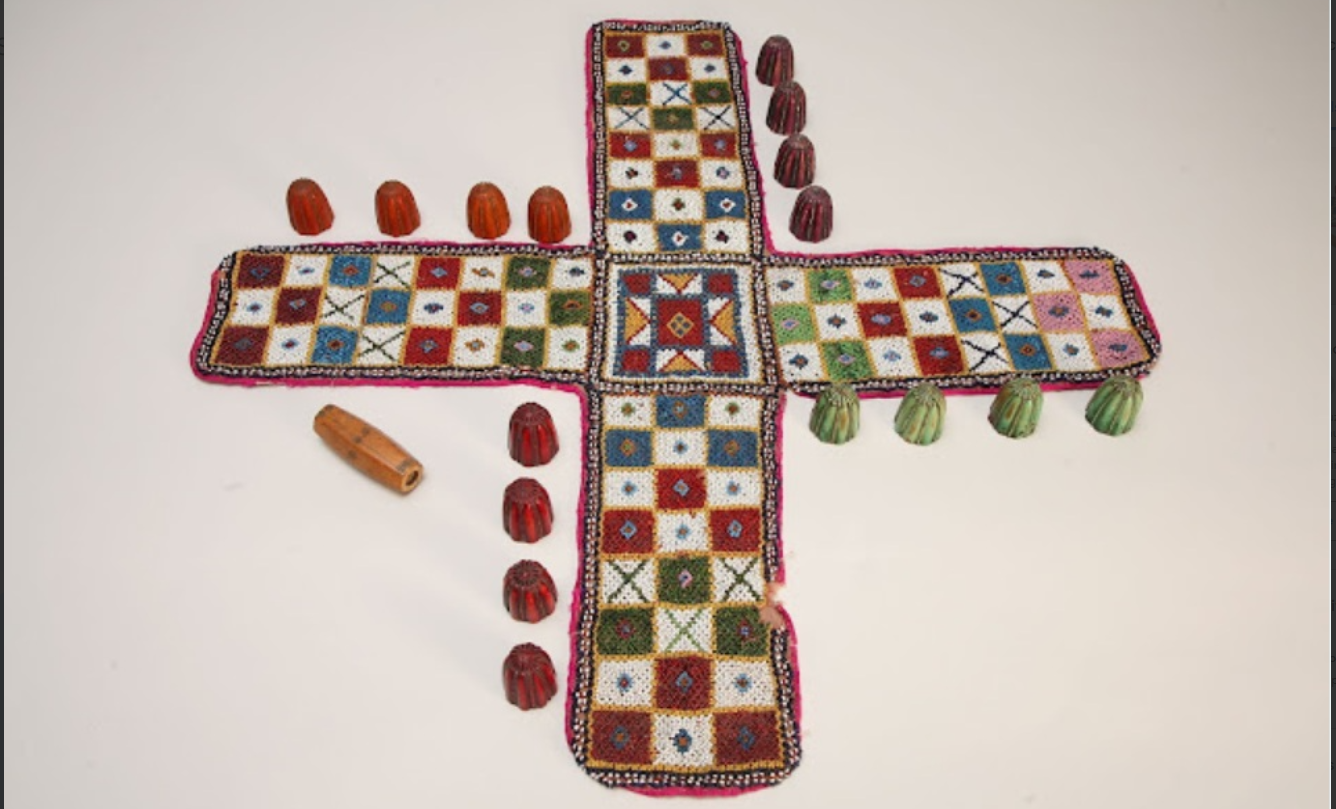
In his well-known book Ancient Cities of the Indus Valley Civilisation, he notes: “Many carved objects from the Indus cities are made of valuable materials such as shell or ivory and may have been used in ritual games or the pastimes of wealthy city dwellers. Carved shell balls may have been rolled onto a square or depression. Dice made from bone, shell, or terracotta were probably used in games of chance similar to those played throughout the subcontinent today. Other bone and ivory counters with circles and lines, carved in ways that do not correspond to dice, may have been used for predicting the future. Long, bar-shaped dice are still used in Pakistan and India to play the game of Pacheesi or Chaupar, which may date as far back as 1500 BC. In this game, two to four players move pieces around the cross-shaped board, blocking and attacking each other until one brings all his pieces safely ‘home.’
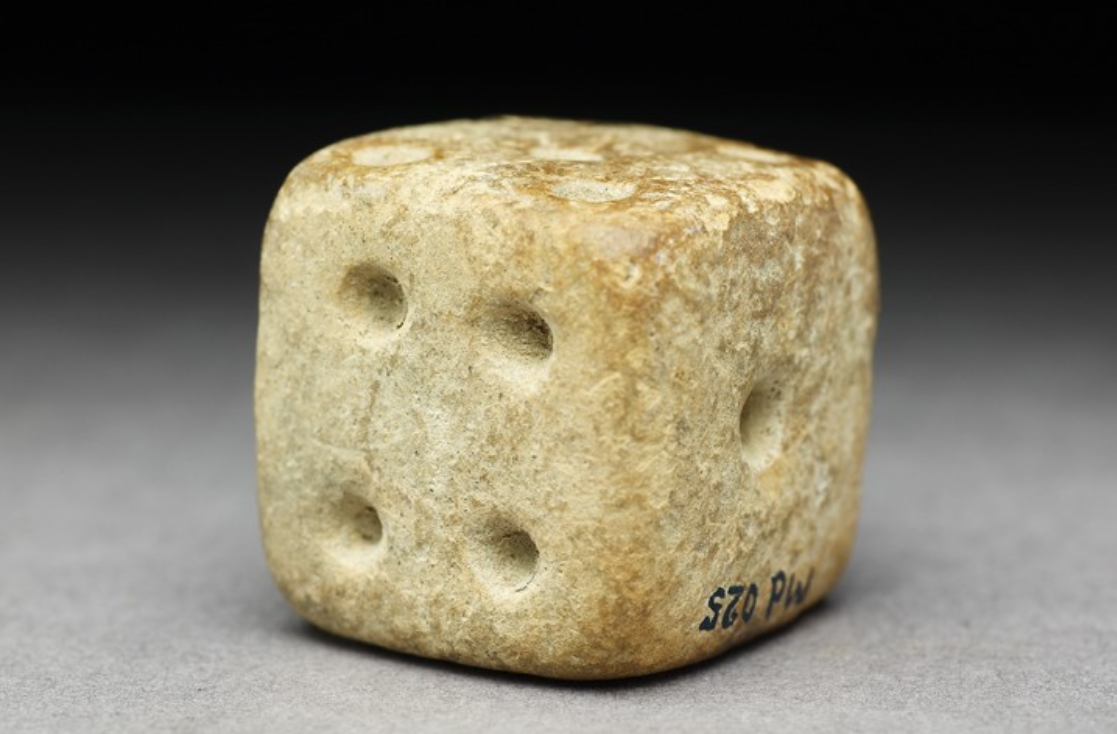
Cubical dice are traditionally used to play the game of Snakes and Ladders, where ladders allow the player to climb to the heavens, and snakes swallow the player and deposit him back in the world or underworld. Both games have important ritual significance but are usually played by children and adults for enjoyment or gambling. These complex gaming boards are traditionally made with painted or embroidered cloth, which would not be preserved for the archaeological record.”
Kenoyer’s analysis underscores the cultural importance of dice and gaming in the Indus Valley, suggesting that games were not just a form of entertainment but may have had deep ritual and symbolic meanings. Whether crafted from bone, shell, or terracotta, these objects reveal a society that valued games of chance, linking them to leisure and divination and indicating broader continuities in gaming traditions that persist in South Asia today.
George Franklin Dales Jr. (1927–1992), an esteemed archaeology professor at the University of Pennsylvania and later at the University of California, Berkeley, where he chaired the South and Southeast Asian Studies department, was widely regarded as a leading expert on the Indus Valley peoples and their languages. In his research, Dales discussed the significance of cubical dice and their connection to Indus-Mesopotamian interactions. He noted that both cubical and oblong “stick dice” have been discovered at Indus sites. The contemporary Indian games of Chaupar and Pachisi (also known as Parcheesi) are thought to have evolved from simpler games dating back to the third millennium BCE.
Professor Ephraim Avigdor Speiser (1902 – 1965) was a Polish-born American assyriologist and renowned translator of the Torah. In 1927, he discovered the ancient site of Tepe Gawra and oversaw its excavation from 1931 to 1938. Speiser was deeply interested in modern and ancient international relations, with a profound understanding of the motivations and practical mechanics behind the cultural, social, and economic interactions between peoples and states. His archaeological and historical writings often included seemingly modest observations on these complex topics, insights that later opened new and significant avenues of research.
One such remark appeared over thirty years ago in his report on the Tepe Gawra excavations. While describing a unique playing die found in Gawra level VI, dating to the Akkadian period, Speiser suggested that its origin was “ultimately of Indian origin,” hinting at early cross-cultural connections.
The discovery of cubical dice provides a fascinating link between the Indus Valley Civilisation and the wider ancient world. Professor Speiser’s excavation at Tepe Gawra uncovered a terracotta die that he attributed to Indian origins. The arrangement of dots on the dice,2 opposite 3, 4 opposite 5, and 6 opposite 1, differs from modern dice and suggests a cultural connection between the Mesopotamian Old Akkadian period and the “mature” Harappan period of South Asia.
Since Speiser’s findings, only a few other cubical die have been reported from Mesopotamian sites. One significant discovery was the unearthing of broken clay dice in a hoard buried beneath the floor of an Akkadian-period house at Tell Asmar in central Iraq’s Diyala region. This hoard contained etched carnelian beads, bone inlays, stamp seals, a cylinder seal, and a distinctive type of knobbed pottery, all of which displayed strong stylistic parallels to Harappan craftsmanship.
While games were popular throughout Mesopotamian and Near Eastern history, the use of cubical dice was rare and a late development. Although limited, archaeological evidence points to South Asia, precisely the Harappan period, as the likely origin of the cubical type of dice. This suggests that the Indus Valley may have been pivotal in introducing this gaming innovation to other ancient civilisations.
Dice have been used since before recorded history, making their origins uncertain. It is believed that dice evolved from early forms of fortune-telling using the talus bones of hoofed animals, commonly known as knucklebones. The ancient Egyptian game of senet, played as early as 3000 BCE and continued into the 2nd century CE, used flat, two-sided throw sticks that functioned similarly to dice, determining the number of squares a player could move.
One of the oldest known dice were found at the Burnt City, an archaeological site in southeastern Iran, as part of a backgammon-like game set dating from between 2800 and 2500 BCE. Bone dice discovered at Skara Brae in Scotland have been dated between 3100 and 2400 BCE. Excavations at Mohenjo-Daro, a primary Indus Valley site, unearthed terracotta dice dating from about 2500–1900 BCE, plus one with reverse sides toting up to seven, significantly like contemporary dice.
The initially written mentions of dice develop in the primaeval Sanskrit epic, the Mahabharata, written around 2,000 years ago. Dice pastimes are also mentioned in biblical texts, including the custom of “casting lots,” indicating that such activities were everyday when the Psalms were composed. In ancient Greece, a game of skill called knucklebones was played with animal bones, with a later variation assigning values to each of the four sides, as in modern dice.
The finding of cubical dice in the Indus Valley Civilisation is viewed as evidence of its society’s imagination. It suggests an overwhelming glimpse into the standard cultural practices of prehistoric cultures. These little artefacts, discovered across important sites, reveal the meanings of leisure, play, and perhaps ritual in a civilisation distinguished by its inner-city formation and artistry. Their presence across territories from South Asia to Mesopotamia suggests early cultural connections and exchanges, indicating a more comprehensive linkage of shared innovations and customs.
Arshad Awan is a Lahore-based author, educationist, local historian, and brand strategist, and can be reached at arshadawan@msn.com
All facts and information are the sole responsibility of the writer
