


PUBLISHED
January 25, 2026
Scandinavian crime drama has a way of clinging to the morbidly depressed viewer. The bleak landscapes of the setting of the crime double as moral terrain, and silence often carries more weight than dialogue in these shows. Land of Sin could easily be filed away as another disposable entry in the Nordic noir catalogue, but its quiet insistence is precisely what makes it linger in my mind. Created by Peter Grönlund, the Swedish miniseries compresses the genre’s familiar elements into something heavier and more intimate. Across five episodes, it builds a portrait of a rural community where people organise their lives around violence. The possibility of harm hangs sharp inside the homes, when the core family comes together or neighbours have an exchange at a funeral.
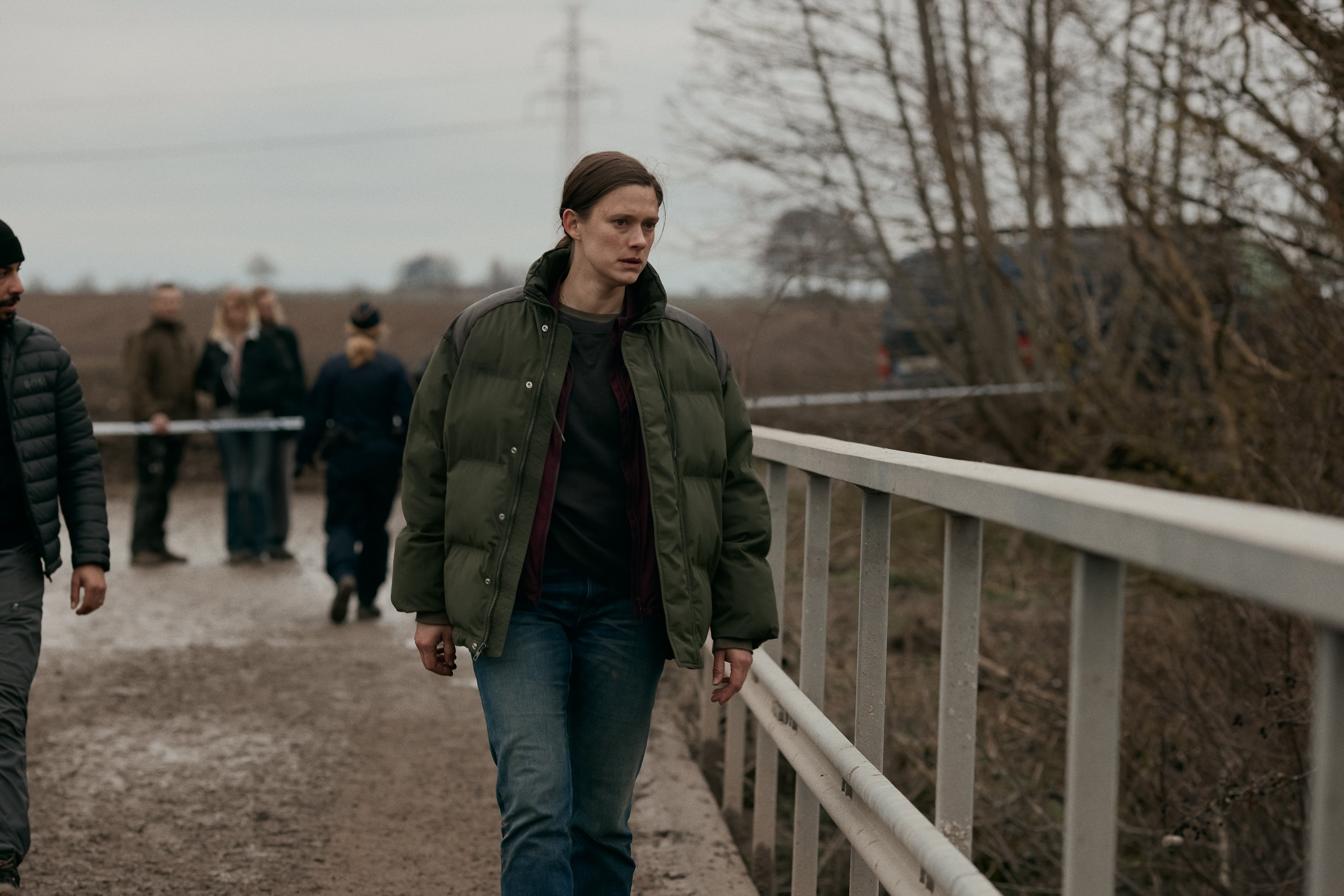
Set on the Bjäre peninsula, the series opens with the disappearance of a teenage boy. Two detectives from Malmö arrive to investigate: Dani, a seasoned officer trying to function despite being exhausted by emotional attrition, and Malik, her younger partner, still invested in the promise of procedure and institutional clarity. Their presence unsettles a fragile equilibrium in the farming community, touching nerves shaped by decades of unspoken resentment.
The missing boy, Silas, is found dead early in the first episode. His dying father, Ivar, had called on Dani to take the case, binding the investigation to her personal history. In the recent past, Dani had been Silas’s foster mother after social services removed him from a violent home. His biological parents never forgave her. Dani’s own son, Oliver, loved Silas like a brother, and she carries the guilt of failing to protect either boy from their fate. Both struggled with addiction. Silas was eventually institutionalised; Oliver was separated from him under the belief—shared by Dani and the community—that Silas was a bad influence.
When the series begins, Dani is already trying to convince Oliver to enter rehab. Their tense standoff is interrupted when Malik arrives at her door, folding Dani’s professional life into her painful domestic life. Oliver, like many young people in Bjäre, is addicted to benzodiazepines. His dependence, compounded by Silas’s absence, deepens the emotional distance between mother and son. Dani’s guilt is acute, but so is her helplessness. She is a police officer trained to intervene, yet powerless to save her own child. A later event gives form to her long-standing internal struggle in a shocking choice she makes professionally for the sake of breaking the cycle of crime and violence.
What distinguishes Land of Sin is its refusal to treat crime as a puzzle to be solved. The murder is not framed as a question of who did it, but of what kind of world makes such an act possible—and survivable. The community is resigned to the quiet destruction of its young, trapped in a system where violence seeps into everyday life and becomes manageable rather than shocking. Exposed to crime from an early age, the youth are inured to escaping their angst through drugs. Benzodiazepines addiction rate among Sweden’s youth was on the rise in the past decade. One of the series’ sharpest achievements is its portrayal of benzo addiction with the drugs circulating freely, with little stigma. Their normalisation is precisely what makes them unsettling.
The snowbound landscapes and moral coolness of Swedish social life may seem far removed from Pakistan’s heat, density, and emotional excess. Yet the logic of benzo dependence travels disturbingly well. In Pakistan, too, benzodiazepines have become tools of coping rather than markers of deviance—prescribed for sleep, nerves, exams, heartbreak, grief. They move easily through clinics and pharmacies. Their appeal lies in their invisibility. They allow people to keep functioning—at work, at home, in relationships—while quietly hollowing out their capacity to feel, remember, or resist.
Land of Sin treats benzodiazepines as a social tool of endurance, allowing characters to remain inside conditions they feel powerless to change. Pain is not processed but managed. Anger is dulled, grief softened, moral urgency deferred. This numbing does not cause harm directly, but by enabling stasis.
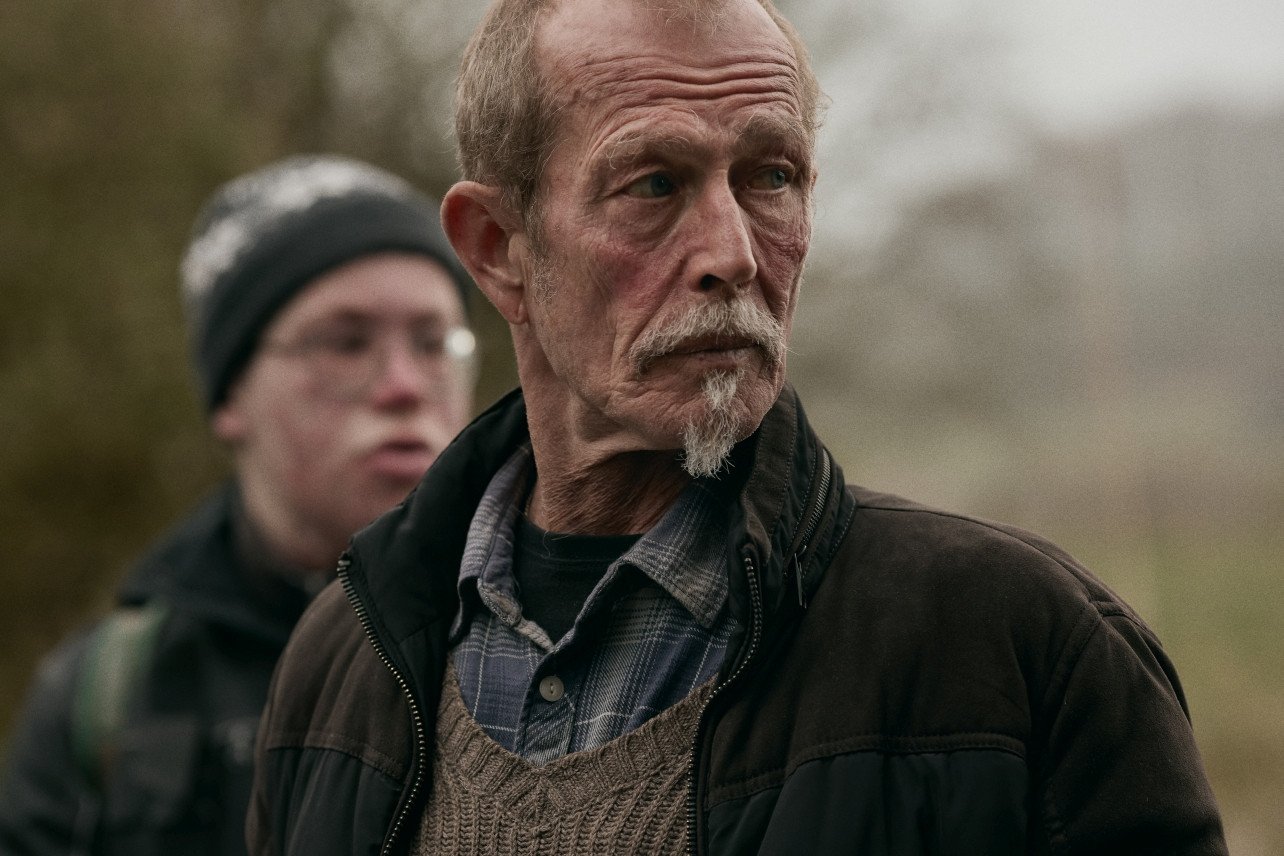
Silas’ dying father, Ivar is in a lawsuit with his brother, Elis who has inherited the supposedly worthless and marshy land, Synden (Land of Sin). Ivar, Elis and co are not just controlling parents but also contend in family rivalry. The toxicity of this family dynamic spills over to their offspring and the sons are more than just the sounding board to their bitter parents. They are disgruntled and they are dismissed by the parents who claim to have only the children’s interest at heart by securing land inheritance.
The link between addiction and land disputes is subtle but devastating when it envelops the younger generation. Characters caught in cycles of obligation and territorial resentment turn to medication not to escape, but to survive.
Dani doesn’t stand apart from the affinity to numbing, she is shaped by it. She keeps functioning by dulling emotions and absorbing pressure as a survival ategy.
Her struggle is existential as much as professional. She works within a system that promises justice but routinely fails in places governed by informal power.
Malik, by contrast, represents belief in transparency, process, and institutional authority. His growing frustration stems not from incompetence but from confronting a community skilled at neutralising scrutiny through silence. His outsider status makes him a moral barometer, but also renders him ineffective. Land of Sin is unsentimental here: idealism is admirable, but insufficient.
At the centre of this world is land. A long-running dispute between two brothers over ownership and ancestral claims forms the series’ backbone. Land does not simply divide families; it binds them to narratives of entitlement that justify coercion.
This belief finds its fullest expression in Elis, the patriarch whose authority radiates through the community. He is not a conventional villain. His power operates through certainty rather than cruelty. Land ownership, for him, confers not just security but moral immunity.
Dani’s interactions with Elis are among the most charged scenes. Neither fully dominates the other. Elis understands the limits of the law; Dani understands the persistence of power beyond it. Though Elis mirrors Dani in his solitary authority, he functions as a transmitter of values. His masculinity is defined by control: emotion is weakness to him and there is no justice in compromise. However, he is less an antagonist than a cultural mechanism, passing down a model of power that sustains itself through repetition. Dani, by contrast, strains—often unsuccessfully—against inheritance in the name of justice.
The land dispute becomes a closed moral loop. The past is selectively invoked, never interrogated. Each generation inherits not only property, but unresolved conflict. This refusal to examine inheritance is what traps the community and the children who watch the adults fight.
The show’s aesthetics reinforce its themes. Bjäre is filmed as a place of enclosure rather than beauty. Wide shots emphasise isolation; interiors feel heavy and cluttered with accumulated history. Natural sounds—wind, footsteps, creaking wood—dominate the soundscape, allowing unease to linger.
The resolution offers little catharsis. The land remains contested, and the damage for its sake is irreparable. Elis is contextualised, not fully redeemed. Addiction is acknowledged, not cured. The drama seeks to locate and expose fissures, not salve them.
Ultimately, the series is a meditation on the quiet bargains people make with power, drugs, and inheritance just to endure. It lingers not because of its twists, but because of its recognitions. It asks the uncomfortable question: what does it cost to keep enduring, rather than changing?
