


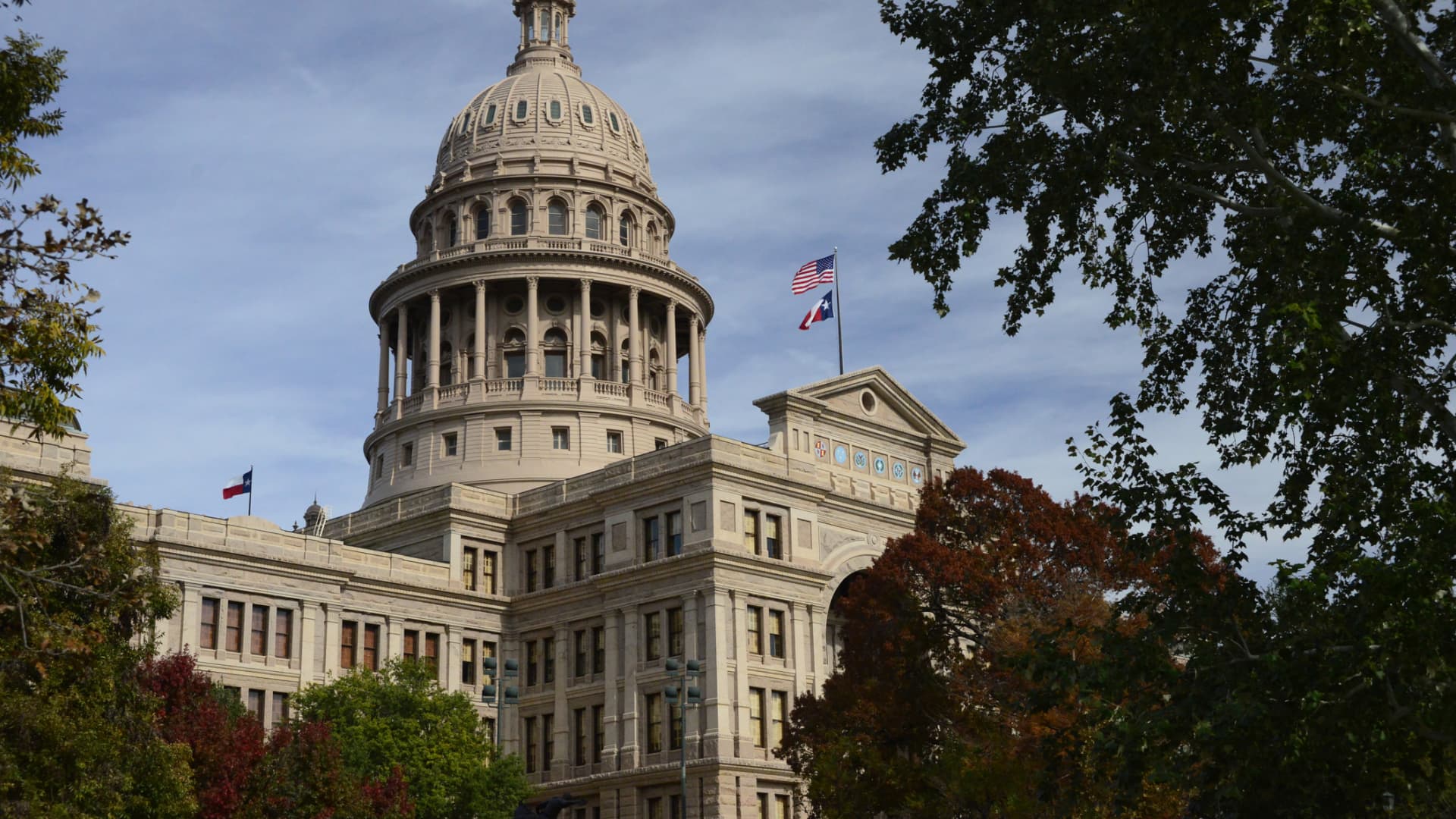
Led by Texas and New Hampshire, U.S. states across the national map, both red and blue in political stripes, are developing bitcoin strategic reserves and bringing cryptocurrencies onto their books through additional state finance and budgeting measures.
Texas recently became the first state to purchase bitcoin after a legislative effort that began in 2024, but numerous states have joined the “Reserve Race” to pass legislation that will allow them to ultimately buy cryptocurrencies.
New Hampshire passed its crypto strategic reserve law last May, even before Texas, giving the state treasurer the authority to invest up to 5% of the state funds in crypto ETFs, though precious metals such as gold are also authorized for purchase. Arizona passed similar legislation, while Massachusetts, Ohio, and South Dakota have legislation at various stages of committee review.
Despite much of the legislation being largely sponsored or co-sponsored by Republicans, the adoption of crypto at the state level is not expected to strictly fall along party lines. The 2024 election cycle was the first time that the cryptocurrency industry played a major role in lobbying in both state and national elections. In fact, it was the largest corporate donor in an election cycle, with support given to candidates on both sides. It is already amassing a war chest for the 2026 midterms.
Congress is currently debating a crypto market structure bill, and state-level politicians are as much out to prove that they, and their states, won’t be left out of the digital assets boom. Justin Marlowe, a public policy professor at the University of Chicago, sees the state-level trend as largely one of signaling at present. “If you’re a governor and you want to broadcast that you are amenable to innovative business development in the digital economy, these are relatively low-cost, low-risk ways to send that signal. That’s why we’ve seen leaders across the ideological spectrum and all over the country take tangible steps in this direction,” he said.
Where the state-level crypto efforts can be described as “bigger steps” — Marlowe cited Texas, Arizona, and Florida, as examples — he said it has helped to acknowledge the growing political power of crypto advocates in these states.
Similarities in the actions taken across states to date include include authorizing the state treasurer or other investment official to allow the investment of a limited amount of public funds in crypto and building out the governance structure needed to invest in crypto. This often will involve more frequent reporting requirements and stronger custodial agreements compared to traditional asset classes. The seeding of the reserve can take the form of utilizing cash or government-seized crypto, as in the recent case of the federal government. President Donald Trump signed an executive order to create a strategic bitcoin reserve last March, but limited the authorization to seized crypto in an effort to show taxpayers would bear no financial burden.
It is no surprise that Texas was the first state to fund a crypto reserve. Texas has been a crypto hub for years through its role in bitcoin mining. The state’s affordable and flexible power, as well as a political environment that has largely been pro-crypto, led Texas in recent years to a sizable position in not just the national, but global bitcoin hashing market.
“Texas has spent the last few years becoming one of the key centers of bitcoin activity, especially on the mining side,” said Christian Catalini, founder of the MIT Cryptoeconomics Lab, seeing this move as one that early branded the state as “open for business” when it comes to digital assets.
“Once you’ve made that bet on infrastructure and industry, adding some Bitcoin exposure at the treasury level is a natural next step,” Catalini said. Such a move essentially makes the state’s balance sheet one that is explicitly aligned with the ecosystem it aims to attract.
Texas also has a long history with bitcoin’s traditional market competitor: gold.
“Texas has proven to be a bedrock of government adoption of bitcoin, starting with laws that allow for legal custody arrangements akin to gold storage laws that are well established there,” said Nik Bhatia, founder of The Bitcoin Layer.
When it comes to storing physical gold, Texas has clear rules on storage and ownership, and even the language invoked – vaults, custodians – helps grease the wheels for crypto assets at the state level. The Texas Bullion Depository of 2015, which allowed for state-level depository of bullion and precious metals, was specifically adapted to apply to digital assets like bitcoin. The Texas Bullion Depositary was the first state-administered precious metals depository in the nation.
Texas has not purchased any on-chain bitcoin. After passing the legislation to create a strategic bitcoin reserve that gave authorization to the state comptroller to hold the cryptocurrency, Texas purchased a stake in a bitcoin ETF — roughly $5 million in the largest bitcoin ETF, the BlackRock iShares’ Bitcoin Trust (IBIT), which since its launch in January 2024 has grown to over $72 billion in assets under management.
The Comptroller’s office made its purchase on the morning of November 20, 2025, when the price of a single bitcoin was $91,336. As of Saturday morning, bitcoin was trading at a little over $95,000.
Bhatia said the approval of bitcoin ETFs by the SEC was crucial to the state plans to be comfortable with the holdings under current U.S. securities law. “Using ETFs is a very clean and safe way to invest in bitcoin, minimizing storage logistical risk and opting for security law protection,” Bhatia said.
Texas state officials have described this purchase — which deployed only half of the $10 million set aside by the Texas Strategic Bitcoin Reserve — as a “placeholder” while security and storage for raw bitcoin can be put into place.
Crypto’s move into core state finance and budgeting
In addition to the concept of reserve funds, states are bringing crypto into core finance functions, with an approach that balances the inherent trepidation of venturing into new terrain with a desire to be a part of the fast-moving crypto realm.
New Hampshire, for example, became the first state to approve the issuance of a bitcoin-backed municipal bond last November, a $100 million issuance that would mark the first time cryptocurrency is used as collateral in the U.S. municipal bond market. The deal has not taken place yet, though plans are for the issuance to occur this year. “The idea is they’ll use bitcoin to back a municipal bond issue, the proceeds of which will then be divvied up into loans to smaller governments for economic development projects across the state,” Marlowe said. Repayment of these loans will recapitalize the fund.
It is a creative evolution in state finances, but like many of the mechanisms for crypto development at the state level, it utilizes existing financial structures and state goals, according to Marlowe, with similar public bonds in prior decades used for projects like clean water, school upgrades, and other infrastructure. “What’s different here is it’s bitcoin rather than taxpayer dollars as the collateral,” he said.
In numerous states, including, Colorada, Utah, and Louisiana, crypto is now accepted as payment for taxes and other state business. As more state public finance crypto efforts develop, the shift represents a change in a core philosophy of safety and liquidity that has dominated the investing of state and local funds for centuries.
In recent decades, assets including real estate and private equity expanded the investment approach of public funds, but crypto represents not only the most recent addition, but the most volatile.
“For many in the state/local investing industry, crypto-backed assets are still far too speculative and volatile for public money,” Marlowe said. “But others, and I think there’s a sort of generational shift in the works, see it as a reasonable store of value that is actually stronger on many other public sector values like transparency and asset integrity,” he added.
