


PUBLISHED
February 22, 2026
A vast majority of Pakistani Anglophone fiction is constrained by geography. Driven by a desire to reflect local experiences and realities, many authors prefer to set their narratives in their own backyards rather than in distant, unfamiliar lands. Karachi-based author and lawyer Sana Pirzada has defied this trend.
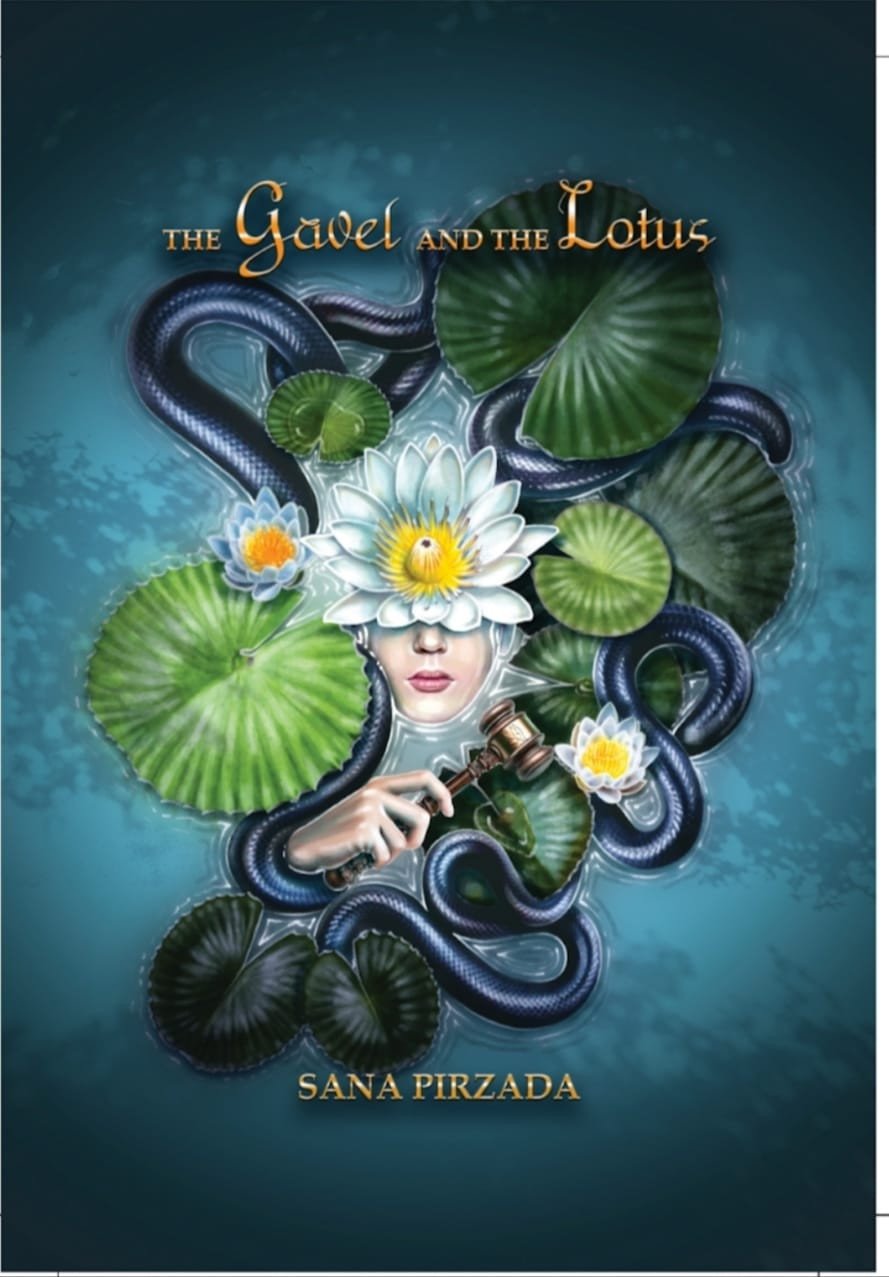
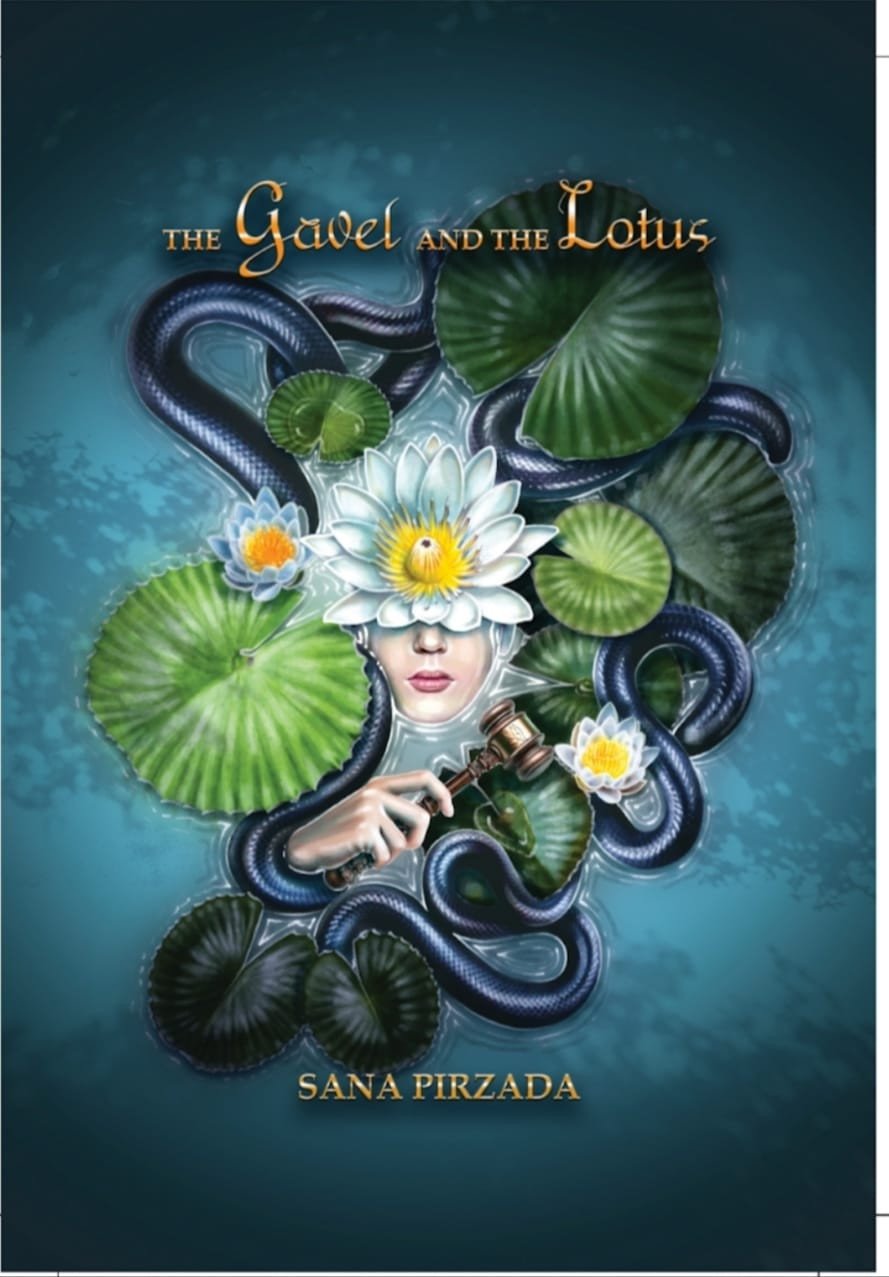
Released in 2016, her first novel The Rose Within derived its creative thrust from the conventions of gothic romance. Since then, she has penned five works of fiction that build on a similar motif, including a novella titled The Gavel and the Lotus, which was launched earlier this year.
Most Pakistani readers would be puzzled by Pirzada’s abiding interest in a category of fiction that seems like an anachronism in these modern times. Be that as it may, her vast, intriguing and unusual oeuvre is a reminder that fiction writers from Pakistan can, quite frankly, allow their imagination to fly. In an age when fiction from the country offers recurring meditations on Pakistan’s social and political realities, there is ample room for narratives that deviate from the norm.
Defiance, though, has its limits. Numerous authors have suffered centuries of neglect before their works have landed in the laps of discerning readers. Pirzada’s fiction remains something of an anomaly in Pakistan’s literary landscape and she predominantly self-publishes her books.
The Gavel and the Lotus is unique as it relies heavily on an epistolary structure. The elderly Mark Finchley, who has spent a lifetime teaching Scripture at Greymaster School in Bodmin, Cornwall, writes a long letter to his niece, Lily. Little is known about the note’s recipient beyond the fact that she lives in Quebec and appears to be the very image of conformity—a married woman with two children. Readers shouldn’t harbour any illusions about ever getting to know Lily. She is a mere cipher—a disembodied, unknowable entity. What truly matters is Finchley’s intention in writing to her.
The missive breaks “a long silence during the past several months” following the loss of the narrator’s wife, which may suggest that it is the product of a grief-addled mind. The note’s eeriness is heightened by its tone of a final farewell.
Finchley’s letter informs Lily about something she has long wished to know: the fate of her brother Felix at Isis Hall. Dated November 10, 1910, the letter transports the reader two decades into the past to uncover the layers of a dark secret. “For twenty long years, I carried [this secret] silently, a shadow upon my conscience,” he writes. “But what comfort [can be derived from] lies?”
Finchley’s impulse to write a candid account is far from arbitrary. Instead, a chance sighting at a railway station prompts him to adopt a confessional mode. What emerges is an unsettling and tantalising tale about Felix’s youthful obsession with Marcella, the enigmatic daughter of Sir Silas Godfrey, a retired judge of Old Bailey. This obsession lays the groundwork for a haunting tale of misplaced morality.
This is undoubtedly Pirzada’s darkest work yet, and possibly the only one where her authorial skill seems to be distinctly sharpened and honed. In its bleakness, the novella offers readers a glimpse of stark, unflinching reality. This is Pirzada’s shortest work, which implies that the author has meticulously pared it down and stripped it of superfluous details.
At its core, The Gavel and the Lotus represents an act of creative rebellion. The novella defies categorisation and is, by turn, a morality tale, a psychological thriller and a work that is firmly rooted within the tradition of Victorian gothic horror. Each facet reinforces the other, allowing the narrative to develop a striking three-dimensionality.
As a morality tale, the novel turns an intimate gaze on how justice is defined, enacted and withheld. In a concise author’s note, Pirzada asserts that her latest “grapples with some of the gravest vices…and the ruin they inevitably bring upon those who commit them, as well as those caught in their shadow.”
“To wield a gavel,” states one of her characters, “is to hold life and death—conscience and consequence—in one’s grasp. Power is a burden few men carry without decay.”
These words, delivered during a guest lecture at Greymaster School, gradually segue into a discussion on morality, which the narrator pointedly describes as a “sermon from hell.” Pirzada evokes a world steered by legal authority, personal righteousness and religious conviction.
However, her characters aren’t uniformly good or evil; they tend to vacillate between both extremes. The Gavel and the Lotus features a memorable cast of flawed characters, who remind us of the intricacies of human nature.
Pirzada’s sixth work of fiction is an immersive, engaging read, not simply because the narrative is dramatic, but because the author creates a haunting atmosphere of discomfort. The lingering effects of memory, grief and obsession sustain this pervasive sense of unease. No major dramatic moments or spectacles can replicate this tension. In this way, the novella meets the essential criteria of a psychological thriller.
While some readers might view The Gavel and the Lotus as a quintessentially Victorian novel, the perspective of a discerning writer from a former British colony cannot be overlooked. Even if her characters are invariably white, Pirzada remains liberated from their biases, placing her in an ideal position to offer critique—and even lampoon—their intentions.
The aim, however, isn’t to bend the genre for her own narrow purposes. From the lens of a brown, Pakistan writer, the narrative subtly re-examines the systems of the Victorian era that continue to shape our notions of propriety and acceptability. This can be seen in the treatment of non-European artefacts, locations and people. In Victorian gothic fiction, these elements were used to portray the ‘other’ as a potential threat to the glorious ‘English self’. Pirzada invokes curses from Indian maharajas and ominous references to Egyptian mythology to underscore the absurdities and anxieties of Empire. These motifs aren’t treated as genuine threats to the sanctity of the white man’s world. Instead, they are perceived as products of his wild, fevered imagination, ultimately becoming self-fulfilling prophecies.
In this way, Pirzada’s novella carries the spirit of a post-colonial work. By revisiting a bygone era and exposing the white man’s crippling anxieties about other cultures, The Gavel and the Lotus reveals how the fear of the ‘other’ served as a convenient distraction from their own hypocrisies and internal strife.
A key concern of gothic fiction is its emphasis on the domestic sphere as a locus of terror rather than a refuge. Pirzada foregrounds this notion through the character of the troubled Marcella, who appears as someone to be shielded from society. Yet, she ultimately finds herself confined in a metaphorical prison, subjected to the watchful surveillance of those who profess to love her. The Gavel and the Lotus refuses to romanticise these contradictions. These double standards reveal the insidious ways in which love can morph into control, and how the suffering of women is rendered necessary, virtuous and inevitable.
Though a slim text, Pirzada’s sixth book is laden with intertextual echoes of many works of great fiction along with several films and theatre plays. “My inspirations were many,” she writes in her Author’s Note. “Bram Stoker’s chilling short story The Judge’s House; the unforgettable [character of] Nicholas Medina as portrayed by Vincent Price in the 1961 film of The Pit and the Pendulum [and] Gary Oldman’s breath-taking performance as the love-stricken centuries-old vampire Dracula in Francis Ford Coppola’s 1992 masterpiece.”
Readers will also detect the influence of Agatha Christie’s And Then There Were None and Susan Hill’s horror tale The Mist in the Mirror in Pirzada’s latest work.
Yet, even while drawing on these varied creative influences, The Gavel and the Lotus retains a distinctly original spark. Across its 118 pages, the novella employs contemporary prose that preserves an old-world charm—a rare and difficult balance to strike.
Readers may be intrigued to learn that Pirzada penned the novella over the span of just two weeks in December 2025. This is, in itself, a remarkable feat that reveals not only her commitment to the written word but also her deep, abiding engagement with gothic literature. The result is far from disappointing. The Gavel and the Lotus is arguably her most assured work to date as it delves into the moral ambiguities that drive human behaviour.
In her commendation on the back cover, author London Clarke states that Pirzada writes with the assurance of someone “descended from the lineage of Emily Brontë and Edgar Allan Poe.” This may lead readers to wonder whether she is, in some sense, a literary reincarnation or a spiritual successor of either one of these authors. The matter is resolved if readers view Pirzada as an earnest disciple of gothic literature, fully aware of its tropes and equally adept at replicating and subtly resisting them.
The Gavel and the Lotus is riveting, absorbing work that functions simultaneously as escapist literature and a quiet challenge to entrenched social norms and expectations.
The reviewer is the critically acclaimed author of No Funeral for Nazia and Typically Tanya
All facts and information are the sole responsibility of the writer
