


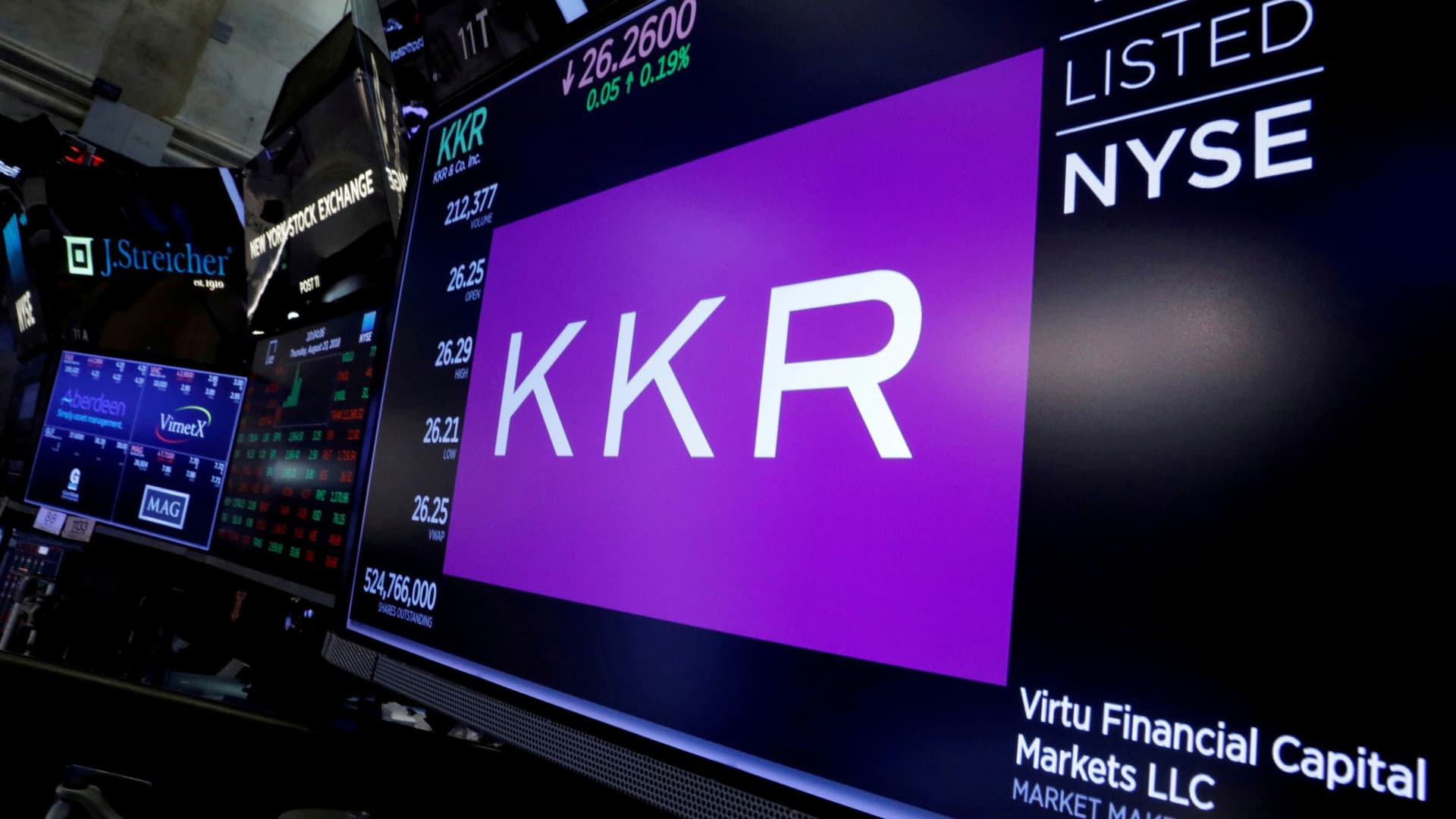
A KKR logo displayed on the floor of the New York Stock Exchange on Aug. 23, 2018.
Brendan McDermid | Reuters
Moody’s Ratings on Monday downgraded a private credit fund run by KKR and Future Standard to junk amid rising bad loans and a string of weak earnings.
The ratings firm lowered the debt ratings of FS KKR Capital Corp by one notch to Ba1 from Baa3 — pushing it into “junk” territory — saying that the fund’s underlying asset quality had worsened more than its peers.
Non-accrual loans, meaning loans that borrowers have stopped making payments on, rose to 5.5% of total investments at the end of 2025, one of the highest rates among rated business development companies, according to the report.
“The downgrade reflects FSK’s continued asset quality challenges, which have resulted in weaker profitability and greater net asset value erosion over time relative to business development company (BDC) peers,” Moody’s said, referring to the fund by its ticker.
Shares of FSK dropped 4% in Tuesday morning trading. They’ve plunged by more than 30% this year.
The move by Moody’s is the latest sign of distress in the private credit world. Retail investors have been rushing to withdraw funds, running into gates amid concerns about upcoming credit losses, especially related to software loans. Asset managers from Blackstone to Blue Owl have had to contend with elevated redemption requests for their private credit funds, a potential turning point for a category that has seen explosive growth in the past decade.
FSK, which lends to private, middle-market U.S. companies, became the second-largest publicly traded BDC when it was formed through a merger of two predecessor funds in 2018.
Funds such as FSK issue debt to help juice returns, so the Moody’s downgrade could increase its borrowing costs and, therefore, lower future returns.
“FSK remains well positioned despite the decision,” a spokesperson for the fund told CNBC in an email. “It has a strong, well‑laddered liability structure with no 2026 unsecured maturities and limited near‑term maturities, enabling us to continue supporting our portfolio companies and navigate the current market environment.”
Moody’s also flagged other aspects of the fund that could expose it to greater losses over time, including higher leverage, a higher proportion of payment-in-kind loans, and a lower percentage of first-lien loans than peers.
FSK posted a net loss of $114 million in the fourth quarter and earned just $11 million in net income for all of 2025, according to Moody’s.
The fund’s largest single category of loans is for software and related services, which made up 16.4% of exposure at year-end.
