


ISLAMABAD:
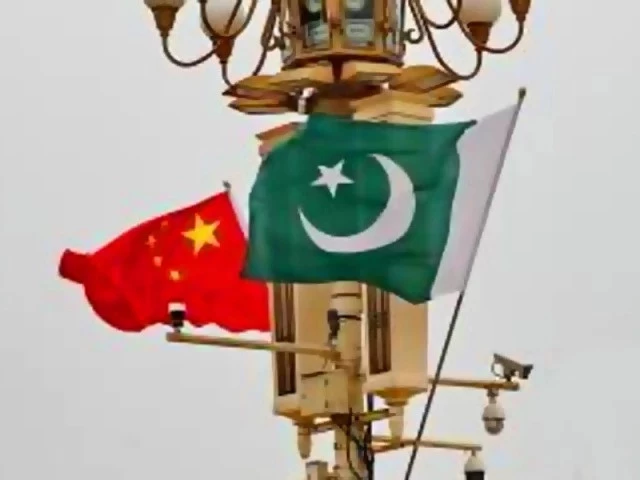
Planning Minister Ahsan Iqbal on Monday ruled out renegotiating over $15 billion in Chinese energy debt deals and said that Beijing should not be victimised for Pakistan’s own faults, taking a clear stance after multiple attempts by the finance and power ministries to reopen these contracts failed.
“Pakistan should honour its commitments and others should not be blamed for our past mistakes,” said Iqbal, while responding to a question during a press conference here. The minister clarified that reopening these deals would increase Pakistan’s financial risk premium and compromise the country’s credibility in the eyes of foreign investors.
China has set up 21 energy projects in Pakistan with a total cost of $21 billion, including about $5 billion in equity. Chinese investors obtained loans for these projects at an interest rate equal to the London Interbank Offered Rate (Libor) plus 4.5%.
Western financial institutions have also been pressuring Pakistani authorities to reopen these contracts to reduce the cost of energy. However, China did not agree to any arrangement under which Western debt, accounting for over 45% of Pakistan’s total debt and largely owed to multilateral institutions, would not also be renegotiated.
After assuming office, the government of Prime Minister Shehbaz Sharif reached out to Beijing with a proposal to spread debt repayments over a longer period. This was aimed at reducing the annual outflow of foreign currency by $750 million per annum and, on the other hand, potentially cut electricity prices by Rs3 per unit.
Pakistan sought a five- to seven-year extension in the repayment of Chinese energy debt obtained for setting up 21 power projects under the China-Pakistan Economic Corridor (CPEC). Against the existing remaining Chinese energy debt of $15.4 billion, payments by 2040 would total $16.6 billion, according to government sources.
Under these agreements, the current power tariff structure requires debt servicing repayments during the first 10 years of the deals. This has placed a significant burden on consumers, who are paying both interest and principal through higher electricity tariffs.
Iqbal also spoke about corruption in Pakistan, claiming that its incidence was much lower than public perception. A recent survey by a trade body showed that while 67% of people spoke of high corruption, only 27% said they had personally faced situations where they had to pay bribes.
However, last week the Chairman of the National Accountability Bureau (NAB) presented the organisation’s annual performance report, claiming recoveries worth Rs6.2 trillion last year. The stated recoveries are more than double Pakistan’s Rs2.5 trillion defence budget. It is, however, unclear how much of the Rs6.2 trillion recovered amount has been deposited with the central bank.
According to details provided by NAB to the media, the recoveries were made through the retrieval of encroached state and other organisations’ land, as well as cash. These included the reclamation of three million acres of encroached state and forest land, valued at approximately Rs6 trillion. It was stated that NAB Sukkur recovered 1.63 million acres of land worth Rs3.73 trillion. However, it was not clear who assessed the land values or what methodology was used. NAB Balochistan reportedly recovered 1.02 million acres worth Rs1.37 trillion, while NAB Multan recovered 330,000 acres valued at Rs654 billion, along with 51 canals of state land worth Rs29.4 billion in the federal capital territory.
Commenting on the economy, the planning minister said inflation had stabilised at an average of 5.2% during the first seven months of the fiscal year and that large-scale manufacturing had also rebounded. However, he acknowledged that imports were under pressure due to trade liberalisation and higher inflows of industrial raw materials. Pakistan’s trade deficit has widened significantly, as imports grew in double digits while exports plunged 7% during the first seven months of the current fiscal year.
Iqbal admitted that foreign remittances “were the silver bullets for the economy”. Overseas Pakistanis sent more money than the $18.2 billion in total exports during the July-January period of the fiscal year.
Deputy Prime Minister and Foreign Minister Ishaq Dar on Monday posted on social media that he had chaired a meeting focused on boosting economic growth, expanding trade and investment opportunities, and promoting the interests of businesses and exporters. He added that discussions also emphasised collaboration with chambers of commerce to advance trade and economic development.
The planning minister said the Public Sector Development Programme (PSDP) was suffering due to low fiscal allocations. He added that the planning ministry had received an additional demand of Rs500 billion for strategically important and mega projects, including Diamer-Bhasha Dam, Mohmand Dam, and the construction of roads and motorways.
The PSDP needs to be increased from the current low of 0.8% of GDP to 2.7% to avoid cost overruns, the minister said.
However, the practical situation remained alarming. The planning ministry authorised Rs556 billion for spending during the first seven months of the fiscal year, but the finance ministry sanctioned only Rs273 billion. Iqbal said the 50% gap between authorisation and actual spending was due to procedural delays.
He added, however, that the reality was that the finance ministry was slowing fund releases to compensate for a tax shortfall of Rs347 billion against the downward-revised target for the July-January period.
