


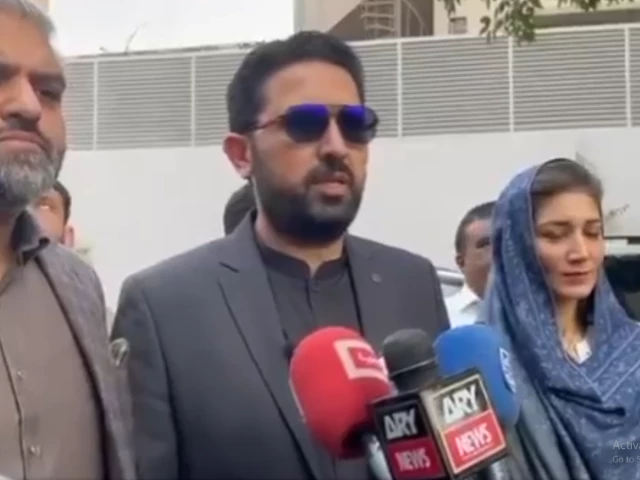
Khyber-Pakhtunkhwa Chief Minister Sohail Afridi speaks to media representatives in Lahore on December 27, 2025. SCREENGRAB
PESHAWAR:
Khyber Pakhtunkhwa Chief Minister Sohail Afridi on Saturday slammed the government for running a system of “oppression and fascism”, saying that such orders could build roads but never nations.
He stressed that genuine nation-building was only possible when the rich and the poor were governed by the same law and the same system of justice.
Addressing a two-day health awareness conference organised by the Pakistan Medical Association in Peshawar, where he attended as chief guest, the chief minister said K-P was the only province in the country providing free healthcare coverage to its entire population.
He contrasted it with Punjab, where he said the free healthcare programme launched by former premier and party supremo Imran Khan had been discontinued.
Afridi said the provincial government would increase allocations for the nutrition sector in the next fiscal year’s budget, stressing that health and education were directly linked to public welfare and were therefore being prioritised for investment.
Expanding on governance, the chief minister said systemic change could not be achieved by individuals acting alone and required collective responsibility. He stressed that every individual must be made conscious of their duties, adding that shirking responsibility also fell within the definition of corruption. He said the provincial government was working to make governance and service delivery systems more effective and transparent, adding that accountability and efficiency were central to restoring public trust.
“In systems of oppression and fascism, only roads are built, nations are not. Nations are built when there is one law and one system of justice for both the rich and the poor.”
He added that the struggle to dismantle separate systems for the privileged and the underprivileged had already begun.
The chief minister said the movement initiated alongside Imran Khan continued with full force, and pledged that collective efforts would be made to transform Pakistan into a truly strong state envisioned by national poet Allama Iqbal and founding father Quaid-e-Azam Muhammad Ali Jinnah.
He also paid tribute to former Punjab health minister Yasmin Rashid, saying the courage and resilience with which she was confronting her circumstances were admirable. “Dr Yasmin Rashid has already fought her share of the battle,” he said, adding that “now she is fighting our share of the struggle”.
