


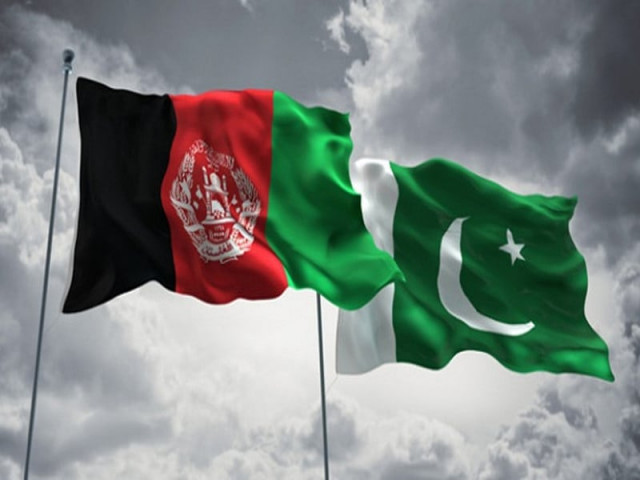
Pakistan to not move from its core demand of decisive action against terrorist outfits, say sources
ISLAMABAD:
Pakistan and Afghan Taliban officials met in China’s Urumqi on Wednesday for a new round of talks brokered by China, sources told The Express Tribune.
Despite 18 rounds of failed talks, the Chinese government has now taken the burden of bringing the warring neighbours to peace, but diplomatic circles are showing little optimism for a successful outcome.
According to Afghan sources, the six-member delegation—comprising the Foreign Office’s Muhibullah Waseeq and Abdul Hai Qanet, the Ministry of Defence’s Ruhullah Umer, Yahya Takal of the General Directorate of Intelligence (GDI), Afghanistan’s national intelligence and security agency, and the Ministry of Interior’s Arifullah—has already departed for China on Wednesday.
Pakistan hasn’t yet announced the names, as Islamabad would later involved special representative for Afghanistan if the talks head onward from the technical level to senior levels, the sources confirmed.
The Pakistani side will also be composed of individuals from the defence and intelligence services and will be led by the head of the Iran and Afghan desk, Asad Gillani, who is already in Beijing, having travelled there with Deputy Prime Minister and Foreign Minister Ishaq Dar on Tuesday.
An Afghan source speaking to The Express Tribune claimed that after successive failed talks and unsuccessful efforts of four Islamic nations, now the Chinese will take the front role in de-escalation between Islamabad and Kabul.
Beijing had already informed Islamabad and Kabul via their special representative that China would act as the guarantor amongst the trust-deficient nations, a diplomatic source has told The Express Tribune.
“The delegations of the two sides aren’t the same who have already taken part in the talks in Doha, Istanbul and Riyadh, but yes seasoned figures, including from the Afghan side, while Pakistan has named an experienced one, which shows the seriousness of efforts of de-escalation to the Chinese mediators,” a seasoned military source confirmed to The Express Tribune.
The two sides would first engage on a technical level, as well as official level meetings would be held on Thursday and Friday, the sources added.
“The two sides were asked not to expose information regarding the meeting to the media, but yes, we can confirm that the meeting will be held in Urumqi, China,” the source confirmed.
On the other hand, Pakistan unofficially extended the ceasefire until gross violence on the western borders, while Torkham and Chaman would continue their services for the Afghan refugees’ repatriation process, the sources said.
The Chinese had requested that the two sides not issue offensive media statements till the meeting came to a logical conclusion, the source said.
“The Pakistani side has confirmed that any misadventure from the Afghan side would be considered as an act of aggression, and after assurances from the Afghan side, we have resumed refugees repatriation”, military sources told The Express Tribune.
General R Inaam Yousafzai told The Express Tribune, “China is a brotherly country, and we welcome such a positive response from Beijing, but the ball is in the court of the Islamic Emirate of Afghanistan; if they actually act wisely, we as Muslim countries don’t need any mediators.”
“I personally doubted the assessment that the Chinese would take any serious measures or success on the Afghan Chapter, as Afghans believe in negative relevance, mindset,” General Inaam added.
The development came as Dar departed from China after concluding his one-day official visit, meeting Chinese Foreign Minister Wang Yi. He travelled after hosting a meeting of foreign ministers from Saudi Arabia, Turkiye, and Egypt as part of Pakistan’s diplomatic efforts to end the conflict.
Read More: Pakistan, China unveil 5-point Gulf peace plan
Relations between Pakistan and Afghanistan have hit their lowest point. Operation Ghazab Lil Haq was launched in February following renewed clashes along the Pakistan–Afghanistan border, after Afghan Taliban forces fired on multiple locations, prompting swift military retaliation by Pakistan.
The neighbouring countries have been engaged in escalating hostilities along the frontier since then. The clashes intensified after Afghanistan launched a border offensive in response to Pakistani air strikes targeting terrorist positions.
China’s Special Envoy for Afghanistan, Yue Xiaoyong, visited Kabul on March 8 and held talks with the Taliban regime’s acting foreign minister Amir Khan Muttaqi to discuss bilateral cooperation as well as the deteriorating security situation in the region.
During the meeting, the Chinese envoy emphasised Beijing’s desire to see tensions between Afghanistan and Pakistan resolved through diplomacy and dialogue. He stressed that preventing further escalation was important for regional stability and security.
Read: Pakistan, China unveil 5-point Gulf peace plan
A spokesperson of the Chinese Foreign Ministry said on March 13 that China would continue its mediation efforts to ease tensions between Pakistan and Afghanistan, as Islamabad pressed for a change in the Taliban’s current approach for any meaningful engagement.
“To mediate between Afghanistan and Pakistan, FM Wang Yi has had phone conversations with his Afghan and Pakistani counterparts during the past week,” said the spokesperson.
Earlier, Pakistan informed China that it will continue with its existing policy of non-engagement with the Taliban regime, citing Kabul’s failure to change its stance on the presence of the outlawed TTP and other terrorist groups operating from Afghan soil.
China recently intensified its diplomatic engagement by dispatching its Special Envoy on Afghanistan to both Kabul and Islamabad as part of a broader effort to calm the simmering tensions between the two neighbours.
Also Read: UAE preparing to support US efforts to open Hormuz by force: WSJ
Sources privy to the development told The Express Tribune that while Pakistan acknowledged China’s sincere efforts to defuse the crisis, it made clear that a return to normal diplomatic engagement with Kabul was not possible without tangible changes on the ground.
According to the sources, Pakistani authorities conveyed to the Chinese side that Islamabad had already exhausted all diplomatic avenues before adopting its current policy toward the Taliban government.
According to officials familiar with the discussions, Taliban authorities reiterated to the Chinese envoy their longstanding position that the TTP issue was Pakistan’s “internal problem,” while maintaining that Afghan territory was not being used against neighbouring countries.
Rising tensions
The latest escalation in tensions between the two countries follows a series of tit-for-tat actions over the past year.
Pakistan earlier carried out air strikes targeting camps of the TTP and Islamic State Khorasan Province inside Afghanistan after a wave of attacks in Pakistan, including a suicide bombing in Islamabad. Islamabad has long maintained that TTP leaders operate from Afghan territory, an allegation that Kabul has repeatedly denied.
Tensions also surged after a series of explosions in Kabul on October 9 last year. Taliban forces subsequently targeted areas along Pakistan’s border, prompting Islamabad to respond with cross-border shelling.
The exchanges caused casualties and infrastructure damage on both sides and led to the suspension of trade after border crossings were closed on October 12, 2025.
Officials said Islamabad was left with no option but to resort to cross-border counter-terrorism operations after the Afghan Taliban regime failed to rein in terrorist groups targeting Pakistan.
Islamabad has repeatedly stated that terrorist groups operating from Afghan soil carry out attacks inside Pakistan, particularly the outlawed TTP.
