


ISLAMABAD:
China on Tuesday said it will continue its mediation efforts to ease tensions between Pakistan and Afghanistan, as Islamabad pressed for a change in the Taliban’s current approach for any meaningful engagement.
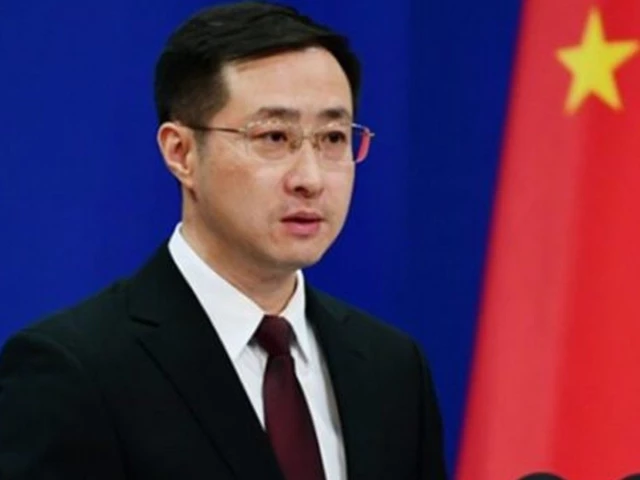
“To mediate between Afghanistan and Pakistan, FM Wang Yi has had phone conversations with his Afghan and Pakistani counterparts during the past week,” said spokesperson of the Chinese Foriegn Ministry.
“The MFA Special Envoy on Afghan Affairs has been shuttling between Afghanistan and Pakistan,” the spokesperson added. “China’s embassies have been in close communication with both sides as well.”
The spokesperson said China hopes Afghanistan and Pakistan will remain calm and exercise restraint, engage face to face as soon as possible, achieve a ceasefire at the earliest opportunity, and resolve differences and disputes through dialogue. “China will continue to facilitate reconciliation and ease tensions,” the spokesperson further said.
Meanwhile, Foreign Office spokesperson Tahir Andrabi said, “Pakistan and China remain trusted partners and close friends. We maintain regular and close communication on all issues of mutual concern and shared interest. Therefore, any unnecessary speculation or fabrication of facts in this regard is unwarranted.”
“During the recent telephone conversation between the deputy prime minister/foreign minister and Foreign Minister Wang Yi, a wide range of issues were discussed, including developments related to Afghanistan. I had also confirmed this aspect of the call during my press briefing last Thursday,” he added.
“Similarly, during the visit of Chinese Special Representative for Afghanistan, Ambassador Yue Xiaoyong, consultations were held on matters relating to regional peace and stability, including Afghanistan.”
Earlier, Pakistan informed China that it will continue with its existing policy of non-engagement with the Taliban regime, citing Kabul’s failure to change its stance on the presence of the outlawed Tehreek-e-Taliban Pakistan (TTP) and other terrorist groups operating from Afghan soil.
China recently intensified its diplomatic engagement by dispatching its Special Envoy on Afghanistan to both Kabul and Islamabad as part of a broader effort to calm the simmering tensions between the two neighbours.
Sources privy to the development told The Express Tribune that while Pakistan acknowledged China’s sincere efforts to defuse the crisis, it made clear that a return to normal diplomatic engagement with Kabul was not possible without tangible changes on the ground.
According to the sources, Pakistani authorities conveyed to the Chinese side that Islamabad had already exhausted all diplomatic avenues before adopting its current policy toward the Taliban government.
Pakistan, the sources said, had raised its concerns through bilateral channels as well as through friendly countries in an attempt to address what it described as the longstanding problem of the Taliban regime harbouring TTP and other militant groups.
However, sources here said meetings between the Chinese envoy and Pakistani officials led Islamabad to conclude that the Taliban leadership had not altered its position.
According to officials familiar with the discussions, Taliban authorities reiterated to the Chinese envoy their longstanding position that the TTP issue was Pakistan’s “internal problem,” while maintaining that Afghan territory was not being used against neighbouring countries.
Pakistani officials rejected that claim, citing what they described as ample evidence, including reports by the United Nations Security Council, which they say corroborate Islamabad’s position regarding the presence and activities of TTP terrorists in Afghanistan.
At his weekly press briefing last week, Andrabi confirmed that Pakistan would maintain its current policy toward Afghanistan. “Since those assurances have not been received, we will continue with our existing policy with respect to that country,” he added.
Neverthelss, it is believed that while Pakistan sticks to its overall stance, possibility of temporary pause in hostilities during Eid is not ruled out.
