


PUBLISHED
February 08, 2026
KARACHI:
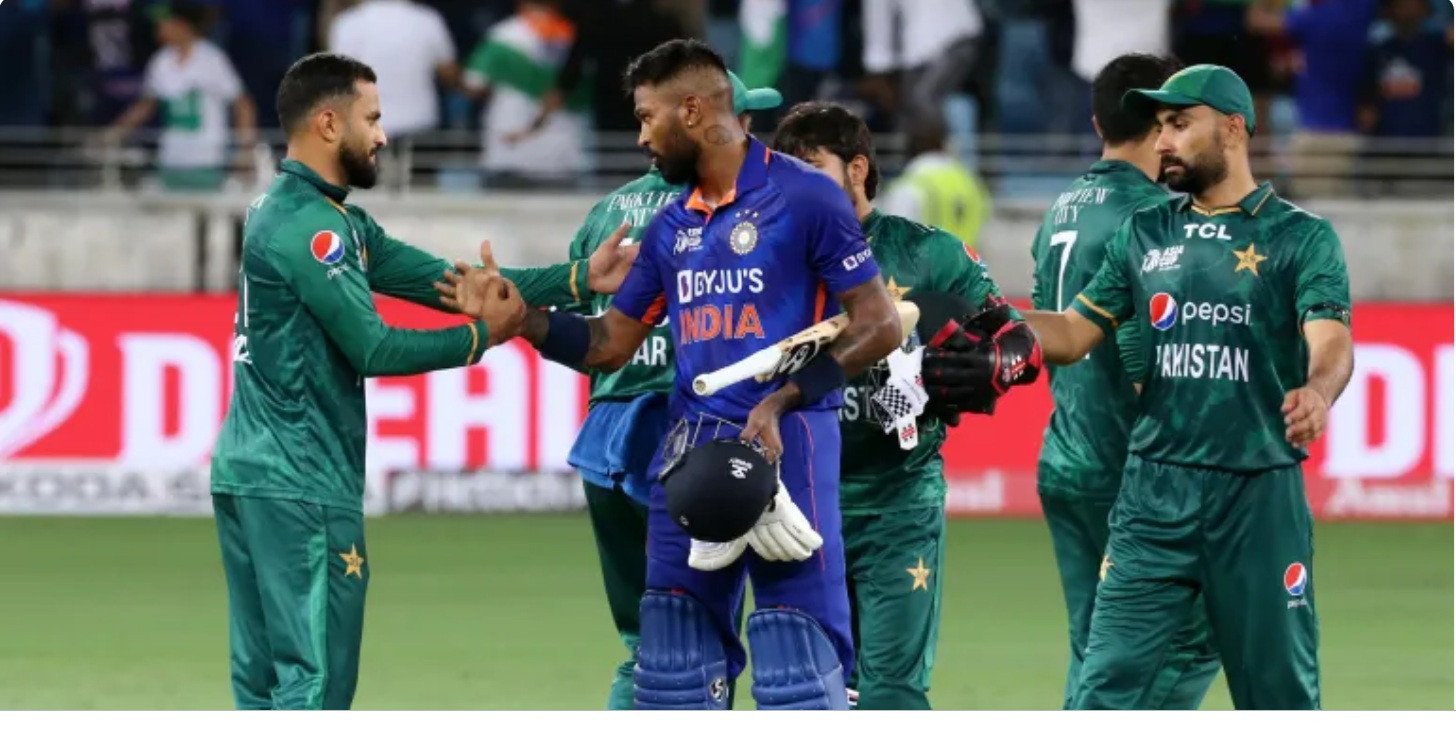
For more than a decade, Pakistan–India cricket has followed an unspoken rule. The bilateral series may disappear, tours may be cancelled, and rhetoric may harden on both sides, but when an ICC tournament arrives, the match happens. Neutral venue or not, security concerns or not, the teams turn up.
That assumption has shaped an entire generation of cricket watchers. It has survived border crises, diplomatic freezes, and repeated breakdowns in dialogue. Which is why the current pause feels different. Not because Pakistan is absent from the tournament, but because, for the first time in the modern era, it is choosing not to play a specific ICC match.
The decision has triggered predictable reactions. Applause from those who see it as overdue assertion. Alarm from those who fear sporting and financial fallout. Criticism from across the border, where Pakistan’s stance is being read less as policy and more as provocation. Yet beneath the noise lies a deeper question that cricket has avoided for years. What happens when the country that has historically complied decides to draw a line of its own?
The decision and the frame
The stance adopted by the Pakistan Cricket Board (PCB), in line with government direction, has been deliberately narrow. Pakistan has not withdrawn from the tournament. It has not called for a boycott. It has not questioned the legitimacy of the competition itself. Instead, it has opted out of a single fixture against India.
That distinction matters. It signals that this is not a rejection of global cricket or the ICC framework, but a selective refusal rooted in precedent and reciprocity. The language used publicly has been cautious, almost restrained. Officials have avoided triumphalist rhetoric, choosing instead to frame the move as a considered response rather than an escalation.
At the same time, what has not been said is just as revealing. There has been no attempt to dress the decision up as a moral crusade or a permanent policy shift. Nor has there been an effort to deny the costs involved. Everyone understands the implications, from forfeited points to potential fines. The choice, then, is not one made in ignorance, but one made with eyes open.
That, perhaps, is what unsettles critics the most.
A divided response at home
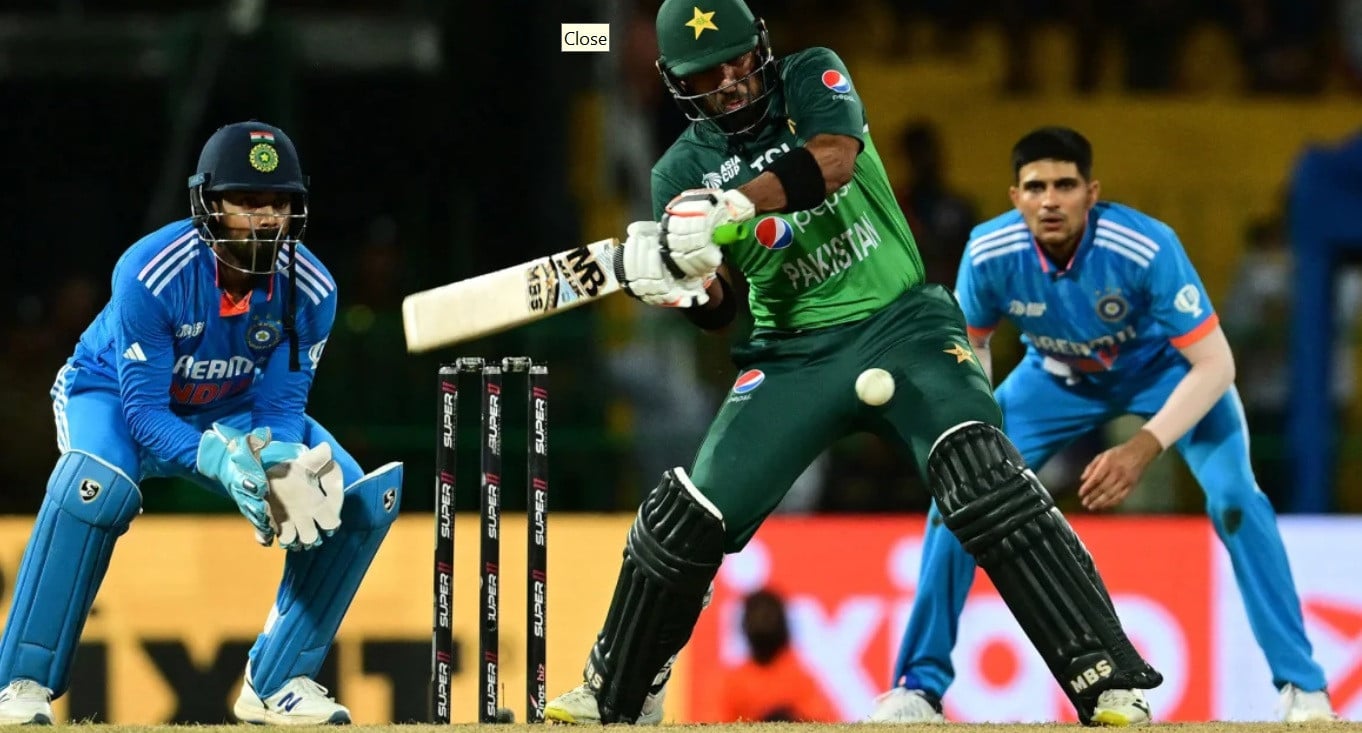
Within Pakistan, reactions have been sharply divided, cutting across predictable lines.
Supportive voices have framed the decision as long overdue. For years, they argue, Pakistan has bent over backwards to keep the rivalry alive at global events, even when reciprocity was absent. From travelling to India under strained diplomatic conditions to accepting hybrid models that diluted hosting rights, Pakistan has repeatedly prioritised continuity over confrontation. Seen through this lens, the refusal to play is not radical, but corrective. A signal that accommodation cannot be infinite.
There is also a symbolic argument at play. Supporters see the move as an assertion of parity. If one country can repeatedly invoke government policy to avoid engagement, why must the other be expected to rise above it indefinitely? In this reading, the issue is not cricketing purity, but consistency.
Critics within Pakistan, however, see things differently. Their concern is less about principle and more about consequence. They warn that selective participation undermines the very argument Pakistan has long made, that sport should remain insulated from politics. Others point to the competitive damage. A forfeited match can derail a tournament campaign before it begins, punishing players for decisions taken elsewhere.
There is also anxiety about isolation. Pakistan’s cricketing history includes long periods on the margins, from hosting bans to security-related exclusions. For those who lived through that era, any step that risks renewed marginalisation is instinctively unsettling.
Both camps, it should be noted, draw on memory. They simply remember different lessons.
Reactions across the border
In India, the dominant reaction has been critical, if not surprised. Large sections of the media have framed Pakistan’s stance as disruptive and politically motivated, accusing it of undermining the spirit of competition. The argument is familiar. Cricket, they insist, should not be held hostage to diplomacy.
What often goes unacknowledged in this framing is how routinely the same logic has been reversed. For more than a decade, India has refused bilateral cricket with Pakistan, citing government policy. That position has been accepted, normalised, and even defended as pragmatic. The refusal has not been seen as politicising sport, but as respecting sovereign constraints.
There are, quietly, dissenting voices in India as well. Commentators and former officials who acknowledge that Pakistan’s move mirrors a logic long employed by New Delhi. Their argument is not that the decision is desirable, but that it is understandable. When precedent runs in one direction for years, it eventually invites imitation.
The difference, of course, is power. And power shapes how identical actions are judged.
A history of accommodation
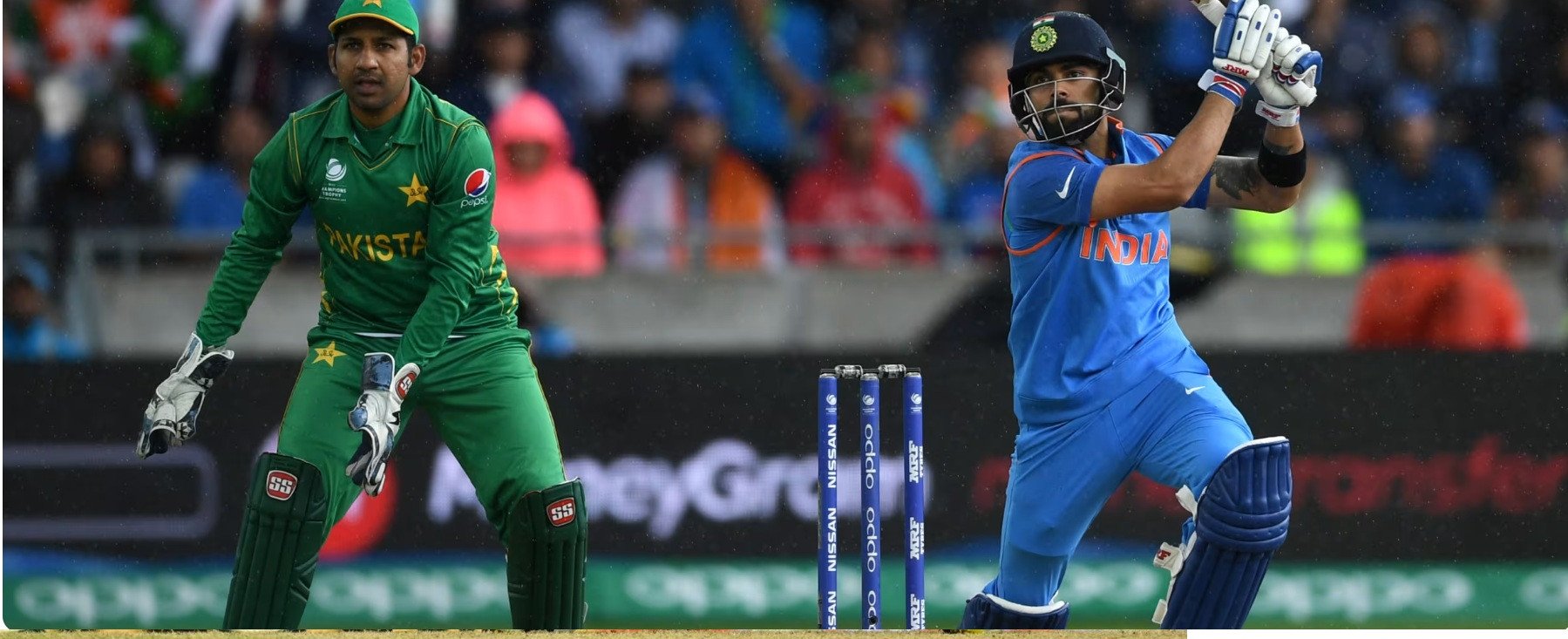
To understand why this moment feels different, it is necessary to revisit the pattern that preceded it.
Since the last bilateral series in 2012–13, Pakistan–India cricket has existed almost exclusively within ICC and ACC tournaments. During this period, the Board of Control for Cricket in India (BCCI) has consistently maintained that government clearance is required for any engagement with Pakistan. That clearance has never come.
Pakistan, by contrast, has repeatedly travelled to India for ICC events, including the 2023 ODI World Cup, despite visa delays, security concerns, and less-than-ideal conditions. When Pakistan hosted major tournaments, India declined to travel, leading to hybrid arrangements that relocated marquee fixtures elsewhere.
These compromises were not cost-free. Hosting rights were diluted. Logistical complexity increased. Fans were divided across borders. Yet Pakistan accepted these arrangements under protest, prioritising tournament continuity and broader goodwill.
At no point during this period did Pakistan refuse to take the field in an ICC match. That consistency became part of its moral argument. We show up, even when it is difficult.
That is why the present decision marks a departure, not in scale, but in philosophy.
Why this time is different
What distinguishes this moment from past standoffs is not the level of tension, but the direction of response.
For years, Pakistan’s approach could be summarised as compliance accompanied by complaint. Objections were raised, statements issued, protests lodged, but participation remained intact. This time, participation itself has been made conditional.
The refusal to play a single match may appear minor, even symbolic, but symbolism matters in international sport. It signals a shift from absorbing asymmetry to challenging it. In effect, Pakistan is saying that if government policy can be a legitimate barrier for one side, it cannot be taboo for the other.
This does not make the move risk-free or consequence-free. It does, however, force a conversation that cricket has long deferred. Is the separation of sport and politics a principle, or a convenience applied selectively?
For the International Cricket Council (ICC), the implications are uncomfortable. The ICC has historically prioritised participation and revenue stability, often bending structures to ensure India’s involvement. If selective refusal becomes normalised, the governance model itself comes under strain. Rules built on assumptions begin to wobble when those assumptions no longer hold.
The outcome trap
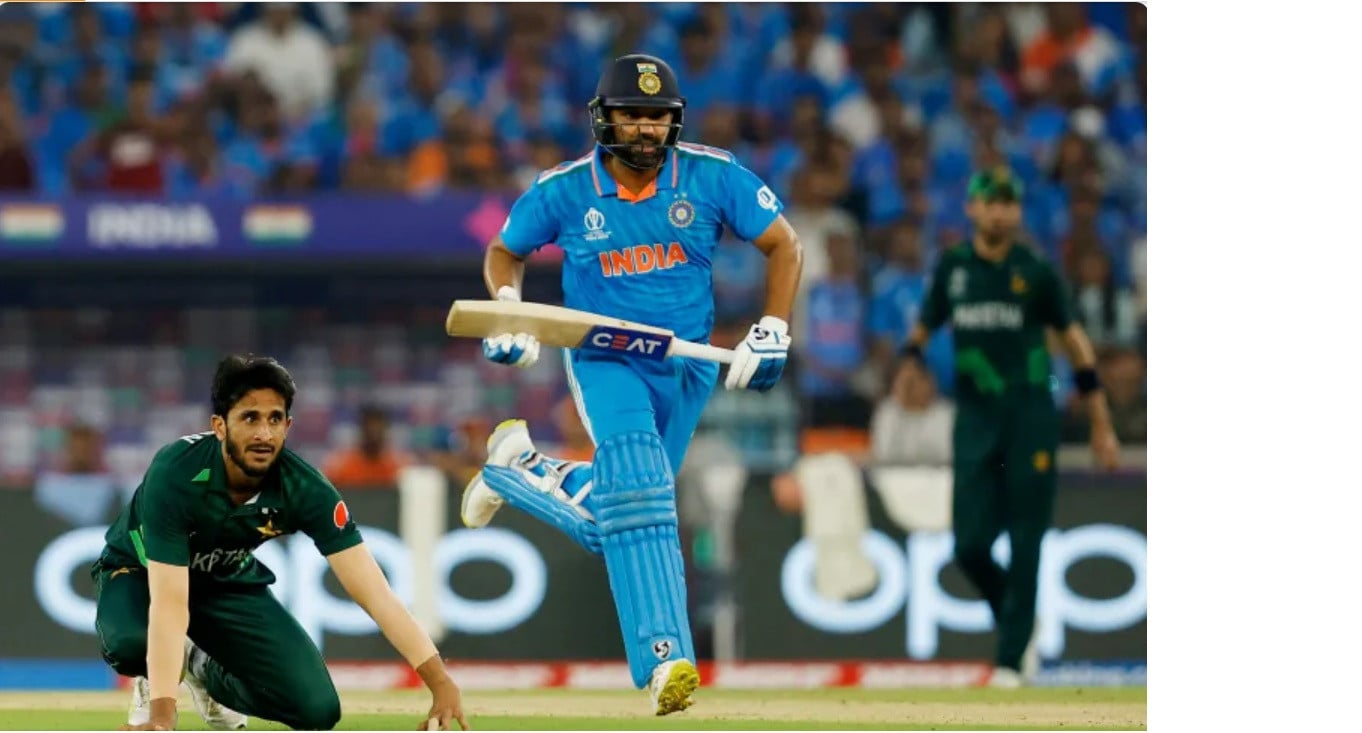
There is another reason the current decision has generated such unease, even among those who understand its logic. Once the question of playing India is framed as a choice rather than an obligation, every possible outcome becomes politically loaded.
If Pakistan were to reverse course and agree to play after signalling refusal, the climbdown would be read less as pragmatism and more as retreat. The original stance, framed as assertion, would lose its meaning. Critics would argue that pressure worked, that resistance was symbolic but unsustainable. In that scenario, Pakistan would not simply be playing a match. It would be absorbing the cost of hesitation without gaining leverage.
If Pakistan plays and loses, the consequences are harsher still. Defeat would collapse the entire debate into a familiar narrative. The decision would be labelled emotional, self-defeating, and poorly timed. Sporting loss would be retroactively used to delegitimise a political stance, as if the two were causally linked. The argument would not be about whether Pakistan had the right to choose, but whether it had earned the right to choose.
Even victory, however, offers no clean resolution. A win against India would bring momentary validation, but not structural change. It would be celebrated as a cricketing achievement, not as proof of parity in decision-making. The broader imbalance that allowed one side to disengage for years without consequence would remain intact. Pakistan would still return to a system where its participation is expected, and India’s remains negotiable.
This is the quiet bind underlying the current moment. On the field, outcomes fluctuate. Off it, the power equation barely moves.
Seen this way, the refusal to play is not an attempt to control narrative through results, but to step outside a cycle where results are used selectively to judge legitimacy.
The money question
Behind much of the anxiety surrounding Pakistan’s decision lies a simpler, more uncomfortable question. How much does not playing India actually cost?
Pakistan-India matches are not just cricketing fixtures. They are the most commercially valuable properties in the global game. Broadcasters, advertisers, and sponsors treat them as tentpole events, capable of propping up entire tournaments. Industry estimates have long suggested that a single Pakistan–India match at an ICC event can be worth anywhere between $200 million and $250 million in combined broadcast value, advertising inventory, and sponsorship activation.
That money does not flow to one board alone. It underwrites ICC tournament economics, influences revenue distribution, and indirectly shapes how much boards like Pakistan’s receive from central pools. When the match disappears, the loss is not only symbolic. It is structural.
If Pakistan ultimately boycotts its match against India at the 2026 T20 World Cup, conservative industry estimates suggest the Pakistan Cricket Board could face cumulative financial exposure exceeding USD 35-40 million (around 10–11 billion rupees), stemming from a combination of potential ICC penalties and match-forfeiture liabilities running into several million dollars, the loss of performance-linked prize money due to an increased risk of early elimination, a reduced share from the ICC’s central revenue pool as the tournament’s most valuable fixture disappears, weakened leverage in future broadcast rights and revenue-distribution negotiations where Pakistan-India matches are priced in as a certainty, and secondary commercial effects tied to sponsor confidence and activation value, with the bulk of the impact unfolding not as a single fine but gradually across the current and subsequent ICC cycles.
There is also the longer-term concern. Pakistan–India matches have historically driven global viewership peaks, which in turn strengthen the bargaining position of the ICC with broadcasters. Any precedent that makes those fixtures uncertain introduces nervousness into future rights cycles. That nervousness rarely hurts the strongest boards. It tends to travel downward.
And yet, this is where the debate becomes more complicated. The commercial value of the rivalry has also been used, quietly but consistently, to justify asymmetry. Because the match is so valuable, extraordinary accommodations have been made to preserve it, often by shifting venues, altering schedules, or diluting hosting rights. Pakistan has absorbed those costs in the past in the name of protecting a product that benefits the global game.
Seen in that light, the financial argument cuts both ways. Not playing India carries a price. But so does always adjusting to ensure the match happens, regardless of who bears the inconvenience.
This is the tension at the heart of the current moment. Cricket’s most valuable fixture has also become its most distortive. Everyone benefits from it. Not everyone pays equally to keep it alive.
Beyond Pakistan and India
The significance of this episode extends beyond the immediate rivalry.
Smaller boards are watching closely. Many operate within regions marked by political disputes, frozen borders, and diplomatic stand-offs. Until now, the message from the top has been clear. Show up, adapt, compromise. If Pakistan’s stance holds without catastrophic fallout, it introduces an alternative script.
There is also a question of fan trust. Cricket thrives on continuity, on the promise that tournaments will unfold as advertised. Selective participation risks eroding that trust, particularly when fixtures are abandoned not due to weather or health, but policy.
At the same time, fans are not oblivious to imbalance. They notice who travels and who does not, who hosts and who relocates. Integrity, in this sense, is not only about playing, but about fairness.
An uncertain threshold
It is too early to declare this a turning point. Pakistan may yet return to its old posture in future tournaments. The immediate costs may outweigh the symbolic gains. Or the ICC may intervene with compromises that restore the familiar pattern.
What is clear is that an assumption has cracked. For the first time in years, Pakistan is not simply protesting the terms of engagement, but testing them. Whether that test leads to recalibration or retrenchment remains to be seen.
Cricket has always insisted that it exists above politics, even as it quietly adapts to them. The current situation challenges that comfort. It asks whether neutrality is a shared burden or a one-sided expectation.
For those who have watched this rivalry evolve, fracture, and persist across formats and forums, the moment feels less like an outburst and more like a pause. A pause in which old habits are reconsidered and long-held patience is reassessed.
What comes next will depend not only on Pakistan’s resolve, but on how global cricket chooses to respond when the familiar script is no longer followed.
