


Authority offers promise, but its success depends on overcoming political, security challenges
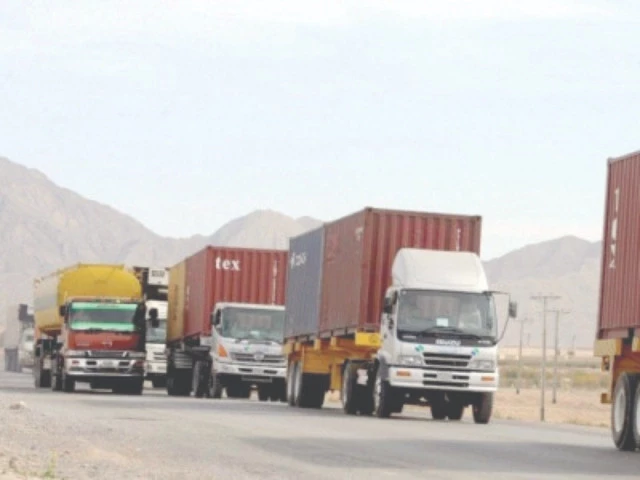
International experience shows that trade tends to stabilise border regions by creating employment, formalising economic activity, and aligning local incentives with peace and continuity. Photo: file
ISLAMABAD:
“When goods don’t cross borders, soldiers will” – Frederic Bastiat.
Pakistan’s recent decision to establish the Land Port Authority is, in principle, a sensible institutional reform.
After nearly two decades of discussion, the country now has a dedicated body tasked with regulating, modernising, and facilitating trade through its land ports. For a country that repeatedly declares exports and trade competitiveness as national priorities, such an authority should have been created long ago.
Yet the commercial value of this reform cannot be judged by legislation alone. Institutions matter only when they operate within a policy environment that allows them to function. At present, Pakistan’s regional trade environment remains severely constrained. In this context, the Land Port Authority risks becoming an administrative structure managing limited activity rather than enabling a meaningful expansion of trade.
With the partial exception of China, where less than 5% of bilateral trade flows through land routes, Pakistan’s borders with neighbouring countries are either closed, intermittently disrupted, or subject to unpredictable restrictions. Trade with India remains frozen. Commercial flows with Afghanistan are repeatedly interrupted. Trade with Iran remains marginal due to US sanctions.
Geography should have been Pakistan’s commercial advantage. In purely economic terms, this location should have supported Pakistan’s emergence as a regional trading and transit hub. Instead, political risk aversion and security-driven policies have constrained the commercial use of this geography.
The experience with India starkly illustrates the scale of opportunity Pakistan is forgoing. Before August 2019, Pakistan permitted only a limited range of commodities, such as chemicals, plastic raw materials, and selected agricultural products, through border trade. Even this constrained exchange benefited producers and consumers on both sides. Since then, trade has virtually collapsed, political tensions have escalated, and economic logic has been sidelined.
Despite the ban on direct imports from India, Pakistan continues to allow limited inflows, mainly pharmaceutical raw materials, out of necessity. In practice, much larger volumes of Indian goods now enter indirectly through third countries. This raises costs for Pakistani businesses and consumers while encouraging informal and illegal trade. A sensible first step would be to restore direct imports of essential industrial raw materials, such as plastics, as was the case prior to 2019.
Concerns that such trade would disproportionately benefit India overlook basic production economics. Pakistani industry depends heavily on imported raw materials, intermediate goods, and machinery. Access to competitively priced inputs from a nearby market would lower production costs and improve export competitiveness globally.
For sectors such as textiles, pharmaceuticals, chemicals, and light engineering, regional sourcing could significantly improve margins and scale. The potential gains are substantial. World Bank estimates suggest that normalising trade with India could raise Pakistan’s exports by up to 80%, an impact few domestic reforms could match within a comparable timeframe.
India-Bangladesh trade offers a useful comparison. Despite serious political tensions, scrapping of several bilateral projects, and India limiting Bangladeshi access to exports through its ports, bilateral trade is rising and now exceeds $10 billion, with India accounting for roughly 85% of the total exports.
Both countries recognise that disrupting trade would ultimately damage their own economies. As a result, India remains Bangladesh’s second-largest trading partner after China. Pakistan’s continued refusal to draw this lesson carries a high and entirely self-inflicted economic cost.
A similar logic applies to Pakistan’s western border. Trade with Afghanistan had started increasing over the last few years with Pakistan’s exports of pharmaceuticals, cement and cereals worth over $1 billion. Trade disruptions over the past three months have resulted in estimated economic losses of $375 million.
International experience shows that trade tends to stabilise border regions by creating employment, formalising economic activity, and aligning local incentives with peace and continuity. Prolonged closures, by contrast, weaken local economies and increase reliance on informal or illicit activity, ultimately raising security costs rather than reducing them.
The path forward does not require resolving every political dispute before reopening trade. Many countries conduct substantial trade with neighbours despite unresolved diplomatic differences. From a business perspective, compartmentalisation is not an abstract principle; it is a practical necessity. Economic engagement can proceed incrementally, with safeguards, while broader political issues are addressed through separate channels.
For Pakistan’s economy, regional trade is not a concession to others. It is a competitiveness strategy. It lowers costs for domestic industry, expands export opportunities, and supports employment in border regions that have long been economically marginalised. It also reduces the fiscal burden associated with prolonged trade disruptions.
In business terms, Pakistan cannot afford to keep its most accessible markets out of reach while searching for growth farther afield. Regional connectivity is not an optional add-on to economic reform; it is one of its foundations. What remains insufficiently appreciated is that the absence of trade does not freeze conflicts. It deepens them, while imposing heavy economic and security costs on Pakistan itself.
The writer is a member of the Steering Committee for the Implementation of National Tariff Policy 2025-30. Previously, he served as Pakistan’s ambassador to World Trade Organisation
