


PUBLISHED
January 18, 2026
BALOCHISTAN:
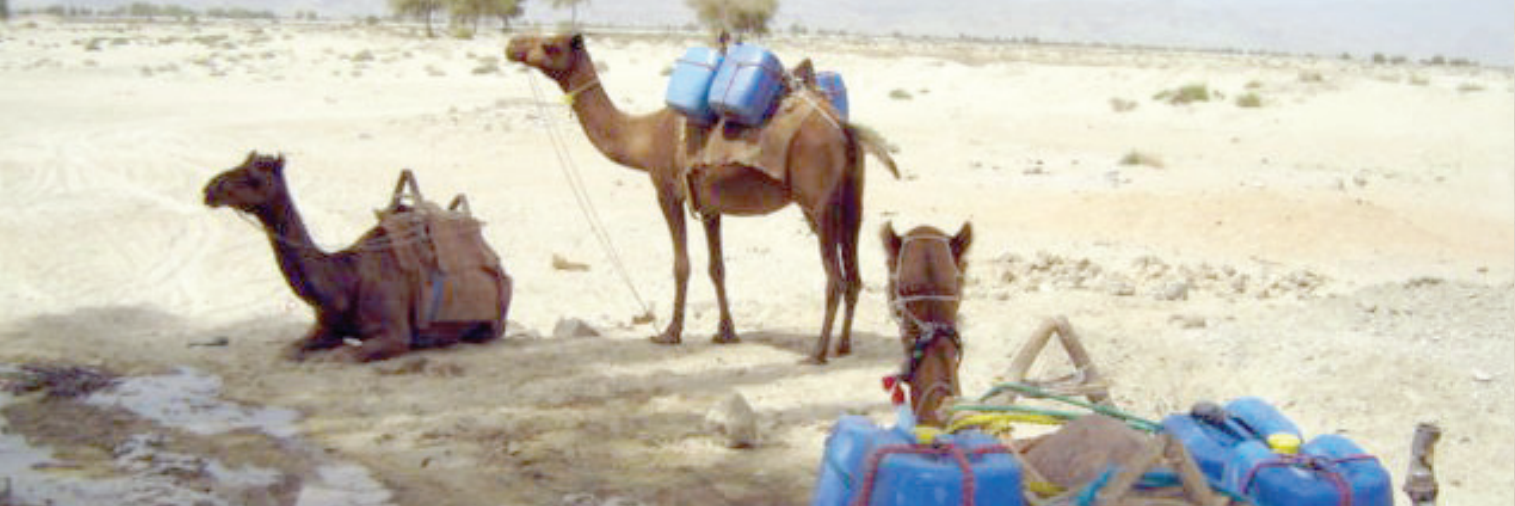
At sunrise, 38-year-old Fatima from the Kulanch area of District Gwadar begins her daily one-kilometre walk to a communal water tank, carrying three empty jerry cans. “Some days I return with water,” she says quietly, “Some days I return with tears.” Her struggle reflects the reality of thousands across Balochistan, where the 2024–2025 drought has intensified, turning daily life into a relentless battle for survival. With rainfall at historic lows and groundwater levels declining at alarming rates, the province is experiencing one of its most severe water crises in decades.
According to geologist and water expert Fazeer Ahmed of the Irrigation Department, drought is not new to Balochistan; it has shaped the region’s landscapes, livelihoods, and migration patterns for generations. Severe multi-year drought cycles between 1997 and 2012 left lasting scars, with intense dry periods recorded in 2000, 2004, 2006, 2007, 2009, 2010, 2011, 2014–2017, 2018, 2020, and now again in 2024–2025. These years triggered widespread crop failures, mass livestock deaths, and large-scale displacement, specifically in Kharan, Chagai, Washuk, Panjgur, Kech, and Gwadar– repeatedly ranked among Pakistan’s most drought-affected districts. Today’s climate-driven shortages are compounding long-standing vulnerabilities, pushing entire communities to the brink.
Across the province, drought has evolved from a weather event into a profound humanitarian crisis. Assessments by the Pakistan Meteorological Department show that more than two-thirds of Balochistan’s districts are currently experiencing moderate to severe drought. The impacts are visible everywhere: failed crops in rain-fed areas, depleted grazing lands, drying springs, empty dams, and sand dunes slowly encroaching onto coastal settlements. Dependence on expensive water tankers has surged. In Gwadar, tanker queues stretch for hours, with a single 30,000-litre tanker now costing between 20,000 and 30,000 rupees —far beyond what most households can afford.
“We spend more on water than on school fees,” says Asghar Babu, a schoolteacher. “Without the tanker, our taps stay dry.” The provincial government allocates more than 70 million rupees each month for drinking water supply, yet demand continues to rise as population, urbanisation, and development expand.
Despite sitting along the Arabian Sea, the coastal belt, including Makran, Gwadar, Pasni, Jiwani, and Ormara, remains one of Pakistan’s most water-stressed regions. Traditional freshwater systems are drying up or failing: Ankara Dam is silted and almost empty, Saiji Dam in Jiwani is clogged with sediment, and Shadi and Sawad Kaur dams in Pasni remain incomplete. Desalination plants meant to solve shortages are either non-operational or running well below capacity. Many households now depend on locally processed 10-litre water gallons often mineral-treated or purified, yet concerns persist about inconsistent quality. On average, a household spends around 200 rupees per day on drinking water alone, an unsustainable burden for low- and middle-income families.
The Government of Balochistan has intensified crisis management in coastal areas through emergency tanker supplies from Meerani Dam, linking major reservoirs such as Shadi Kaur, Sawad Kaur, and Ankara Dam, and improving household-level distribution. Efforts are underway to replace aging pipelines, restore stalled RO units, revive GPA’s desalination systems, and recycle treated wastewater for urban landscaping to reduce pressure on freshwater sources. Several dams, including Shadi Kaur, Sawad Kaur, and Dosi, are being upgraded or fast-tracked. Yet low rainfall, rapid population growth, and siltation continue to undermine long-term water security across Makran and beyond.
In the highlands, drought has devastated orchards, cash crops, and grazing lands. Apple orchards in Ziarat and Kalat have shrunk dramatically. Tubewells in Pishin and Panjgur increasingly pump brackish, saline water. Date groves in Panjgur and Kech are drying up, while dust storms and shifting dunes threaten farms along the coast. The prolonged drought affecting the Meerani Dam catchment and the Dasht River Basin is inflicting heavy losses on farming communities, especially those dependent on seasonal flows for watermelon, cotton, and other cash crops.
Biodiversity is also under severe strain. Moazzam Khan, technical advisor at WWF-Pakistan, explains that wetlands and farmlands are drying rapidly, leaving livestock with little water or fodder. Wild species such as the marsh crocodile, which depends on freshwater pools, are losing habitat and struggling to survive. Reduced freshwater flows into seasonal rivers are disrupting the Makran coastal wetlands’ complex biodiversity, and declining discharge into the Arabian Sea is increasing seawater salinity. This shift threatens coastal ecosystems, fisheries, and the delicate balance of marine life that depends on the mixing of fresh and saltwater. These interconnected impacts show how drought is reshaping both inland and coastal environments in ways that may take decades to recover.
“Livestock is our bank,” says Asif Lehri, a herder in Khuzdar. “When the animals die, our future dies.” For many families, losing even a few animals means the collapse of their main asset, income source, and safety net.
The burden of drought falls heaviest on women and children, who are responsible for collecting water. Girls often walk several kilometres each day, missing school, domestic duties, and rest. “When water runs out, everything stops,” says 22-year-old Sadganj from Dasht. “Cooking stops, school stops, life stops.” In many villages, girls’ education has become an invisible yet profound casualty of the water crisis.
Families across Balochistan are now making heartbreaking decisions as drought tightens its grip. In Dasht and Kulanch, villagers who once relied on modest herds now watch their last goats die of thirst, forcing them to leave. In Awaran, 50-year-old Noor Jan locked the door of his mud house for the first time in his life before moving his family to Turbat because the village well had turned to dust. These personal stories—echoed in hundreds of villages—show how drought is not only displacing people but erasing entire ways of life.
Nadil Baloch, a representative of the Pak–China Friendship Indus Hospital in Gwadar, says the facility has seen an unprecedented rise in drought-related cases over the past year. According to him, most patients arriving at the outdoor department suffer from dehydration, gastric infections, kidney stress, and skin allergy conditions directly linked to the shortage of clean drinking water. He notes that many women and children arrive exhausted after long walks to fetch water, while others show symptoms caused by consuming unsafe, low-quality water. Baloch warns that if the drought continues, mounting pressure on the hospital’s limited resources will place vulnerable communities at even greater risk.
Scientists warn that climate change is intensifying drought cycles across Balochistan. Higher temperatures, declining winter rainfall, more frequent heatwaves, seawater intrusion into coastal aquifers, and rising evaporation rates are accelerating water losses. With evaporation ranging between 3,000 and 5,000mm per year, far exceeding annual rainfall, the province is losing water faster than it can recharge or store it. The result is a deepening crisis affecting agriculture, food security, and household supply.
Yet amid the challenges, several community-led resilience models offer hope. Many villages are constructing small reservoirs to harvest rainwater for livestock and small farms. Hybrid solar-wind pumps are replacing costly diesel systems in remote areas. Farmers in coastal towns are adopting drip irrigation to grow dates, citrus, and vegetables with minimal water. Mangrove patches in Jiwani and Pasni help stabilise coasts, support fisheries, and buffer against storms. These initiatives highlight the potential of low-cost, community-driven solutions when supported by technical guidance.
While tanker supplies and dam construction continue, long-term resilience will require modern, scalable solutions. Emerging technologies used globally to combat chronic drought are now being explored for Balochistan. Cloud-seeding, commonly known as artificial rain, is under consideration for hyper-arid regions and is widely practiced in neighboring Middle Eastern countries, though its success depends on atmospheric conditions. Solar-powered desalination units and off-grid household RO systems offer sustainable potential for coastal towns, while solar pumps can reduce diesel dependence and stabilise groundwater extraction in remote communities. Fog-harvesting nets, dew collectors along the Makran coast, small modular desalination units, and large-scale managed aquifer recharge systems are other promising innovations. If effectively integrated, these technologies could significantly strengthen water security and help Balochistan adapt to an increasingly water-scarce future.
All facts and information are the sole responsibility of the writer
Abdul Rahim is an environmental journalist and conservationist specialising in biodiversity and coastal ecosystem research, with extensive experience in field environment
