


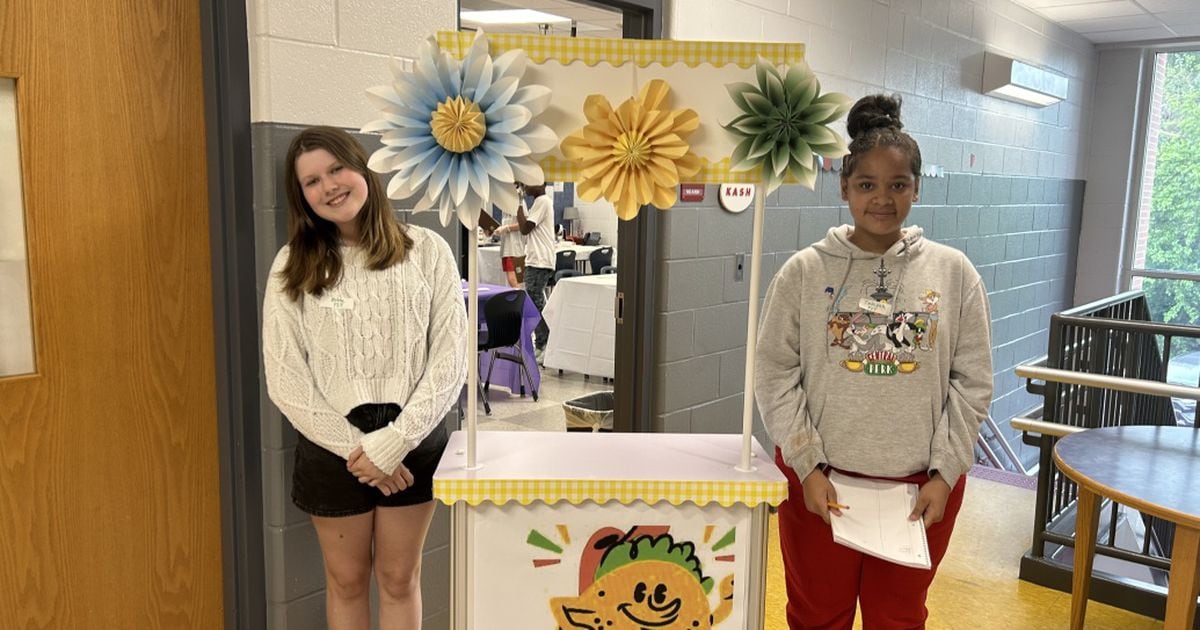
After learning about the fields of business, marketing and management, students in Marnie Kash’s class applied that knowledge to running their own businesses, in this case Highview Top of the Tacos. Local businesses pitched in and even served as taco judges.
“My (students) found the program a lot of fun,” Kash said.
The novel approach to teaching basic business principles had the effect of “allowing them to use higher-level thinking skills by allowing them to make all the decisions.”
“There was very little guidance from myself…We saw firsthand how this program helped each student grow in different ways and in different areas,” Kash said. Told.
Middletown school officials said the pop-up business “not only provides a hands-on learning experience, but also inculcates valuable life skills such as teamwork, creativity and problem-solving.”
Students learned the basics of business operations, financial literacy, and how to collaborate. Elementary school students also took on roles such as hosts, servers, chefs, and other roles found in restaurants.
The program, which also includes providing free tacos to students, school staff and participating community members, was made possible with funding and support from Junior Achievement of the Middletown Area and Emery Federal Credit Union.
Jen Hayes, K-12 program coordinator for the city schools, said the program is part of the district’s “Passport to Tomorrow” learning track, which includes a wide range of real-world learning for young people.
“Students in Ms. Kash’s class chose the field of business, management, and marketing during the fourth quarter and leveraged the Junior Achievement curriculum to encourage students to plan, lead, and operate a pop-up business. I did,” Hayes said.
“Each day there was a mini-lesson on how to run a business, and then students were given time to plan and make decisions. Mr. Kash’s students unanimously voted to run a taco restaurant. We quickly divided ourselves into categories based on our strengths and interests.”
“Each student was a member of the board, and each time an idea was proposed to the group, the board voted on whether to move forward with the idea.”
“The students’ eyes lit up throughout this project,” said Hayes. “They felt empowered to make decisions and were able to make small mistakes in a supportive environment.”
