


PUBLISHED
March 01, 2026
KARACHI:
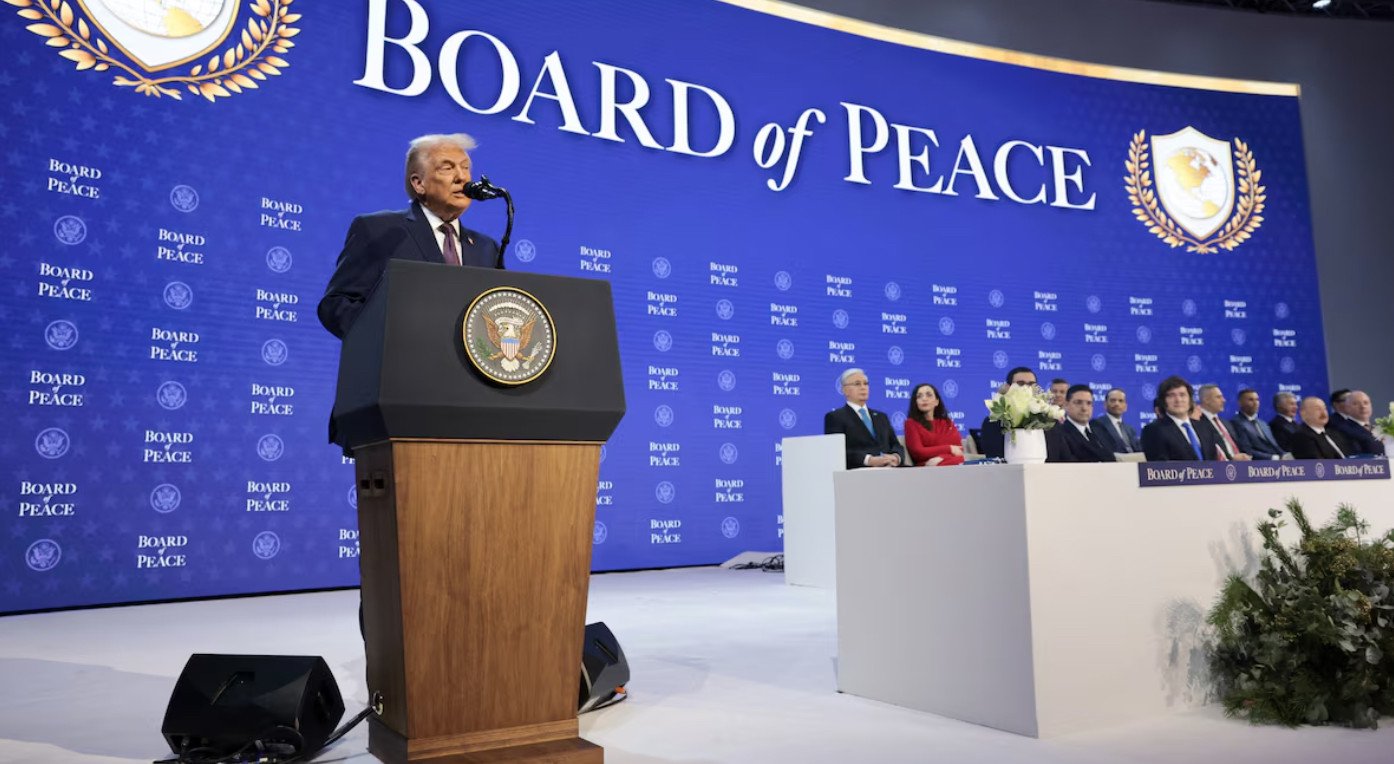
The idea of peace in Gaza, the claim that the war has ended, and the creation of a ‘Board of Peace’ by US President Donald Trump, presented in Davos as a bold stroke of diplomatic genius, reads less like a credible peace plan and more like a scene from an alternate reality. On the ground, barely anything has shifted for the Palestinians.
It was the kind of announcement designed to dominate news headlines – a sweeping initiative, a break from multilateral bureaucracy, a president casting himself as the architect and saviour of order in one of the world’s most fractured landscapes. But from the outset, the Board of Peace carried the contours of a project built more for optics than outcomes. Critics were quick to flag the exclusion at its core. Norway’s former prime minister, Kjell Magne Bondevik, accused Washington of acting as the ‘world’s police,’ warning that the plan for Gaza lacked clarity, legitimacy, and most damningly, any meaningful Palestinian representation.
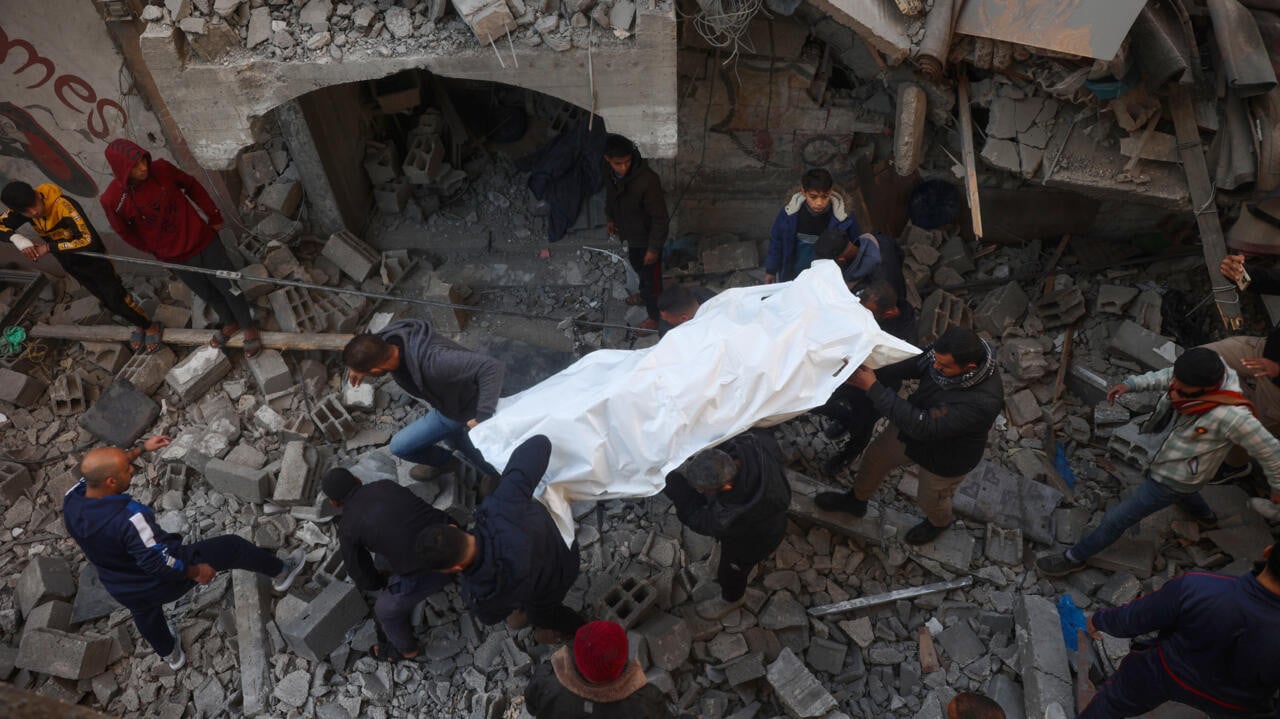
Bondevik was not wrong. Palestinians—the very people whose peace Trump’s board promises to secure—are glaringly absent from its table. More striking, and infinitely more consequential, is who does have a seat: Israel, a state that has carried out relentless bombing across the enclave since October 7, 2023, killing more than 75,000 people as of February 21, 2026.
On paper, Trump’s board presents itself as a vehicle for peace. Last month, at its inaugural meeting in Washington, the US president pledged $10 billion for Gaza’s reconstruction, announced an additional $7 billion from other countries, and outlined plans for a 20,000-strong International Stabilization Force (ISF). That day, Donald Trump went further, declaring the war in the Palestinian enclave over. The situation in Gaza, however, tells a different story.
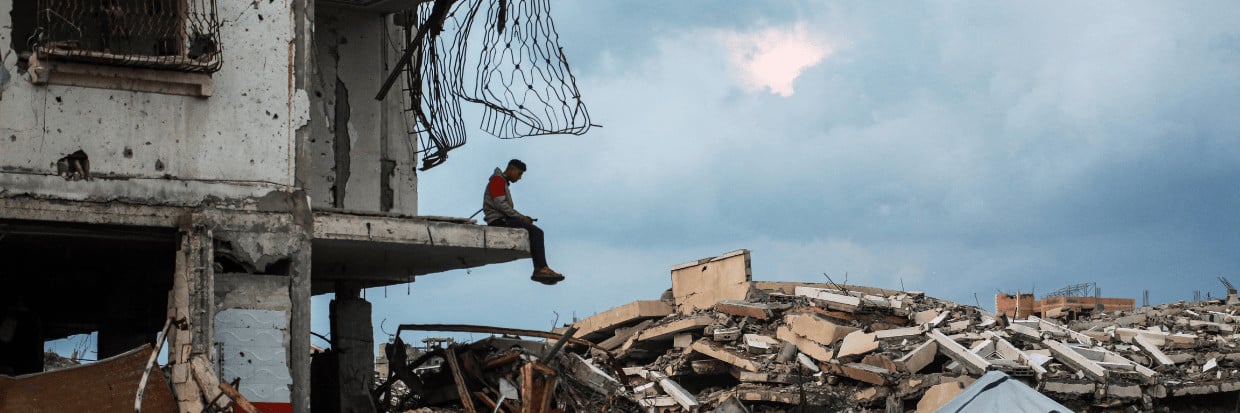
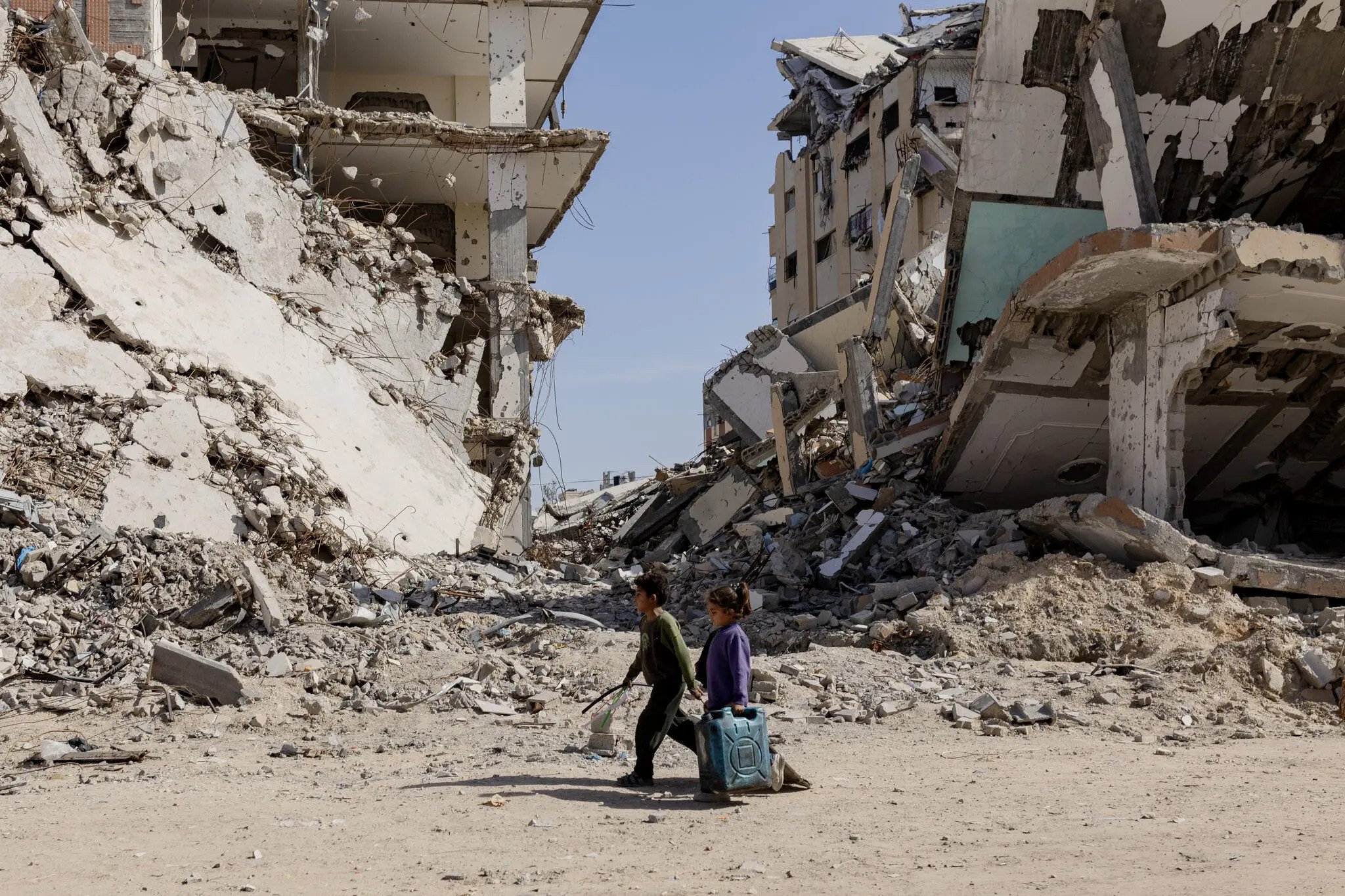
Richard Engel, NBC’s chief foreign correspondent, recently achieved what few journalists have since the conflict began: he was embedded with the Israel Defense Forces inside Gaza, a zone largely off-limits to independent reporting since October 2023. In an interview with Yalda Hakim on Sky News, he described what he saw in terms that defy easy summary. “I didn’t see a single building standing,” he said. “The entire time I was in Gaza, I didn’t see one building intact.”
Gaza, Engel explained, is now divided by what is called the yellow line, a demarcation that roughly splits the territory in half. “Inside the yellow line, Palestinian authorities govern, and this is where roughly two million Palestinians now live—just half of the land they once considered home.” The strip, he said, is devastated: enormous infrastructure damage, flattened buildings, mountains of debris, destroyed roads. On the Israeli-controlled side, the conditions were entirely different. It remains an active military zone. Engel noted that they didn’t see any Palestinians—not one. “As far as the eye could see, there was nothing but rubble. Everything was flattened. When I say flattened, I mean it was hard to even tell that buildings had ever been there.”
He compared the destruction to what happens if a building were run through a wood chipper—totally mangled, flattened beyond recognition. The devastation extended beyond homes and infrastructure. “You go through a military gate and immediately see dirt roads, destroyed roads, rubble everywhere, military vehicles, bulldozers, Israeli troops. Then when you leave, you leave the rubble and the smell of rotting garbage behind.”
The contrast between Gaza and Israel, he said, was almost surreal. “Cross back into Israel, and suddenly you’re on smooth roads. You see gardens, houses with red roofs. You’re in another dimension—one of the most shocking contrasts that you’ll find, perhaps anywhere on earth.”
So, with that reality in mind—the wood-chipper destruction, the smell of garbage, the two million people confined to half the land they once called home—what peace are we being told now prevails in Gaza? And what, if anything, is President Trump’s Board of Peace actually capable of achieving?
The composition of the board offers some clues. More than 60 leaders were invited, with permanent membership contingent on a $1 billion contribution. Key democratic allies—including the UK, Canada, France, and Germany were nowhere to be seen. Their absence alone strips the board of the international backing it would need to claim even a shadow of legitimacy alongside the United Nations. Around two dozen countries have joined, from Arab states like Jordan, Qatar, Egypt, Saudi Arabia, and the UAE, to Armenia, Azerbaijan, Pakistan, Indonesia, and Vietnam. A coalition, certainly—but as one expert put it, a coalition of convenience, not of genuine consensus or commitment.
If the absence of Palestinians on the board was shocking, the omissions in its charter are equally telling. It makes no mention of the two-state solution or the UN, effectively pushing the global body to the margins. Trump, meanwhile, wants to command a multinational peacekeeping force in postwar Gaza, with troops drawn from Albania, Indonesia, Kazakhstan, Kosovo, and Morocco. The plan also rests on two fragile premises: that Hamas will lay down its arms, and that Israel will cooperate.
On that demand for disarmament Israeli journalist Gideon Levy, writing in Haaretz, cuts to the core: “after waging a war of annihilation in Gaza, Israel now wants everyone else disarmed, but itself.” There is no guarantee, Levy notes, that Israel will refrain from using the brutal force it has deployed against Palestinians over the nearly two and a half years since the conflict began. The Board of Peace and its chairman, however, continue to insist all is well in the war-torn strip.
If anything, the board’s first meeting exposed the chasm between political theatre and reality. Aid continues to trickle slowly into Gaza, Israeli bombing has not ceased, yet the summit unfolded in a celebratory mood. Leaders—largely handpicked allies and autocrats—gathered to endorse Donald Trump’s vision of ending the conflict and refashioning Gaza into a kind of riviera. “YMCA” by Village People—an almost ritual anthem at his rallies—played in the background, an incongruous soundtrack for a moment in which ordinary Gazans had no say in decisions shaping their lives and territory. Rights groups and activists called the spectacle grotesque: music, pageantry and red carpets, even as those at the centre of it all faced rubble, hunger and death.
That dissonance raises fundamental questions about the structure of the initiative itself. In the absence of the transparency associated with United Nations-led peace efforts, who stands to benefit from the funds Trump proposes to mobilise? Why is a private mechanism being so heavily bankrolled while the established UN framework remains marginal and under-resourced? As a The Guardian editorial noted, channeling state resources into a board chaired by Trump risks recasting foreign policy as an instrument of private influence rather than public purpose: peace in the region rests on law and sovereignty, not ego and brinkmanship.
All that said, experts view Trump’s initiative as mired in contradictions, raising more questions than it answers. How peaceful will Gaza actually be for its people, and to what extent is the board instead shaping up as a real estate and reconstruction project—a fear many analysts have voiced?
To unpack what the initiative represents, whether it can achieve anything meaningful, and what its emergence signals about the future of international conflict resolution, The Express Tribune interviewed Ashok Swain, professor of peace and conflict research at Uppsala University. A longtime observer of international interventions, Swain offered a sobering assessment of Donald Trump’s initiative—what it means for Palestinians and for the very idea of internationally brokered peace.
ET: What does the creation of a separate Board of Peace mean for the United Nations, peace in Gaza, and Trump himself?
AS: The creation of a separate Board of Peace sends a strong signal that the United Nations is seen as inadequate—or simply inconvenient—when it comes to addressing Palestinian issues. Instead of supporting UN mediation, the board shifts legitimacy to US convening power and ad hoc coalitions. For Trump, the gain is political. He positions himself as the central broker of “peace,” bypassing multilateral checks, norms, and leadership. Even if the board is nominally linked to the UN, it concentrates agenda-setting power in Washington and frames Gaza more as a managerial challenge than a political and humanitarian crisis rooted in occupation and rights. In doing so, it undercuts the UN’s role by suggesting peace can be engineered outside its institutional framework.
ET: Given its first meeting, what is the Board of Peace capable of achieving?
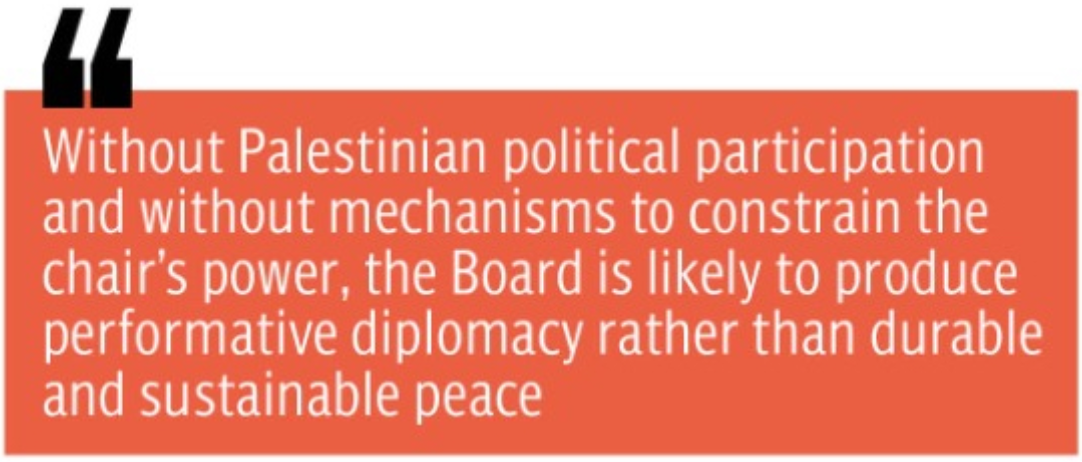
AS: Based on its first meeting, the Board’s most realistic role seems limited to coordinating funding pledges, security arrangements, and administrative logistics, rather than producing any meaningful political settlement. It can influence the situation on the ground through money, personnel, and international backing, but it lacks the legitimacy to tackle the core issues. The danger is that it turns into a routine where leaders signal loyalty to the convenor instead of engaging in real problem-solving. Without Palestinian political participation and with few checks on the chair’s power, the Board risks becoming a stage for performative diplomacy rather than a path to durable and sustainable peace.
ET: The United States was the primary supplier of weapons used to bomb Gaza. How does this make the US a reliable partner for peace in the same region it helped destroy?
AS: The US’s role as the main supplier of weapons to Gaza seriously undermines its credibility as a peace broker. Playing both the enabler of destruction and the architect of reconstruction creates a moral and political contradiction. Yes, the US wields leverage over Israel and other regional players—but leverage alone doesn’t build trust. To Palestinians and much of the world, the US looks less like a neutral mediator and more like a party trying to manage the fallout of its own actions. That dynamic risks turning “peace” into a post-war clean-up operation rather than a genuine reckoning with responsibility.
ET: The two-state solution seems to be missing from the agenda. What are your thoughts on this?
AS: Its absence is telling. This isn’t a political peace process aimed at resolving competing claims to land, sovereignty, or rights. The focus is squarely on security and stability for Israel—demilitarization, administration, and management—rather than political equality. History shows that such technocratic approaches often substitute control for genuine resolution, leaving fundamental questions unanswered. By sidelining the two-state framework without offering a credible alternative rooted in equality and self-determination, the Board risks deepening ambiguity rather than resolving the conflict.
ET: What does the absence of Palestinian representation tell us, and will this board risk clashing with existing international laws and organizations?
AS: The absence of Palestinians is the Board’s most glaring flaw. It sends a clear message: the people whose lives are at stake are not recognized as political actors but as subjects to be managed by others. That exclusion erodes legitimacy from the start and makes resistance almost inevitable. It also raises serious legal and institutional risks—by bypassing consent, authority, and accountability, the Board could clash with international law and established organizations. Far from strengthening the existing system, it risks undermining the very frameworks that make peace credible and sustainable.
ET: What are your thoughts on this board’s members? What are they hoping to achieve by their ceremonial presence?
AS: The Board’s setup and its roster say a lot about its true purpose: it’s more about optics than outcomes. Leaders show up to signal loyalty to US priorities, get a seat at the table, and potentially secure benefits that have little to do with Gaza. Their presence gives the impression of international consensus, even though many key actors are absent or wary. In practice, the Board acts less as a forum for real problem-solving and more as a stage where legitimacy is performed, while the hard political questions are left on hold.
ET: The Board of Peace includes several Arab governments and Muslim leaders, alongside Israel, despite its ongoing assault on Gaza. Is this a broader acceptance of the aggressor as a party while the victim is missing from the equation?
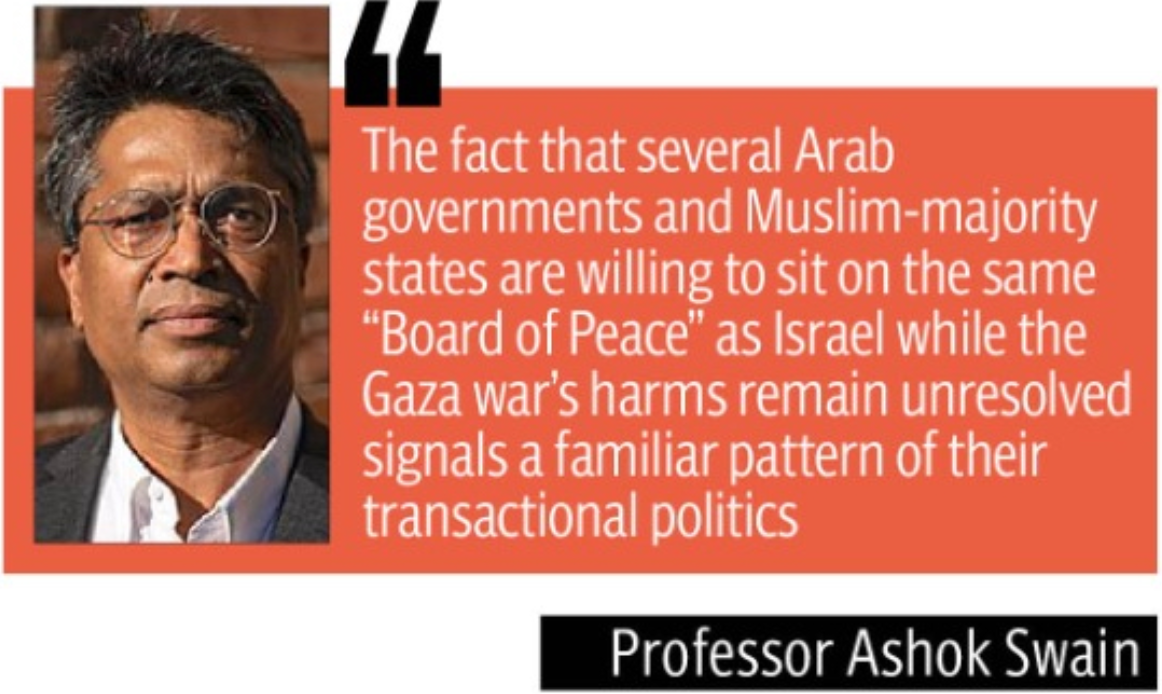
AS: The presence of Arab and Muslim-majority states alongside Israel on the Board shows a familiar pattern: transactional politics. These governments are prioritizing access and influence with Washington over publicly challenging Israel’s actions. While sitting on the Board doesn’t officially absolve Israel, it does normalize it as an equal actor in a US-led framework—while Palestinians are absent. That creates a pronounced imbalance: the aggressor is a full participant, the victim is treated as a subject to be managed. The result is less about justice or accountability and more about conflict management and damage control.
ET: According to international legal doctrine, “an international organisation should be created by a treaty, have permanent organs, and possess international legal personality.” What are your thoughts on this?
AS: On paper, the Board ticks some of the boxes—it has a charter, organs, and even claims international legal personality. But ticking boxes doesn’t make it legitimate. When all authority is concentrated in a single chair with sweeping veto powers, it strays far from the shared governance and accountability that real international institutions rely on. In practice, it risks being a legal façade, a way to exercise public power without the checks and safeguards that normally come with international administration.
ET: What precedence does the establishment of such a Board of Peace set for future conflicts?
AS: The Board risks setting a worrying precedent: making ad hoc, power-driven peace mechanisms the norm, led by the strongest players rather than multilateral institutions. It signals a world where peace is put together through selective invitations, financial leverage, and political loyalty instead of law and inclusive negotiation. This model could be repeated in other conflicts, pushing international diplomacy toward patronage over principle. The danger is clear – a global order where peace is defined by who calls the meeting, not by shared norms or the consent of the people most affected.
